


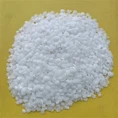


As a supplier of Nitrate of Magnesium, I am often asked about its crystal structure. In this blog post, I will delve into the details of the crystal structure of Nitrate of Magnesium, exploring its composition, properties, and significance.
Composition and Chemical Formula
Nitrate of Magnesium, also known as magnesium nitrate, has the chemical formula Mg(NO₃)₂. It consists of one magnesium ion (Mg²⁺) and two nitrate ions (NO₃⁻). The magnesium ion has a +2 charge, while each nitrate ion has a -1 charge, resulting in a neutral compound.
Crystal Structure
The crystal structure of Nitrate of Magnesium is typically in the form of a hydrated salt. The most common hydrates are the hexahydrate (Mg(NO₃)₂·6H₂O) and the tetrahydrate (Mg(NO₃)₂·4H₂O).
Hexahydrate (Mg(NO₃)₂·6H₂O)
The hexahydrate form of Nitrate of Magnesium crystallizes in the monoclinic system. In this structure, the magnesium ions are surrounded by six water molecules in an octahedral arrangement. The nitrate ions are located outside the coordination sphere of the magnesium ions. The water molecules play a crucial role in stabilizing the crystal structure by forming hydrogen bonds with the nitrate ions and other water molecules.
The crystal lattice of Mg(NO₃)₂·6H₂O is held together by a combination of ionic and hydrogen bonding forces. The ionic bonds between the magnesium and nitrate ions contribute to the overall stability of the compound, while the hydrogen bonds between the water molecules and the nitrate ions help to maintain the crystal structure.
Tetrahydrate (Mg(NO₃)₂·4H₂O)
The tetrahydrate form of Nitrate of Magnesium also crystallizes in the monoclinic system. In this structure, the magnesium ions are coordinated to four water molecules and two nitrate ions. The coordination geometry around the magnesium ion is a distorted octahedron.
Similar to the hexahydrate, the crystal lattice of Mg(NO₃)₂·4H₂O is held together by a combination of ionic and hydrogen bonding forces. The hydrogen bonds between the water molecules and the nitrate ions contribute to the stability of the crystal structure.
Properties of Nitrate of Magnesium
The crystal structure of Nitrate of Magnesium has a significant impact on its physical and chemical properties. Some of the key properties of Nitrate of Magnesium include:
Solubility
Nitrate of Magnesium is highly soluble in water. The presence of water molecules in the crystal structure facilitates the dissolution process by interacting with the ions and breaking the ionic bonds. The solubility of Nitrate of Magnesium increases with temperature.
Hygroscopicity
Nitrate of Magnesium is hygroscopic, which means it has a tendency to absorb moisture from the atmosphere. This property is due to the presence of water molecules in the crystal structure, which can form hydrogen bonds with water vapor in the air. Hygroscopicity can affect the storage and handling of Nitrate of Magnesium, as it can lead to the formation of lumps or clumps.
Thermal Stability
The thermal stability of Nitrate of Magnesium depends on the degree of hydration. The hexahydrate form decomposes at relatively low temperatures, releasing water molecules and forming the anhydrous salt. The anhydrous salt is more thermally stable and decomposes at higher temperatures to form magnesium oxide, nitrogen oxides, and oxygen.


Significance in Agriculture
Nitrate of Magnesium is widely used in agriculture as a fertilizer. It provides both magnesium and nitrogen to plants, which are essential nutrients for growth and development. Magnesium is a key component of chlorophyll, the pigment responsible for photosynthesis, while nitrogen is required for the synthesis of proteins, nucleic acids, and other important biomolecules.
The Magnesium Nitrate Uses in Agriculture are numerous. It can be applied to the soil or used as a foliar spray. When applied to the soil, Nitrate of Magnesium is readily absorbed by the roots and transported to the leaves, where it can be used for photosynthesis and other metabolic processes. As a foliar spray, it can provide a quick source of nutrients to plants, especially during periods of high demand.
Applications in Other Industries
In addition to its use in agriculture, Nitrate of Magnesium has several other applications in various industries. Some of these applications include:
Pyrotechnics
Nitrate of Magnesium is used in pyrotechnics to produce a bright white light. When heated, it decomposes to release oxygen, which supports the combustion of other pyrotechnic materials.
Desiccants
Due to its hygroscopic nature, Nitrate of Magnesium can be used as a desiccant to remove moisture from the air or other substances. It is commonly used in the packaging of electronic components and other moisture-sensitive products.
Catalysts
Nitrate of Magnesium can be used as a catalyst in various chemical reactions. It can promote the oxidation of organic compounds and the synthesis of other chemicals.
Conclusion
In conclusion, the crystal structure of Nitrate of Magnesium plays a crucial role in determining its properties and applications. The hydrated forms of Nitrate of Magnesium, such as the hexahydrate and tetrahydrate, have unique crystal structures that are held together by a combination of ionic and hydrogen bonding forces. These structures contribute to the solubility, hygroscopicity, and thermal stability of the compound.
As a supplier of Nitrate of Magnesium, we offer high-quality products that are suitable for a wide range of applications. Our Mag Nitrate and Magnesium II Nitrate products are carefully formulated to meet the specific needs of our customers.
If you are interested in purchasing Nitrate of Magnesium for your agricultural or industrial applications, we encourage you to contact us for more information. Our team of experts can provide you with detailed product specifications, pricing, and technical support. We look forward to working with you to meet your needs.
References
- Atkins, P. W., & de Paula, J. (2014). Physical Chemistry (10th ed.). Oxford University Press.
- Huheey, J. E., Keiter, E. A., & Keiter, R. L. (1993). Inorganic Chemistry: Principles of Structure and Reactivity (4th ed.). HarperCollins College Publishers.
- Lide, D. R. (Ed.). (2004). CRC Handbook of Chemistry and Physics (85th ed.). CRC Press.