


Hey there! As a supplier of Potassium Carbonate K2CO3, I've seen firsthand how crucial this compound is in the production of potassium salts. In this blog, I'll break down the role of Potassium Carbonate K2CO3 in that process, sharing some cool science and real - world applications.
The Basics of Potassium Carbonate K2CO3
First off, let's get to know Potassium Carbonate K2CO3 a bit better. It's an inorganic compound with the chemical formula K2CO3. You can find it in different forms, like Anhydrous Potassium Carbonate, which is the water - free version, and Potassium Carbonate Industrial Grade, which is commonly used in various industries.
Potassium Carbonate K2CO3 looks like a white, granular powder or sometimes comes in the form of crystals. It's highly soluble in water, and when it dissolves, it forms a basic solution. This basic nature is one of the key factors that make it so useful in the production of potassium salts.
Acting as a Potassium Source
One of the main roles of Potassium Carbonate K2CO3 in potassium salt production is to serve as a reliable source of potassium ions (K+). Potassium is an essential element, and many industries need potassium salts for different applications.
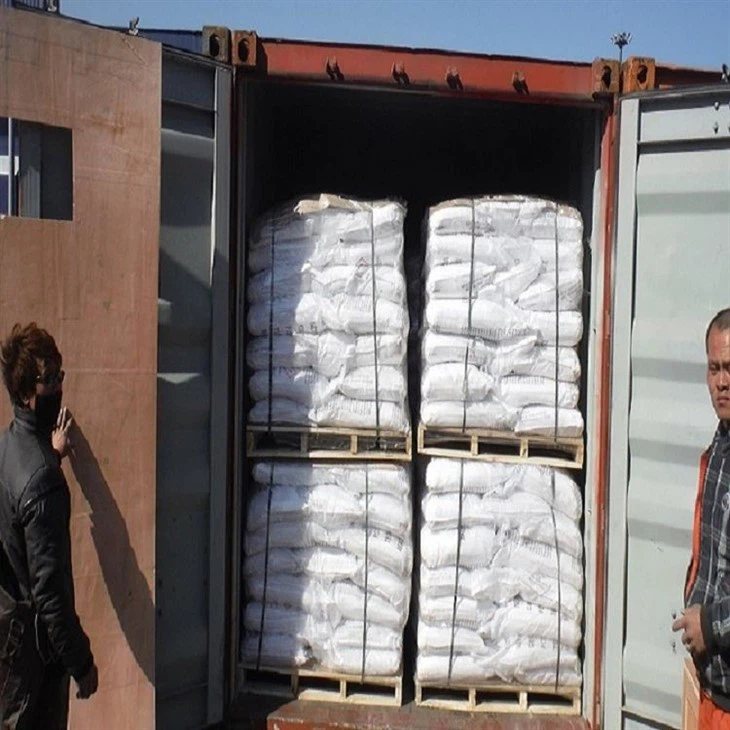

When you're making potassium salts, you often need to introduce potassium into the chemical reaction. Potassium Carbonate K2CO3 is a great choice because it readily dissociates in solution to release potassium ions. For example, when K2CO3 is dissolved in water, the following reaction occurs:
K2CO3(s) → 2K+(aq)+ CO32-(aq)
These potassium ions can then react with other anions to form different potassium salts. For instance, if you want to make potassium chloride (KCl), you can react Potassium Carbonate K2CO3 with hydrochloric acid (HCl). The chemical equation for this reaction is:
K2CO3 + 2HCl → 2KCl+ H2O + CO2↑
Here, the potassium ions from Potassium Carbonate K2CO3 combine with chloride ions from hydrochloric acid to form potassium chloride. The carbonate ions react with the hydrogen ions from the acid to form water and carbon dioxide gas, which bubbles out of the solution.
pH Regulation
Another important role of Potassium Carbonate K2CO3 in potassium salt production is pH regulation. As I mentioned earlier, when Potassium Carbonate K2CO3 dissolves in water, it forms a basic solution. Many chemical reactions involved in making potassium salts are sensitive to pH.
Some reactions require a specific pH range to proceed efficiently and produce high - quality potassium salts. By adding Potassium Carbonate K2CO3 to the reaction mixture, you can adjust the pH to the desired level. For example, in the production of certain potassium salts that are more stable in a basic environment, adding Potassium Carbonate K2CO3 can help maintain the appropriate pH.
Let's say you're making a potassium salt that precipitates out of solution at a certain pH. By carefully controlling the amount of Potassium Carbonate K2CO3 added, you can ensure that the pH reaches the optimal value for precipitation. This way, you can get a purer and more concentrated product.
Precipitation and Purification
Potassium Carbonate K2CO3 also plays a role in the precipitation and purification of potassium salts. In some cases, you can use it to selectively precipitate certain impurities or unwanted substances from a solution containing potassium salts.
For example, if there are metal ions in the solution that you don't want in your final potassium salt product, you can add Potassium Carbonate K2CO3. The carbonate ions can react with these metal ions to form insoluble metal carbonates, which will precipitate out of the solution. You can then filter these precipitates out, leaving behind a purer solution of potassium salts.
Moreover, during the crystallization process of potassium salts, Potassium Carbonate K2CO3 can influence the crystal growth. By adjusting the reaction conditions with the help of K2CO3, you can control the size and shape of the potassium salt crystals. This is important because the physical properties of the crystals, such as their size and shape, can affect the handling, storage, and performance of the final product.
Applications of Potassium Salts Produced with Potassium Carbonate K2CO3
The potassium salts produced using Potassium Carbonate K2CO3 have a wide range of applications. In the agricultural industry, potassium salts like potassium nitrate and potassium sulfate are used as fertilizers. Potassium is an essential nutrient for plants, and these salts help improve plant growth, increase crop yields, and enhance the quality of the produce.
In the food industry, potassium salts are used as additives. For example, potassium chloride can be used as a salt substitute for people who need to reduce their sodium intake. Potassium salts are also used in the production of baking powders, where they help with the leavening process.
In the pharmaceutical industry, potassium salts are used in various medications. They can be used to treat potassium deficiencies in the body and are also used in the formulation of some drugs to improve their solubility and stability.
Why Choose Our Potassium Carbonate K2CO3
As a supplier of Potassium Carbonate K2CO3, we take pride in providing high - quality products. Our Potassium Carbonate K2CO3 is produced using advanced manufacturing processes, ensuring its purity and consistency.
We understand the importance of reliable raw materials in the production of potassium salts. That's why we have strict quality control measures in place to make sure that our product meets the highest standards. Whether you need a small quantity for research purposes or a large amount for industrial production, we can meet your needs.
Let's Connect
If you're in the business of producing potassium salts or any other industry that uses Potassium Carbonate K2CO3, I'd love to hear from you. We can discuss your specific requirements, and I'm confident that our Potassium Carbonate K2CO3 will be a great fit for your production processes. So, don't hesitate to reach out and start a conversation about potential procurement and how we can work together to achieve your goals.
References
- Atkins, P., & de Paula, J. (2006). Physical Chemistry. Oxford University Press.
- Housecroft, C. E., & Sharpe, A. G. (2008). Inorganic Chemistry. Pearson Education.