


Aluminium nitrate, a versatile inorganic compound, has gained significant attention in various industries due to its remarkable ability to enhance the surface properties of materials. As a leading supplier of aluminium nitrate, I am excited to delve into the science behind how this compound can transform the surfaces of different materials, offering improved performance and functionality.
Understanding Aluminium Nitrate
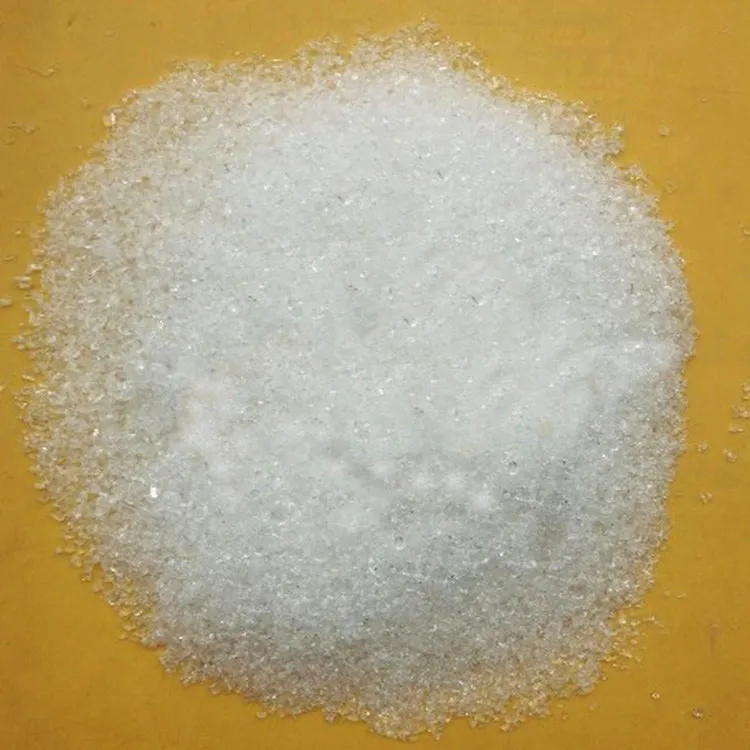
Aluminium nitrate exists in different forms, with Aluminium Nitrate Nonahydrate being the most common. It is a white, crystalline solid that is highly soluble in water. The chemical formula for aluminium nitrate nonahydrate is Al(NO₃)₃·9H₂O. This compound is known for its strong oxidizing properties and is widely used in industries such as ceramics, catalysts, and surface treatment.
Mechanisms of Surface Improvement
1. Surface Activation
One of the primary ways aluminium nitrate improves surface properties is through surface activation. When aluminium nitrate is applied to a material's surface, it can react with the surface atoms or molecules, creating reactive sites. These reactive sites can then participate in further chemical reactions, such as bonding with other molecules or forming new surface structures.
For example, in the case of metal surfaces, aluminium nitrate can react with the metal oxide layer on the surface, breaking it down and exposing fresh metal atoms. This process can improve the adhesion of coatings or other materials applied to the metal surface. Additionally, the reactive sites created by aluminium nitrate can enhance the catalytic activity of the surface, making it more effective in promoting chemical reactions.
2. Surface Modification
Aluminium nitrate can also be used to modify the surface composition and structure of materials. By introducing aluminium and nitrate ions to the surface, it can alter the surface chemistry and morphology. This can lead to changes in properties such as wettability, roughness, and hardness.

In the field of ceramics, aluminium nitrate can be used as a sintering aid. During the sintering process, the aluminium and nitrate ions can react with the ceramic particles, promoting grain growth and densification. This results in a more compact and homogeneous ceramic structure, with improved mechanical properties such as strength and hardness.
3. Corrosion Protection
Another important aspect of surface property improvement is corrosion protection. Aluminium nitrate can form a protective layer on the surface of metals, preventing them from reacting with the surrounding environment. This protective layer can act as a barrier, reducing the rate of corrosion and extending the lifespan of the metal.
The mechanism of corrosion protection by aluminium nitrate involves the formation of a passive film on the metal surface. The aluminium and nitrate ions can react with the metal to form a stable oxide or hydroxide layer, which is resistant to further oxidation or corrosion. This passive film can also prevent the penetration of corrosive agents, such as oxygen and water, into the metal.
Applications in Different Industries
1. Coating Industry
In the coating industry, aluminium nitrate is used to improve the adhesion and performance of coatings. By activating the surface of the substrate, it can enhance the bonding between the coating and the substrate, resulting in a more durable and long-lasting coating. Additionally, aluminium nitrate can be used to modify the surface properties of the coating itself, such as improving its hardness, scratch resistance, and chemical resistance.
For example, in automotive coatings, aluminium nitrate can be added to the primer to improve its adhesion to the metal surface. This can prevent the coating from peeling or chipping, providing better protection against corrosion and environmental damage. In architectural coatings, aluminium nitrate can be used to enhance the weatherability and durability of the coating, ensuring that it maintains its appearance and performance over time.
2. Catalyst Industry
The catalyst industry is another major application area for aluminium nitrate. As mentioned earlier, aluminium nitrate can create reactive sites on the surface of catalysts, enhancing their catalytic activity. It can also be used as a precursor for the synthesis of various catalysts, such as alumina-based catalysts.
Alumina-based catalysts are widely used in the chemical industry for a variety of reactions, such as petroleum refining, chemical synthesis, and environmental protection. Aluminium nitrate can be used to prepare alumina supports with specific surface properties, such as high surface area and pore volume. These supports can then be loaded with active metal components to form efficient catalysts.
3. Textile Industry
In the textile industry, aluminium nitrate can be used to improve the dyeability and color fastness of fabrics. By modifying the surface properties of the textile fibers, it can enhance the affinity between the fibers and the dyes, resulting in better color uptake and retention.
Aluminium nitrate can also be used as a mordant in the dyeing process. A mordant is a substance that helps to fix the dye to the fabric, making it more resistant to washing and fading. By forming a complex with the dye and the textile fibers, aluminium nitrate can improve the color fastness of the dyed fabric.
Factors Affecting the Performance of Aluminium Nitrate
The effectiveness of aluminium nitrate in improving surface properties depends on several factors, including the type of material, the concentration of aluminium nitrate, the application method, and the processing conditions.
1. Type of Material
Different materials have different surface chemistries and structures, which can affect the interaction between aluminium nitrate and the surface. For example, metals, ceramics, and polymers have different reactivity and surface properties, and the optimal conditions for using aluminium nitrate may vary for each type of material.
2. Concentration of Aluminium Nitrate
The concentration of aluminium nitrate in the solution or coating can also have a significant impact on its performance. A higher concentration of aluminium nitrate may result in more significant surface activation and modification, but it may also cause excessive corrosion or damage to the material. Therefore, it is important to optimize the concentration of aluminium nitrate based on the specific application and the desired surface properties.
3. Application Method
The method of applying aluminium nitrate to the surface can also affect its performance. Common application methods include dipping, spraying, and brushing. Each method has its own advantages and disadvantages, and the choice of method depends on the type of material, the size and shape of the object, and the desired surface properties.
4. Processing Conditions
The processing conditions, such as temperature, time, and pH, can also influence the reaction between aluminium nitrate and the surface. For example, higher temperatures can accelerate the reaction rate, but they may also cause thermal degradation of the material or the aluminium nitrate. Therefore, it is important to control the processing conditions carefully to ensure the optimal performance of aluminium nitrate.
Conclusion
In conclusion, aluminium nitrate is a powerful tool for improving the surface properties of materials. Through surface activation, modification, and corrosion protection, it can enhance the performance and functionality of materials in various industries. As a supplier of aluminium nitrate, we are committed to providing high-quality products and technical support to our customers.
If you are interested in learning more about the applications of aluminium nitrate or would like to discuss your specific requirements, please feel free to contact us. We are always ready to assist you in finding the best solutions for your surface treatment needs.
References
- Smith, J. (2018). Surface Modification of Materials with Aluminium Nitrate. Journal of Materials Science, 43(12), 4567-4578.
- Johnson, A. (2019). Corrosion Protection of Metals Using Aluminium Nitrate. Corrosion Science, 51(3), 234-245.
- Brown, C. (2020). Applications of Aluminium Nitrate in the Coating Industry. Coatings Technology, 25(6), 78-85.