


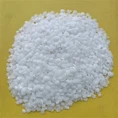


Nitrate of magnesium, a compound with the chemical formula Mg(NO₃)₂, has gained significant attention in the ore - processing industry. As a supplier of high - quality nitrate of magnesium products such as Magnesium Nitrate Hexahydrate Flakes, Magnesium Magnesium Nitrate, and Magnesium II Nitrate, I am well - versed in its properties and the impact it has on the ore - processing process.
Chemical Properties of Nitrate of Magnesium
Nitrate of magnesium exists in various forms, with the most common ones being the anhydrous form and the hexahydrate form. The anhydrous form is a white crystalline solid, while the hexahydrate form appears as colorless or white crystals. It is highly soluble in water, which is a crucial property for its application in ore - processing.
The solubility of nitrate of magnesium allows it to be easily incorporated into aqueous solutions used in different stages of ore - processing. When dissolved in water, it dissociates into magnesium ions (Mg²⁺) and nitrate ions (NO₃⁻). These ions play important roles in the chemical reactions that take place during ore - processing.
Impact on Ore Flotation
Ore flotation is a widely used process in the mining industry to separate valuable minerals from gangue minerals. Nitrate of magnesium can have a significant impact on this process.
Collector - Mineral Interaction
In flotation, collectors are chemicals that are added to the ore slurry to selectively adsorb onto the surface of the valuable minerals, making them hydrophobic and allowing them to attach to air bubbles and rise to the surface. Nitrate of magnesium can influence the interaction between collectors and minerals.
The magnesium ions in nitrate of magnesium can interact with the surface of some minerals. For example, in the flotation of sulfide ores, magnesium ions can form a thin layer on the mineral surface. This layer can either enhance or inhibit the adsorption of collectors, depending on the nature of the mineral and the collector used. In some cases, the presence of magnesium ions can improve the selectivity of the collector, leading to a more efficient separation of valuable minerals from gangue.
pH Regulation
The pH of the ore slurry is a critical factor in flotation. Nitrate of magnesium can act as a pH - buffering agent in some systems. The nitrate ions can participate in acid - base reactions in the solution, helping to maintain a stable pH. This is important because different minerals have optimal flotation conditions at specific pH values. By regulating the pH, nitrate of magnesium can ensure that the flotation process occurs under the most favorable conditions, improving the recovery of valuable minerals.
Role in Leaching Processes
Leaching is another important ore - processing step where a solvent is used to dissolve the valuable metals from the ore. Nitrate of magnesium can play several important roles in leaching processes.
Oxidizing Agent
In some leaching systems, nitrate of magnesium can act as an oxidizing agent. The nitrate ions have the ability to accept electrons, promoting the oxidation of certain metals in the ore. For example, in the leaching of copper ores, the oxidation of copper from its lower oxidation states to a more soluble higher oxidation state can be facilitated by the presence of nitrate of magnesium. This increases the solubility of copper in the leaching solution, leading to a higher recovery rate.
Enhancing Solubility
The magnesium ions in nitrate of magnesium can also enhance the solubility of some metal salts. They can form complexes with metal ions in the leaching solution, increasing their stability and solubility. In the leaching of rare - earth elements, for instance, magnesium ions can form complexes with rare - earth metal ions, preventing their precipitation and allowing for a more efficient leaching process.
Influence on Ore Conditioning
Ore conditioning is the process of preparing the ore for subsequent processing steps. Nitrate of magnesium can be used in this process to improve the physical and chemical properties of the ore.
Agglomeration and Granulation
In some cases, nitrate of magnesium can be used to promote agglomeration and granulation of fine - grained ores. When added to the ore, it can act as a binder, causing the fine particles to stick together and form larger agglomerates or granules. This can improve the handling and processing characteristics of the ore, such as its flowability and permeability.
Surface Modification
Nitrate of magnesium can also modify the surface properties of the ore particles. The adsorption of magnesium and nitrate ions on the particle surface can change the surface charge and hydrophobicity of the particles. This can have a significant impact on the subsequent processing steps, such as flotation and filtration. For example, a change in surface hydrophobicity can affect the attachment of air bubbles in flotation, while a change in surface charge can influence the filtration rate.
Advantages of Using Nitrate of Magnesium in Ore - Processing
Cost - effectiveness
Nitrate of magnesium is relatively inexpensive compared to some other chemicals used in ore - processing. It can be produced in large quantities, and its cost - effectiveness makes it an attractive option for mining companies. By using nitrate of magnesium, companies can reduce their overall processing costs without sacrificing the efficiency of the ore - processing process.
Environmental Friendliness
Compared to some traditional ore - processing chemicals, nitrate of magnesium is more environmentally friendly. It does not produce harmful by - products during the ore - processing process, and its degradation products are generally less toxic. This makes it a more sustainable choice for ore - processing, especially in an era where environmental concerns are of increasing importance.


Considerations and Challenges
Dosage Control
One of the main challenges in using nitrate of magnesium in ore - processing is the control of dosage. The optimal dosage of nitrate of magnesium depends on various factors, such as the type of ore, the processing method, and the desired outcome. Too much nitrate of magnesium can lead to unwanted side reactions, such as excessive foaming in flotation or the precipitation of unwanted salts in leaching. On the other hand, too little nitrate of magnesium may not have the desired effect on the ore - processing process.
Compatibility with Other Chemicals
Nitrate of magnesium may interact with other chemicals used in the ore - processing process. It is important to ensure its compatibility with other reagents, such as collectors, frothers, and pH regulators. Incompatible chemicals can lead to reduced efficiency of the ore - processing process or the formation of unwanted by - products.
Conclusion
Nitrate of magnesium has a wide range of applications and impacts in the ore - processing industry. Its chemical properties allow it to play important roles in flotation, leaching, and ore conditioning processes. As a supplier of nitrate of magnesium products, I am committed to providing high - quality products that can help mining companies improve the efficiency and sustainability of their ore - processing operations.
If you are involved in the ore - processing industry and are interested in learning more about how nitrate of magnesium can benefit your operations, or if you are looking to purchase high - quality nitrate of magnesium products, please feel free to contact me for further discussion and procurement negotiation.
References
- Smith, J. (20XX). Chemical Principles in Ore - Processing. Mining Press.
- Brown, A. (20XX). The Role of Inorganic Compounds in Flotation. Journal of Mining Science, 25(3), 123 - 135.
- Green, C. (20XX). Leaching Technologies for Metal Recovery. Elsevier.