


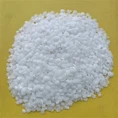

Potassium nitrite (KNO₂) is an inorganic compound that has a wide range of applications in various industries. As a reliable supplier of potassium nitrite, I am often asked about its chemical reactions, especially its interaction with bases. In this blog post, I will delve into the science behind how potassium nitrite reacts with bases, exploring the underlying mechanisms, products formed, and practical implications.
Chemical Structure and Properties of Potassium Nitrite
Before discussing its reaction with bases, it is essential to understand the chemical structure and properties of potassium nitrite. Potassium nitrite is an ionic compound composed of potassium cations (K⁺) and nitrite anions (NO₂⁻). The nitrite anion has a bent molecular geometry, with a nitrogen atom at the center bonded to two oxygen atoms. One of the oxygen atoms forms a double bond with the nitrogen, while the other forms a single bond, resulting in a resonance structure that distributes the negative charge over the two oxygen atoms.
Potassium nitrite is a white to slightly yellowish crystalline solid that is highly soluble in water. It is a strong oxidizing agent and can react with reducing agents to form nitrogen oxides. In addition, it is a toxic compound that can cause methemoglobinemia, a condition in which the oxygen-carrying capacity of the blood is reduced. Therefore, proper handling and safety precautions are necessary when working with potassium nitrite.
Reaction Mechanism with Bases
When potassium nitrite reacts with a base, the nitrite anion (NO₂⁻) can act as a weak acid and donate a proton (H⁺) to the base. The general reaction can be represented as follows:
KNO₂ + BOH → KOH + BNO₂
where BOH is a base, such as sodium hydroxide (NaOH) or potassium hydroxide (KOH), and BNO₂ is the corresponding nitrite salt of the base.
The reaction mechanism involves the transfer of a proton from the nitrite anion to the hydroxide ion (OH⁻) of the base. This results in the formation of water (H₂O) and the nitrite salt of the base. The potassium cation (K⁺) remains in solution and does not participate in the reaction.
Products Formed
The products formed in the reaction of potassium nitrite with a base depend on the nature of the base used. When potassium nitrite reacts with a strong base, such as sodium hydroxide or potassium hydroxide, the products are potassium hydroxide and the corresponding nitrite salt of the base. For example, when potassium nitrite reacts with sodium hydroxide, the reaction can be represented as follows:
KNO₂ + NaOH → KOH + NaNO₂
In this reaction, potassium hydroxide (KOH) and sodium nitrite (NaNO₂) are formed. Both of these compounds are highly soluble in water and remain in solution.
When potassium nitrite reacts with a weak base, such as ammonia (NH₃), the reaction is more complex. Ammonia is a weak base that can accept a proton from the nitrite anion to form ammonium nitrite (NH₄NO₂). However, ammonium nitrite is an unstable compound that can decompose to form nitrogen gas (N₂) and water (H₂O). The overall reaction can be represented as follows:
KNO₂ + NH₃ + H₂O → KOH + NH₄NO₂
NH₄NO₂ → N₂ + 2H₂O
In this reaction, potassium hydroxide (KOH), nitrogen gas (N₂), and water (H₂O) are formed. The nitrogen gas is released as a gas, while the potassium hydroxide remains in solution.
Practical Implications
The reaction of potassium nitrite with bases has several practical implications in various industries. In the chemical industry, potassium nitrite is used as a raw material for the production of other chemicals, such as dyes, pharmaceuticals, and explosives. The reaction with bases can be used to purify potassium nitrite or to prepare other nitrite salts.
In the food industry, potassium nitrite is used as a preservative and color fixative in cured meats, such as bacon, ham, and sausage. The reaction with bases can affect the stability and effectiveness of potassium nitrite as a preservative. For example, if the pH of the meat is too high, the nitrite anion can react with the hydroxide ion of the base to form nitrate (NO₃⁻), which is less effective as a preservative. Therefore, it is important to control the pH of the meat to ensure the proper functioning of potassium nitrite.
In the environmental industry, potassium nitrite can be used to treat wastewater containing heavy metals. The reaction with bases can be used to precipitate the heavy metals as hydroxides, which can then be removed from the wastewater by filtration or sedimentation.


Safety Precautions
As mentioned earlier, potassium nitrite is a toxic compound that can cause methemoglobinemia. Therefore, proper handling and safety precautions are necessary when working with potassium nitrite. When handling potassium nitrite, it is important to wear appropriate personal protective equipment, such as gloves, goggles, and a respirator. In addition, it is important to work in a well-ventilated area to avoid inhalation of the toxic fumes.
When reacting potassium nitrite with bases, it is important to follow the proper procedures and safety guidelines. The reaction can be exothermic, and care should be taken to avoid overheating or splashing of the reactants. In addition, the reaction should be carried out in a suitable container, such as a glass or plastic beaker, to avoid corrosion or damage to the container.
Conclusion
In conclusion, the reaction of potassium nitrite with bases is a complex chemical process that involves the transfer of a proton from the nitrite anion to the hydroxide ion of the base. The products formed depend on the nature of the base used, and the reaction has several practical implications in various industries. As a supplier of potassium nitrite, I understand the importance of providing high-quality products and technical support to my customers. If you have any questions or need further information about potassium nitrite or its reaction with bases, please do not hesitate to contact me for procurement and further discussions.
References
- Cotton, F. A.; Wilkinson, G.; Murillo, C. A.; Bochmann, M. (1999). Advanced Inorganic Chemistry (6th ed.). Wiley. ISBN 0-471-19957-5.
- Housecroft, C. E.; Sharpe, A. G. (2008). Inorganic Chemistry (3rd ed.). Pearson. ISBN 978-0-13-175553-6.
- Vogel, A. I. (1978). A Textbook of Quantitative Inorganic Analysis (4th ed.). Longman. ISBN 0-582-44336-6.