




As a supplier of Nitrate Of Magnesium, I'm often asked about the common ligands that can form complexes with this compound. In this blog post, I'll delve into the topic, exploring the ligands and their interactions with Magnesium Nitrate.
Understanding Magnesium Nitrate
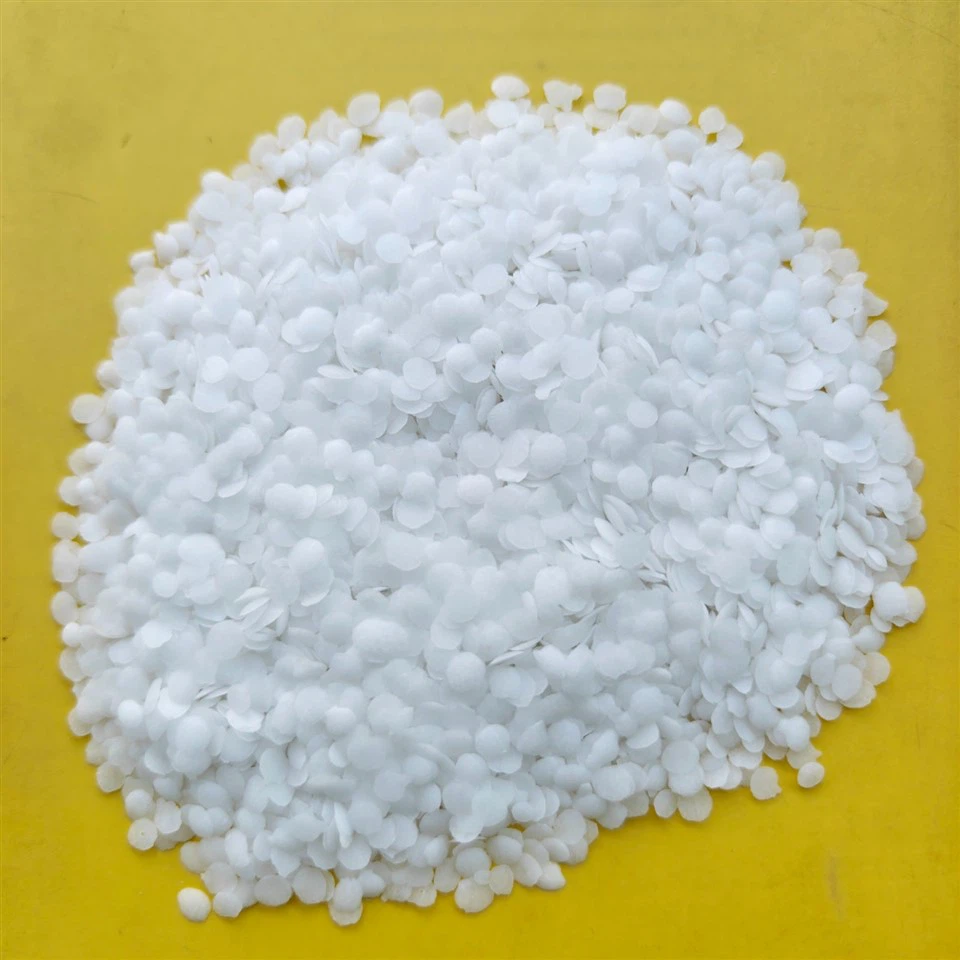
Magnesium Nitrate exists in several forms, such as Magnesium Nitrate Hexahydrate and Magnesium Nitrate Hexahydrate Flakes. It is a versatile compound used in various industries, including agriculture as a fertilizer and in pyrotechnics. The magnesium ion (Mg²⁺) in Magnesium Nitrate has a high charge - to - radius ratio, which makes it capable of forming coordination complexes with suitable ligands.
Common Ligands and Their Complexes with Magnesium Nitrate
Water (H₂O)
Water is one of the most common ligands for Magnesium Nitrate. The oxygen atom in water has two lone pairs of electrons, which can be donated to the empty orbitals of the magnesium ion. In the case of Magnesium Nitrate Hexahydrate, six water molecules coordinate around the magnesium ion in an octahedral geometry. The chemical formula of this complex is Mg(NO₃)₂·6H₂O. The water molecules act as monodentate ligands, meaning each water molecule donates one pair of electrons to the central magnesium ion.
The formation of this complex is due to the electrostatic attraction between the positively charged magnesium ion and the partial negative charge on the oxygen atom of water. This complex is stable under normal conditions and is often used in laboratory settings and industrial applications.
Ammonia (NH₃)
Ammonia can also form complexes with Magnesium Nitrate. The nitrogen atom in ammonia has a lone pair of electrons that can be donated to the magnesium ion. Ammonia is a stronger ligand than water in terms of its ability to donate electrons. When ammonia reacts with Magnesium Nitrate, it can displace some or all of the water molecules in the hydrated complex.

The general reaction can be written as:
Mg(NO₃)₂·6H₂O + xNH₃ → Mg(NH₃)ₓ(H₂O)₆ - ₓ₂ + (6 - x)H₂O
The value of x depends on the reaction conditions, such as the concentration of ammonia and the temperature. The coordination geometry around the magnesium ion in the ammonia - containing complexes is also octahedral, with ammonia and water molecules occupying the coordination sites.
Ethylenediamine (en)
Ethylenediamine is a bidentate ligand, which means each molecule of ethylenediamine can donate two pairs of electrons to the central metal ion. When ethylenediamine reacts with Magnesium Nitrate, it forms a chelate complex. A chelate complex is more stable than a complex formed with monodentate ligands due to the chelate effect.
The reaction is as follows:
Mg(NO₃)₂ + 3en → Mg(en)₃₂
In this complex, the three ethylenediamine molecules wrap around the magnesium ion, forming a very stable structure. The chelate effect arises from the entropy gain when the bidentate ligand replaces monodentate ligands, as well as the formation of a more rigid and stable ring - like structure.
Acetylacetonate (acac⁻)
Acetylacetonate is a common ligand used in coordination chemistry. It is a bidentate ligand that can form complexes with Magnesium Nitrate. The acetylacetonate ion has a resonance - stabilized structure, which allows it to donate two pairs of electrons to the magnesium ion.
The reaction to form the complex is:
Mg(NO₃)₂ + 2acac⁻ → [Mg(acac)₂] + 2NO₃⁻
The [Mg(acac)₂] complex has a planar or slightly distorted octahedral geometry, depending on the reaction conditions. This complex is often used in catalysis and materials science applications.
Factors Affecting Complex Formation
Ligand Strength
The strength of a ligand, which is determined by its ability to donate electrons, plays a crucial role in complex formation. Stronger ligands, such as ammonia and ethylenediamine, are more likely to displace weaker ligands, like water, from the coordination sphere of the magnesium ion.
Temperature
Temperature affects the rate and equilibrium of complex formation reactions. Higher temperatures generally increase the reaction rate but may also affect the stability of the complexes. For example, some complexes may decompose at high temperatures, while others may form more readily due to increased molecular motion.
Concentration
The concentration of the ligand and the metal salt also affects complex formation. A higher concentration of the ligand favors the formation of complexes with a higher number of ligand molecules coordinated to the metal ion.
Applications of Magnesium Nitrate Complexes
Agriculture
The complexes of Magnesium Nitrate are widely used in agriculture. For example, the hydrated form Magnesium Nitrate Hexahydrate provides both magnesium and nitrogen to the soil, which are essential nutrients for plant growth. The complexed forms ensure better solubility and availability of these nutrients to the plants.
Chemical Synthesis
Magnesium Nitrate complexes are used as catalysts in various chemical reactions. The chelate complexes, such as those formed with ethylenediamine and acetylacetonate, can provide specific reaction environments and enhance the selectivity and efficiency of chemical reactions.
Conclusion
In conclusion, Magnesium Nitrate can form a variety of complexes with different ligands, including water, ammonia, ethylenediamine, and acetylacetonate. The formation of these complexes is influenced by factors such as ligand strength, temperature, and concentration. These complexes have important applications in agriculture, chemical synthesis, and other industries.
If you are interested in purchasing Magnesium Nitrate for your specific needs, whether it's for agricultural use or chemical synthesis, please feel free to contact us for procurement discussions. We can provide high - quality Magnesium Nitrate products and offer technical support to ensure that you get the best results for your applications.
References
- Huheey, J. E., Keiter, E. A., & Keiter, R. L. (1993). Inorganic Chemistry: Principles of Structure and Reactivity. HarperCollins College Publishers.
- Cotton, F. A., & Wilkinson, G. (1988). Advanced Inorganic Chemistry. John Wiley & Sons.
- Housecroft, C. E., & Sharpe, A. G. (2008). Inorganic Chemistry. Pearson Education.