




What are the oxidation states of elements in Nitrate Of Magnesium?

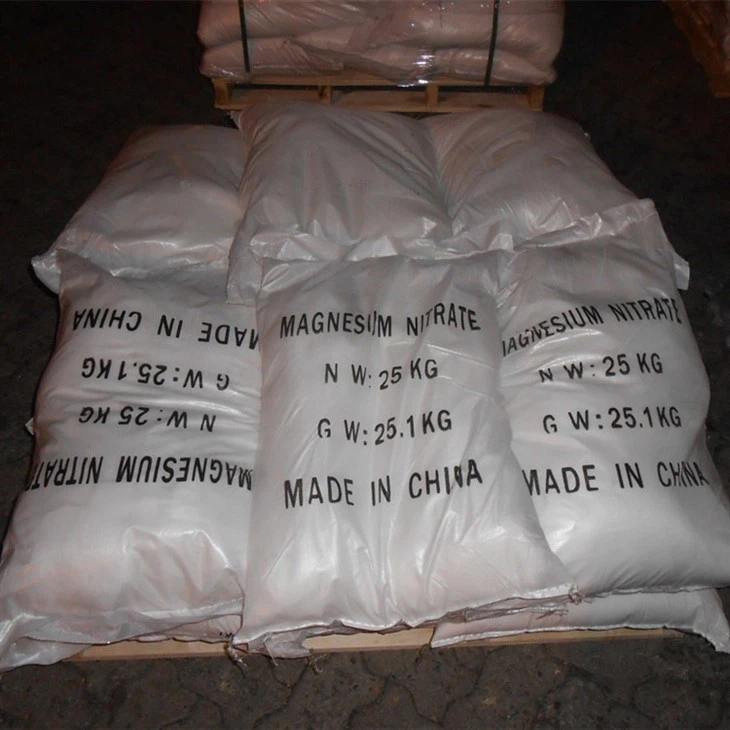
Hey there! I'm a supplier of Nitrate Of Magnesium, and today I wanna talk about the oxidation states of elements in this compound. It's not just some boring chemistry stuff; understanding this can actually help us see why magnesium nitrate is so useful.
Let's start with the basics. The chemical formula for magnesium nitrate is Mg(NO₃)₂. This means that in one molecule of magnesium nitrate, there's one magnesium atom and two nitrate ions (NO₃⁻).
First off, let's look at magnesium. Magnesium is in Group 2 of the periodic table. Elements in this group are known to lose two electrons to achieve a stable electron configuration. When an atom loses electrons, it has a positive oxidation state. So, magnesium in magnesium nitrate has an oxidation state of +2. It's pretty straightforward because Group 2 elements almost always have a +2 oxidation state in ionic compounds.
Now, let's dig into the nitrate ion (NO₃⁻). The nitrate ion is made up of one nitrogen atom and three oxygen atoms. Oxygen is a very electronegative element, which means it likes to pull electrons towards itself. In most compounds, oxygen has an oxidation state of -2. There are three oxygen atoms in the nitrate ion, so the total contribution of oxygen to the oxidation - state of the nitrate ion is 3×(-2)= - 6.
Let the oxidation state of nitrogen in the nitrate ion be (x). The overall charge of the nitrate ion is -1. We can set up an equation based on the fact that the sum of the oxidation states of all atoms in an ion equals the charge of the ion. So, (x+3\times(-2)= - 1). Solving this equation: (x−6 = - 1), and then (x=+5). So, the oxidation state of nitrogen in the nitrate ion is +5.
The oxidation states of the elements in magnesium nitrate are: +2 for magnesium, +5 for nitrogen, and -2 for oxygen. These oxidation states give magnesium nitrate some unique properties that make it useful in different fields.
One of the most well - known uses of magnesium nitrate is in agriculture. Magnesium is an essential nutrient for plants. It plays a crucial role in photosynthesis, as it's a key component of chlorophyll. The nitrate part provides a source of nitrogen, another vital nutrient for plant growth. You can learn more about Magnesium Nitrate Uses in Agriculture. Nitrogen is important for the formation of proteins and nucleic acids in plants.
Magnesium nitrate also comes in different forms, like Magnesium Nitrate Hexahydrate. The hexahydrate form means that each formula unit of magnesium nitrate is associated with six water molecules. This form can be more soluble in water, which is great for applications where a liquid solution is needed, like in foliar sprays for plants.
Another common name you might hear for magnesium nitrate is Mag Nitrate. It's just a shorthand way of referring to it, but it's the same great compound with all those useful properties.
If you're in the market for magnesium nitrate, whether it's for agricultural use, in some industrial processes, or other applications, I'm here to help. I've got a reliable supply of high - quality magnesium nitrate. Whether you need the hexahydrate form for a specific solubility requirement or just the regular magnesium nitrate for general use, I can provide it.
The oxidation states of the elements in magnesium nitrate determine its chemical behavior and its suitability for different applications. The +2 oxidation state of magnesium and the +5 oxidation state of nitrogen in the nitrate ion are what make this compound so versatile.
So, if you're interested in purchasing magnesium nitrate, don't hesitate to reach out. We can have a chat about your specific needs, the quantity you require, and the best form of magnesium nitrate for your situation. Let's work together to get you the magnesium nitrate you need for your projects.
References:
- Brown, T. L., LeMay, H. E., Bursten, B. E., & Murphy, C. J. (2012). Chemistry: The Central Science. Pearson.
- Chang, R. (2010). Chemistry. McGraw - Hill.