


Hey there! As a supplier of Potassium Carbonate K2CO3, I often get asked about its reactions with different substances. Today, I'm going to dig into what happens when Potassium Carbonate reacts with nitric oxide.
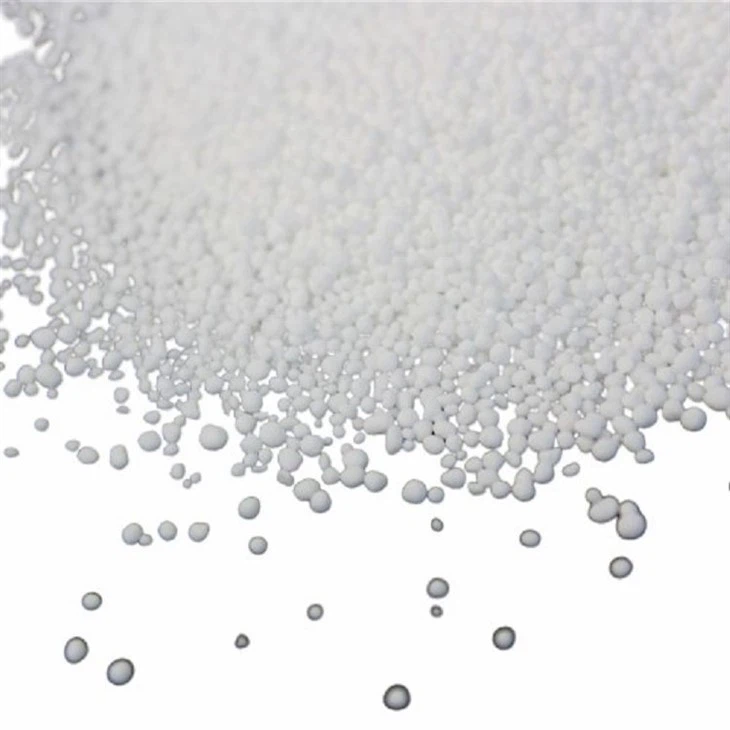
First off, let's talk a bit about Potassium Carbonate. It's a white, water - soluble salt with the chemical formula K2CO3. We offer Potassium Carbonate K2CO3 in various grades, and our Potassium Carbonate Industrial Grade is quite popular in different industries. It has a bunch of Potassium Carbonate Uses, like in the production of glass, soap, and as a buffering agent in the food industry.

Now, onto the reaction with nitric oxide (NO). Nitric oxide is a colorless gas that's an important signaling molecule in the body and also has industrial applications. In a normal situation, Potassium Carbonate and nitric oxide don't directly react in a straightforward way under standard conditions.
Potassium Carbonate is an ionic compound. It consists of potassium ions (K⁺) and carbonate ions (CO₃²⁻). Nitric oxide is a covalent molecule. For a reaction to occur, there usually needs to be a driving force, like the formation of a more stable compound, a change in oxidation states, or the release of a gas.
However, in the presence of oxygen and water, things get a bit more interesting. When nitric oxide is exposed to air, it quickly reacts with oxygen to form nitrogen dioxide (NO₂). The reaction is 2NO + O₂ → 2NO₂. Nitrogen dioxide is a red - brown gas and is much more reactive than nitric oxide.
If we have Potassium Carbonate in an aqueous solution and introduce nitrogen dioxide, a reaction can take place. The nitrogen dioxide reacts with water to form nitric acid (HNO₃) and nitrous acid (HNO₂) according to the equation 2NO₂ + H₂O → HNO₃+ HNO₂.
The nitric acid then reacts with Potassium Carbonate. The chemical equation for this reaction is:
K₂CO₃ + 2HNO₃ → 2KNO₃+ H₂O + CO₂↑
In this reaction, potassium nitrate (KNO₃) is formed, along with water and carbon dioxide gas. The carbon dioxide gas bubbles out of the solution, which is a clear sign that a reaction has occurred.
The nitrous acid can also react with Potassium Carbonate. The reaction would be:
K₂CO₃ + 2HNO₂ → 2KNO₂+ H₂O + CO₂↑
This results in the formation of potassium nitrite (KNO₂), water, and carbon dioxide.
From an industrial perspective, these reactions can have some implications. For example, in industries where Potassium Carbonate is used and there's a risk of exposure to nitric oxide or nitrogen dioxide, proper safety measures need to be in place. The release of carbon dioxide can cause pressure build - up in closed systems, which might require appropriate venting.
If you're in an industry that uses Potassium Carbonate and are worried about potential reactions with nitric oxide or related compounds, it's important to understand these chemical processes. Our company offers high - quality Potassium Carbonate, and we can provide you with all the necessary information about its properties and reactions.
If you're interested in purchasing Potassium Carbonate for your business, whether it's for the production of glass, chemicals, or any other application, we'd love to have a chat with you. We can discuss your specific requirements, the quantity you need, and the best pricing options.
References:
- Atkins, P. W., & de Paula, J. (2006). Physical Chemistry. Oxford University Press.
- Chang, R. (2010). Chemistry. McGraw - Hill.