




Can Mag Nitrate be used in the production of catalysts?
As a supplier of Mag Nitrate, I've often been asked about the diverse applications of this chemical compound. While Mag Nitrate is well - known for its use in fertilizers, many are curious about its potential in catalyst production. In this blog, we'll explore whether Mag Nitrate can indeed be used in the production of catalysts, delving into the scientific basis, existing research, and practical applications.
Chemical Properties of Mag Nitrate
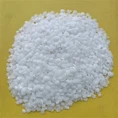
Mag Nitrate, chemically known as magnesium nitrate, has the formula (Mg(NO_3)_2). It is an inorganic compound that exists in various hydrated forms, with the hexahydrate (Mg(NO_3)_2\cdot6H_2O) being the most common. Mag Nitrate is highly soluble in water and has a relatively high decomposition temperature. When heated, it decomposes to release nitrogen oxides and form magnesium oxide.
These chemical properties make Mag Nitrate an interesting candidate for catalyst production. The decomposition products, especially magnesium oxide, are known to have catalytic properties in certain reactions. Magnesium oxide is a basic oxide, and its surface basicity can play a crucial role in catalyzing reactions that involve acid - base interactions.

Potential Catalytic Applications
-
Oxidation Reactions

- In oxidation reactions, catalysts are used to facilitate the transfer of oxygen atoms to the reactants. Mag Nitrate can potentially be used as a precursor to form magnesium - based catalysts. When Mag Nitrate decomposes, it can form magnesium oxide nanoparticles with high surface area. These nanoparticles can act as active sites for oxidation reactions. For example, in the oxidation of volatile organic compounds (VOCs), magnesium - based catalysts derived from Mag Nitrate may be able to adsorb and activate oxygen molecules, promoting the oxidation of VOCs to carbon dioxide and water.
-
Esterification Reactions
- Esterification is a reaction between an alcohol and a carboxylic acid to form an ester and water. Basic catalysts can enhance the rate of this reaction by deprotonating the alcohol, making it more reactive. Magnesium oxide, which can be obtained from the thermal decomposition of Mag Nitrate, has basic sites on its surface. These basic sites can act as catalysts in esterification reactions, increasing the yield of esters.
-
Hydrogenation Reactions
- Hydrogenation reactions involve the addition of hydrogen to unsaturated compounds. Some metal - magnesium composite catalysts derived from Mag Nitrate may have the potential to catalyze hydrogenation reactions. For instance, by combining magnesium with other transition metals during the catalyst preparation process using Mag Nitrate as a magnesium source, the resulting catalyst may have unique electronic and geometric properties that can promote hydrogenation reactions.
Existing Research and Studies
Numerous research studies have explored the use of magnesium - based materials in catalysis, and Mag Nitrate has been an important starting material in many of these investigations.
A study published in the Journal of Catalysis demonstrated that magnesium oxide nanoparticles prepared from Mag Nitrate showed excellent catalytic activity in the epoxidation of olefins. The researchers found that the surface properties of the magnesium oxide, such as its basicity and porosity, could be tuned by controlling the preparation conditions of Mag Nitrate decomposition. This allowed for the optimization of the catalyst for specific epoxidation reactions.
Another research group investigated the use of magnesium - based catalysts in the steam reforming of methane. They prepared catalysts using Mag Nitrate as a precursor and found that the addition of magnesium could enhance the stability and activity of the catalyst. The magnesium species in the catalyst were able to interact with the support material and the reactants, improving the catalytic performance.

Advantages of Using Mag Nitrate in Catalyst Production
- Cost - effectiveness
- Mag Nitrate is relatively inexpensive compared to some other metal salts used in catalyst production. As a supplier, I can offer Mag Nitrate at competitive prices, which can significantly reduce the production cost of catalysts, especially for large - scale applications.
- Controllable Properties
- The properties of the catalysts derived from Mag Nitrate can be easily controlled. By adjusting the decomposition conditions of Mag Nitrate, such as temperature, heating rate, and atmosphere, the morphology, crystal structure, and surface properties of the resulting magnesium - based catalysts can be tailored to meet the requirements of different catalytic reactions.
- Environmental Friendliness
- Magnesium is an abundant and non - toxic element. Catalysts derived from Mag Nitrate are generally considered to be more environmentally friendly compared to some catalysts that contain heavy metals. This makes them a more sustainable choice for industrial applications.
Challenges and Limitations
- Catalyst Activation and Regeneration
- Some magnesium - based catalysts derived from Mag Nitrate may require specific activation procedures to achieve optimal catalytic activity. Additionally, the regeneration of these catalysts after use can be challenging. The deactivation of the catalyst due to coke deposition or poisoning needs to be addressed through proper regeneration methods.
- Reaction Specificity
- While Mag Nitrate - derived catalysts show potential in various reactions, they may not be as effective in all types of catalytic reactions. The catalytic activity and selectivity of these catalysts are highly dependent on the reaction conditions and the nature of the reactants. Therefore, careful optimization is required for each specific reaction.
Conclusion
In conclusion, Mag Nitrate has significant potential in the production of catalysts. Its chemical properties, such as the ability to form magnesium oxide with catalytic activity, make it a promising precursor for various catalytic applications. Existing research has demonstrated its effectiveness in oxidation, esterification, and hydrogenation reactions. The advantages of cost - effectiveness, controllable properties, and environmental friendliness further enhance its appeal.

However, there are also challenges and limitations that need to be addressed, such as catalyst activation and reaction specificity. As a Mag Nitrate supplier, I am committed to working with researchers and manufacturers to overcome these challenges and explore the full potential of Mag Nitrate in catalyst production.
If you are interested in using [Mag Nitrate]((/nitrogen-fertilizer/nitrate-of-magnesium/mag-nitrate.html) for catalyst production or have any questions about our [Magnesium Magnesium Nitrate]((/nitrogen-fertilizer/nitrate-of-magnesium/magnesium-magnesium-nitrate.html) or [Magnesium Nitrate Fertilizer]((/nitrogen-fertilizer/nitrate-of-magnesium/magnesium-nitrate-fertilizer.html), please feel free to contact us for further discussion and potential procurement opportunities.
References
- Journal of Catalysis study on olefin epoxidation using magnesium oxide nanoparticles from Mag Nitrate.
- Research on steam reforming of methane using magnesium - based catalysts prepared from Mag Nitrate.