




Hey there! As a supplier of Magnesium II Nitrate, I often get asked about how it reacts with halogens. It's a super interesting topic, so I thought I'd share some insights in this blog.
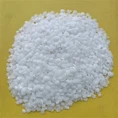
First off, let's quickly talk about Magnesium II Nitrate. You can learn more about it on this page Magnesium II Nitrate. Magnesium II Nitrate, with the chemical formula Mg(NO₃)₂, is a white crystalline solid that's quite soluble in water. It's used in a bunch of different industries, and one of its cool applications is in agriculture. Check out Magnesium Nitrate Uses in Agriculture to see how it helps plants grow better.
Now, let's dive into the reactions with halogens. Halogens are a group of elements in the periodic table, including fluorine (F), chlorine (Cl), bromine (Br), iodine (I), and astatine (At). For the sake of this discussion, we'll focus on the more common ones: fluorine, chlorine, bromine, and iodine.


Reaction with Fluorine
Fluorine is the most reactive halogen. When Magnesium II Nitrate reacts with fluorine, it's a pretty intense reaction. Fluorine has a strong tendency to gain electrons and form fluoride ions. In the presence of Magnesium II Nitrate, the nitrate ions (NO₃⁻) and the magnesium ions (Mg²⁺) in the compound interact with the highly reactive fluorine.
The reaction can be written as follows:
Mg(NO₃)₂ + F₂ → MgF₂ + 2NO₂ + O₂
In this reaction, magnesium nitrate reacts with fluorine gas to form magnesium fluoride (MgF₂), nitrogen dioxide (NO₂), and oxygen gas (O₂). Magnesium fluoride is a white solid that's insoluble in water. The nitrogen dioxide is a reddish - brown gas, which you can easily spot if the reaction is taking place in an open container.
This reaction is highly exothermic, meaning it releases a lot of heat. You have to be really careful when dealing with this reaction in a lab setting because the heat can cause the reaction to go out of control if not properly managed.
Reaction with Chlorine
Chlorine is also a reactive halogen, but not as reactive as fluorine. When Magnesium II Nitrate reacts with chlorine gas, the reaction is a bit more complex.
The overall reaction might look something like this:
Mg(NO₃)₂ + Cl₂ → MgCl₂ + 2NO₂ + 1/2O₂
Here, magnesium nitrate reacts with chlorine gas to form magnesium chloride (MgCl₂), nitrogen dioxide, and oxygen gas. Magnesium chloride is a white crystalline solid that's highly soluble in water.
The reaction doesn't happen as readily as the reaction with fluorine. You might need to heat the mixture a bit to get the reaction going. Once it starts, though, it can proceed at a decent pace. The chlorine atoms replace the nitrate groups in the magnesium nitrate molecule, forming magnesium chloride and releasing nitrogen dioxide and oxygen.
Reaction with Bromine
Bromine is a liquid at room temperature, and it's less reactive than chlorine. When Magnesium II Nitrate comes into contact with bromine, the reaction is relatively slow.
The possible reaction could be:
Mg(NO₃)₂ + Br₂ → MgBr₂ + 2NO₂ + 1/2O₂
In this reaction, bromine replaces the nitrate groups in magnesium nitrate to form magnesium bromide (MgBr₂), nitrogen dioxide, and oxygen. Magnesium bromide is a white solid that's also soluble in water.
To make this reaction happen, you may need to provide some energy, like gentle heating. The reaction rate is much slower compared to the reactions with fluorine and chlorine. You'll notice that the color of the bromine might start to fade as it reacts with the magnesium nitrate.
Reaction with Iodine
Iodine is a solid at room temperature, and it's the least reactive of the common halogens. The reaction between Magnesium II Nitrate and iodine is very slow and might not occur under normal conditions without some external influence.
Even if you try to heat the mixture of magnesium nitrate and iodine, the reaction is still difficult to initiate. The iodine atoms have a relatively low tendency to replace the nitrate groups in the magnesium nitrate molecule.
If a reaction were to occur, it would be similar to the previous reactions:
Mg(NO₃)₂ + I₂ → MgI₂ + 2NO₂ + 1/2O₂
Magnesium iodide (MgI₂) is a white solid that's soluble in water. But in reality, getting this reaction to happen in a significant way is quite a challenge.
Practical Applications and Significance
These reactions between Magnesium II Nitrate and halogens are not just interesting from a chemical perspective; they also have some practical applications.
In the chemical industry, these reactions can be used to synthesize different magnesium halides. Magnesium halides are used in various processes, such as in the production of magnesium metal and in some organic synthesis reactions.
In the field of agriculture, as I mentioned earlier, Magnesium Nitrate Fertilizer is an important product. Understanding the reactions with halogens can help in ensuring the stability and effectiveness of the fertilizer. For example, if there are traces of halogens in the soil or in the water used for irrigation, knowing how they react with magnesium nitrate can help farmers and agricultural scientists make better decisions about fertilization.
Conclusion
Well, that's a wrap on how Magnesium II Nitrate reacts with halogens. As you can see, the reactivity of the halogens plays a big role in determining how easily the reactions occur. Fluorine is the most reactive and causes a very intense reaction, while iodine is the least reactive and has a hard time reacting with magnesium nitrate.
If you're in the business of using Magnesium II Nitrate in your chemical processes or in agriculture, and you have any questions about these reactions or want to discuss purchasing high - quality Magnesium II Nitrate, feel free to reach out. I'm always here to help and can provide you with the best products and advice.
References
- Atkins, P. W., & de Paula, J. (2014). Physical Chemistry. Oxford University Press.
- Chang, R. (2010). Chemistry. McGraw - Hill Education.
- Housecroft, C. E., & Sharpe, A. G. (2012). Inorganic Chemistry. Pearson Education.