


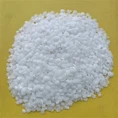


Potassium carbonate (K₂CO₃) is a vital inorganic compound with a wide range of applications across different industries. As a trusted supplier of Potassium Carbonate K2CO3, I'm excited to delve into the chemical reaction between potassium carbonate and hydrochloric acid (HCl). Understanding this reaction not only provides insights into the chemical properties of potassium carbonate but also has practical implications in various industrial processes.
The Chemical Reaction
When potassium carbonate reacts with hydrochloric acid, a classic acid - base reaction occurs. The general chemical equation for this reaction is as follows:
K₂CO₃(aq) + 2HCl(aq) → 2KCl(aq) + H₂O(l) + CO₂(g)
Let's break down this reaction step by step to understand what happens at the molecular level.
Step 1: Ionization in Solution
Both potassium carbonate and hydrochloric acid are strong electrolytes, which means they dissociate completely in aqueous solutions. Potassium carbonate dissociates into potassium ions (K⁺) and carbonate ions (CO₃²⁻):
K₂CO₃(s) → 2K⁺(aq) + CO₃²⁻(aq)
Hydrochloric acid dissociates into hydrogen ions (H⁺) and chloride ions (Cl⁻):
HCl(aq) → H⁺(aq) + Cl⁻(aq)
Step 2: Protonation of Carbonate Ions
The hydrogen ions from hydrochloric acid react with the carbonate ions from potassium carbonate. The carbonate ion is a base, and it can accept protons (H⁺). Initially, the carbonate ion accepts one proton to form the bicarbonate ion (HCO₃⁻):
CO₃²⁻(aq) + H⁺(aq) → HCO₃⁻(aq)
However, the bicarbonate ion is also a base and can accept another proton. So, it reacts with a second hydrogen ion to form carbonic acid (H₂CO₃):
HCO₃⁻(aq) + H⁺(aq) → H₂CO₃(aq)
Step 3: Decomposition of Carbonic Acid
Carbonic acid is unstable and decomposes readily into water and carbon dioxide gas:
H₂CO₃(aq) → H₂O(l) + CO₂(g)
Step 4: Formation of Potassium Chloride
The potassium ions (K⁺) from potassium carbonate and the chloride ions (Cl⁻) from hydrochloric acid remain in the solution and combine to form potassium chloride (KCl), which is a soluble salt:
K⁺(aq) + Cl⁻(aq) → KCl(aq)
Observable Signs of the Reaction
When potassium carbonate reacts with hydrochloric acid, several observable signs indicate that a chemical reaction is taking place:
Gas Evolution
One of the most noticeable signs is the evolution of carbon dioxide gas. As the carbonic acid decomposes, bubbles of carbon dioxide are released from the solution. This gas can be tested by passing it through limewater (calcium hydroxide solution), which turns milky due to the formation of calcium carbonate precipitate:
Ca(OH)₂(aq) + CO₂(g) → CaCO₃(s) + H₂O(l)


Temperature Change
The reaction between potassium carbonate and hydrochloric acid is exothermic, which means it releases heat. As the reaction proceeds, the temperature of the solution increases. This is because the formation of new chemical bonds in the products (water, carbon dioxide, and potassium chloride) releases more energy than is required to break the bonds in the reactants.
Dissolution of Solid Potassium Carbonate
If solid potassium carbonate is used in the reaction, it will gradually dissolve in the hydrochloric acid solution as the reaction progresses. This is because the carbonate ions react with the hydrogen ions, and the potassium ions remain in the solution as potassium chloride.
Factors Affecting the Reaction Rate
The rate at which potassium carbonate reacts with hydrochloric acid can be influenced by several factors:
Concentration of Reactants
Increasing the concentration of either potassium carbonate or hydrochloric acid will increase the reaction rate. This is because a higher concentration means there are more reactant particles per unit volume, which increases the frequency of collisions between the particles and thus the likelihood of a successful reaction.
Temperature
As mentioned earlier, the reaction is exothermic. However, increasing the temperature still increases the reaction rate. This is because at higher temperatures, the reactant particles have more kinetic energy, which means they move faster and collide more frequently and with greater energy. As a result, more collisions have enough energy to overcome the activation energy barrier and lead to a reaction.
Surface Area of Potassium Carbonate
If solid potassium carbonate is used, increasing its surface area will increase the reaction rate. This is because a larger surface area provides more contact between the solid and the hydrochloric acid solution, allowing for more frequent collisions between the reactant particles.
Industrial Applications
The reaction between potassium carbonate and hydrochloric acid has several industrial applications:
Production of Potassium Chloride
Potassium chloride is an important industrial chemical used in the production of fertilizers, pharmaceuticals, and food additives. The reaction between potassium carbonate and hydrochloric acid provides a convenient way to produce potassium chloride on an industrial scale.
pH Adjustment
In some industrial processes, it is necessary to adjust the pH of a solution. The reaction between potassium carbonate and hydrochloric acid can be used to control the pH of a solution. By adding potassium carbonate to an acidic solution containing hydrochloric acid, the carbonate ions react with the hydrogen ions, reducing the acidity of the solution.
Cleaning and Descaling
Potassium carbonate can be used in cleaning and descaling applications. When it reacts with hydrochloric acid in a cleaning solution, the carbon dioxide gas produced can help to dislodge dirt and scale from surfaces. The potassium chloride formed in the reaction is also a mild cleaning agent.
Our Potassium Carbonate Products
As a leading supplier of Potassium Carbonate K2CO3, we offer a wide range of high - quality potassium carbonate products to meet the diverse needs of our customers. Our Anhydrous Potassium Carbonate is a pure and highly reactive form of potassium carbonate, which is ideal for applications where a dry and stable product is required.
We also provide detailed information on Potassium Carbonate Uses to help our customers make informed decisions about the best product for their specific applications. Our team of experts is always available to provide technical support and advice on the use of potassium carbonate in various chemical reactions, including its reaction with hydrochloric acid.
Conclusion
The reaction between potassium carbonate and hydrochloric acid is a fascinating chemical process with many practical applications. By understanding the reaction mechanism, observable signs, factors affecting the reaction rate, and industrial applications, we can better utilize this reaction in various industries.
If you are interested in purchasing high - quality potassium carbonate for your industrial or research needs, please feel free to contact us. We are committed to providing our customers with the best products and services, and we look forward to discussing your requirements and potential partnerships.
References
- Atkins, P., & de Paula, J. (2014). Physical Chemistry. Oxford University Press.
- Brown, T. L., LeMay, H. E., Bursten, B. E., Murphy, C. J., Woodward, P. M., & Stoltzfus, M. W. (2018). Chemistry: The Central Science. Pearson.
- Housecroft, C. E., & Sharpe, A. G. (2012). Inorganic Chemistry. Pearson.