


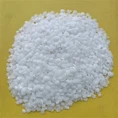


Potassium nitrite (KNO₂) is a versatile inorganic compound with a wide range of applications, including in the field of mineral extraction. As a leading supplier of potassium nitrite products such as Nitrite Potassium and Potassium Nitrite Crystal, we have witnessed firsthand its significant role in the mining and mineral processing industries. In this blog, we will explore how potassium nitrite assists in the extraction of minerals and why it is a valuable addition to mineral extraction processes.
1. Chemical Properties of Potassium Nitrite
Before delving into its role in mineral extraction, it is essential to understand the chemical properties of potassium nitrite. Potassium nitrite is a yellowish - white crystalline solid that is highly soluble in water. It is a strong oxidizing agent and can react with various substances under different conditions. The nitrite ion (NO₂⁻) in potassium nitrite is a key component in many chemical reactions, and its redox properties are particularly important in mineral extraction processes.
2. Oxidation and Reduction Reactions in Mineral Extraction
One of the primary ways potassium nitrite assists in mineral extraction is through oxidation - reduction (redox) reactions. Many minerals exist in nature in reduced forms, and to extract the valuable metals or elements from them, oxidation is often required. Potassium nitrite can act as an oxidizing agent in these processes.
For example, in the extraction of certain metals from sulfide ores, the sulfide minerals need to be oxidized to convert them into more easily processed forms. Potassium nitrite can react with metal sulfides, oxidizing the sulfur in the sulfide to sulfate ions (SO₄²⁻) and releasing the metal ions. The general reaction for the oxidation of a metal sulfide (MS) by potassium nitrite can be represented as follows:
MS + 2KNO₂ + 2H₂O → M²⁺+ SO₄²⁻+ 2K⁺+ 2NO + 4OH⁻


This reaction not only helps in the liberation of the metal ions but also makes it easier to separate the metal from the ore matrix. The oxidized metal ions can then be further processed through techniques such as precipitation, solvent extraction, or electrolysis to obtain the pure metal.
3. Complex Formation
Potassium nitrite can also participate in complex - formation reactions during mineral extraction. Many metal ions can form complexes with the nitrite ion. These complexes have different solubility and reactivity compared to the free metal ions, which can be exploited in the extraction process.
For instance, some transition metals can form stable nitrite complexes. These complexes can be selectively extracted from the ore solution using appropriate solvents or by adjusting the pH of the solution. The formation of complexes can also help in the separation of different metals present in the ore. If two or more metals form complexes with different stabilities, it is possible to separate them by controlling the reaction conditions, such as the concentration of potassium nitrite and the pH of the solution.
4. Leaching Enhancement
Leaching is a common method used in mineral extraction, where a solvent is used to dissolve the valuable components from the ore. Potassium nitrite can enhance the leaching process in several ways.
Firstly, as an oxidizing agent, it can break down the ore matrix and expose more of the target minerals to the leaching solution. This increases the surface area available for the leaching reaction and improves the efficiency of the process. Secondly, the redox reactions involving potassium nitrite can change the chemical environment of the leaching solution, making it more favorable for the dissolution of the target minerals.
For example, in the leaching of uranium from its ores, potassium nitrite can be used to oxidize the uranium from its lower oxidation states (U⁴⁺) to the more soluble U⁶⁺ state. This oxidation reaction makes it easier for the uranium to dissolve in the leaching solution, which is typically an acidic or alkaline solution.
5. Selective Dissolution
In some cases, potassium nitrite can be used to achieve selective dissolution of certain minerals in an ore. Different minerals have different reactivities with potassium nitrite, and by carefully controlling the reaction conditions, it is possible to dissolve only the target minerals while leaving other unwanted minerals in the solid residue.
This selective dissolution is particularly useful in the extraction of valuable minerals from complex ores that contain multiple types of minerals. For example, in an ore that contains both a valuable metal sulfide and some gangue minerals (minerals that are not of economic value), potassium nitrite can be used to selectively oxidize and dissolve the metal sulfide, leaving the gangue minerals intact. This simplifies the subsequent separation and purification steps.
6. pH Regulation
The pH of the solution in a mineral extraction process is crucial as it can affect the solubility of minerals, the stability of complexes, and the rate of chemical reactions. Potassium nitrite can influence the pH of the solution through its chemical reactions.
When potassium nitrite reacts with water, it can undergo hydrolysis to produce nitrous acid (HNO₂) and hydroxide ions (OH⁻). The nitrous acid can then further dissociate in the solution, affecting the overall pH. By adjusting the amount of potassium nitrite added to the extraction solution, it is possible to control the pH within a desired range.
For example, in some leaching processes, a specific pH range is required for optimal dissolution of the target minerals. Potassium nitrite can be used to adjust the pH to this range, ensuring that the leaching reaction proceeds efficiently.
7. Safety and Handling Considerations
While potassium nitrite is a valuable reagent in mineral extraction, it is important to handle it with care. Potassium nitrite is toxic and can be harmful if inhaled, ingested, or comes into contact with the skin. It is also a strong oxidizing agent and can pose a fire and explosion hazard if not stored and used properly.
We provide Potassium Nitrite SDS to our customers, which contains detailed information about the safety, handling, storage, and emergency procedures for potassium nitrite. It is essential for all personnel involved in the mineral extraction processes using potassium nitrite to be familiar with the safety data sheet and follow the recommended safety practices.
8. Conclusion and Call to Action
In conclusion, potassium nitrite plays a vital role in mineral extraction through oxidation - reduction reactions, complex formation, leaching enhancement, selective dissolution, and pH regulation. Its unique chemical properties make it a valuable tool in the mining and mineral processing industries.
As a reliable supplier of high - quality potassium nitrite products, we are committed to providing our customers with the best - in - class materials and technical support. Whether you are involved in large - scale industrial mining operations or research - based mineral extraction projects, our potassium nitrite products can meet your specific needs.
If you are interested in learning more about how our potassium nitrite products can assist in your mineral extraction processes or if you would like to discuss potential purchasing options, please feel free to contact us. We look forward to the opportunity to work with you and contribute to the success of your mineral extraction endeavors.
References
- Cotton, F. A., & Wilkinson, G. (1988). Advanced Inorganic Chemistry. John Wiley & Sons.
- Kirk - Othmer Encyclopedia of Chemical Technology. Wiley.
- Mineral Processing and Extractive Metallurgy Handbook, 2nd Edition. CRC Press.