


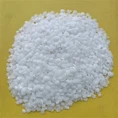


Hey there! As a supplier of nitrate of magnesium, I often get asked about how this stuff is made. So, I thought I'd take a deep - dive into the industrial production processes of nitrate of magnesium and share it with you all.
1. Starting Materials
The first step in making nitrate of magnesium is to gather the right starting materials. We typically use magnesium carbonate (MgCO₃), magnesium hydroxide (Mg(OH)₂), or magnesium oxide (MgO) as the magnesium source. For the nitrate part, nitric acid (HNO₃) is the go - to chemical. These raw materials are readily available in the market, and their quality can greatly impact the final product.
2. The Reaction Process
Once we have our starting materials, it's time for the chemical reaction. The most common way to produce nitrate of magnesium is by reacting magnesium compounds with nitric acid.
Reaction with Magnesium Oxide
When magnesium oxide reacts with nitric acid, the chemical equation looks like this:
MgO + 2HNO₃ → Mg(NO₃)₂+ H₂O
We add magnesium oxide gradually to a solution of nitric acid. The reaction is exothermic, which means it releases heat. We have to be careful during this process to control the temperature. If the temperature gets too high, it can cause the nitric acid to evaporate and also lead to some side - reactions. We usually do this in a well - equipped reaction vessel with proper cooling systems.
Reaction with Magnesium Hydroxide
The reaction between magnesium hydroxide and nitric acid is as follows:
Mg(OH)₂+ 2HNO₃ → Mg(NO₃)₂+ 2H₂O
Similar to the reaction with magnesium oxide, we slowly add magnesium hydroxide to the nitric acid solution. The advantage of using magnesium hydroxide is that it's a bit more stable and easier to handle compared to magnesium oxide in some cases.
Reaction with Magnesium Carbonate
The reaction of magnesium carbonate with nitric acid is given by:
MgCO₃+ 2HNO₃ → Mg(NO₃)₂+ H₂O + CO₂↑
This reaction produces carbon dioxide gas, which bubbles out of the solution. We need to have proper ventilation in the reaction area to get rid of the carbon dioxide. And again, we control the addition rate of magnesium carbonate to manage the reaction heat and the evolution of carbon dioxide.
3. Purification
After the reaction is complete, the resulting solution of magnesium nitrate contains some impurities. These impurities can come from the raw materials or from side - reactions. To get a high - quality product, we need to purify the solution.
One common purification method is filtration. We pass the solution through a filter to remove any solid particles. Then, we might use techniques like crystallization. We cool the solution slowly, and as the temperature drops, magnesium nitrate starts to crystallize out. The crystals are then separated from the remaining solution, which is called the mother liquor.
We can also use ion - exchange resins to remove any unwanted ions in the solution. These resins have a special property that allows them to selectively bind to certain ions and remove them from the solution. This helps in getting a very pure form of magnesium nitrate.
4. Drying and Packaging
Once we have the purified magnesium nitrate crystals, the next step is drying. We use drying equipment to remove any remaining moisture from the crystals. The drying process is crucial because if there's too much moisture, it can cause the product to clump together during storage.
After drying, we package the magnesium nitrate in suitable containers. We use different types of packaging depending on the customer's requirements. For small - scale customers, we might use bags, while for large - scale industrial customers, we use bulk containers.
Applications of Magnesium Nitrate
Magnesium nitrate has a wide range of applications. One of the most important applications is in agriculture. You can learn more about Magnesium Nitrate Uses in Agriculture. In agriculture, it's used as a fertilizer. It provides both magnesium and nitrogen to the plants, which are essential nutrients for their growth.


There's also a specific form called Magnesium Nitrate Hexahydrate. This form has six water molecules in its crystal structure and is used in some chemical processes and in the production of certain types of explosives.
On the whole, Magnesium Nitrate Fertilizer is quite popular in the market due to its effectiveness in improving soil fertility and plant growth.
Why Choose Our Nitrate of Magnesium
As a supplier, we take pride in the quality of our nitrate of magnesium. We follow strict quality control measures at every step of the production process. From the selection of raw materials to the final packaging, we make sure that our product meets the highest standards.
Our production facilities are state - of - the - art, and our team of experts has years of experience in the chemical industry. We can customize the product according to your specific needs, whether you need a certain purity level or a particular packaging size.
If you're in the market for high - quality nitrate of magnesium, whether for agricultural use or other industrial applications, we'd love to have a chat with you. We can provide you with samples so you can test the product before making a large - scale purchase. And we're always open to negotiating the price and delivery terms to meet your requirements.
So, if you're interested in buying nitrate of magnesium, don't hesitate to reach out. We're here to help you get the best product for your needs. Let's start a conversation and see how we can work together to make your projects a success.
References
- Smith, J. W. (2018). Chemical Processes in the Production of Inorganic Salts. New York: Chemical Press.
- Johnson, A. R. (2020). Agricultural Fertilizers: Types and Applications. London: Agri - Science Publishers.