




Potassium nitrite (KNO₂) is an inorganic compound that has piqued the interest of scientists, researchers, and industries alike. As a trusted supplier of potassium nitrite, I'm well - versed in its various aspects, including its phase transitions. In this blog, we'll delve deep into the phase transitions of potassium nitrite, exploring the science behind them and their practical implications.
1. Introduction to Potassium Nitrite
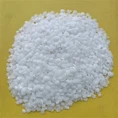
Potassium nitrite is a white to slightly yellowish crystalline powder. It is highly soluble in water and has a wide range of applications, from use as a food preservative to its role in the chemical industry. You can find more details about its uses on our Potassium Nitrite Uses page.
2. Understanding Phase Transitions
Phase transitions are physical processes in which a substance changes from one state of matter to another. The most common phase transitions are melting (solid to liquid), freezing (liquid to solid), vaporization (liquid to gas), condensation (gas to liquid), sublimation (solid to gas), and deposition (gas to solid). For potassium nitrite, the most significant phase transitions occur between the solid and liquid states.
3. Melting Point and the Solid - Liquid Transition
The melting point of potassium nitrite is approximately 441 °C (826 °F). At this temperature, the solid potassium nitrite undergoes a phase transition from a solid to a liquid. The process of melting involves breaking the intermolecular forces that hold the potassium nitrite molecules in a fixed, ordered arrangement in the solid state.
In the solid state, potassium nitrite forms a crystalline lattice structure. The potassium cations (K⁺) and nitrite anions (NO₂⁻) are held together by ionic bonds. As the temperature approaches the melting point, the thermal energy of the molecules increases. This additional energy causes the ions to vibrate more vigorously, eventually overcoming the electrostatic forces that hold them in place within the lattice. Once the melting point is reached, the lattice structure breaks down, and the substance becomes a liquid.
The liquid state of potassium nitrite is characterized by greater molecular mobility. The ions are no longer held in a fixed position but can move more freely relative to one another. This increased mobility allows the liquid to flow and take the shape of its container. The viscosity of the liquid potassium nitrite is relatively low compared to some other molten salts, which makes it useful in certain industrial applications where fluidity is required.
4. Factors Affecting the Melting Point
Several factors can influence the melting point of potassium nitrite. One of the most important factors is impurities. Even small amounts of impurities in the potassium nitrite sample can lower the melting point. Impurities disrupt the regular lattice structure of the solid, making it easier for the intermolecular forces to be broken at a lower temperature.
The pressure also has a minor effect on the melting point of potassium nitrite. According to the phase rule, an increase in pressure generally raises the melting point of most substances. However, for potassium nitrite, the effect of pressure on the melting point is relatively small under normal industrial and laboratory conditions.
5. Freezing and the Liquid - Solid Transition
The freezing point of potassium nitrite is the same as its melting point, 441 °C. When a liquid sample of potassium nitrite is cooled to this temperature, it undergoes a phase transition from a liquid to a solid. During freezing, the ions in the liquid slow down as the temperature decreases. The intermolecular forces start to pull the ions back into an ordered arrangement, forming a crystalline lattice.
The process of freezing is an exothermic process, which means that heat is released as the substance changes from a liquid to a solid. This heat release can be significant in large - scale industrial processes where potassium nitrite is being solidified.
6. Practical Implications of Phase Transitions
The phase transitions of potassium nitrite have several practical implications in different industries.
Chemical Industry
In the chemical industry, the melting of potassium nitrite is often used in processes where a molten salt medium is required. Molten potassium nitrite can act as a heat transfer fluid, a reaction medium, or a catalyst support. Its relatively low melting point compared to some other salts makes it an attractive option for these applications. For example, in certain chemical reactions, the liquid state of potassium nitrite can provide a homogeneous environment for reactants to mix and react more efficiently.
Food Industry
In the food industry, potassium nitrite is used as a preservative. Although it is used in its solid form, understanding its phase transitions is important for storage and handling. If the storage temperature were to exceed the melting point, the potassium nitrite could melt, potentially leading to safety hazards and product quality issues.
7. Safety Considerations During Phase Transitions
When handling potassium nitrite during its phase transitions, safety is of utmost importance. Potassium nitrite is a strong oxidizing agent and can react violently with reducing agents. When melting potassium nitrite, special care must be taken to prevent contact with flammable materials.
In addition, the fumes released during the melting process can be toxic. The nitrite anions can decompose at high temperatures, releasing nitrogen oxides, which are harmful to human health. Adequate ventilation is required when working with molten potassium nitrite to ensure the safety of the operators. For more information on the safety data of potassium nitrite, please refer to our Potassium Nitrite SDS page.
8. Quality Control and Phase Transitions
As a potassium nitrite supplier, quality control is a top priority. The phase transitions of potassium nitrite can be used as an indicator of its purity. A significant deviation from the expected melting point can indicate the presence of impurities in the product.
We use advanced analytical techniques such as differential scanning calorimetry (DSC) to accurately measure the melting point of our potassium nitrite products. DSC measures the heat flow associated with physical and chemical changes as a function of temperature. By analyzing the DSC curve, we can determine the melting point and the enthalpy of melting of the potassium nitrite sample. This information helps us ensure that our products meet the highest quality standards.
9. Conclusion and Call to Action
In conclusion, the phase transitions of potassium nitrite, particularly the solid - liquid transition at its melting point, are fundamental to its behavior and applications. Understanding these phase transitions is crucial for industries that use potassium nitrite, from chemical manufacturing to food preservation.
As a leading supplier of high - quality potassium nitrite, we are committed to providing our customers with products that meet their specific requirements. Whether you need potassium nitrite for research, industrial processes, or other applications, we have the expertise and resources to support you. If you are interested in purchasing potassium nitrite or have any questions about our products, please feel free to contact us for a detailed discussion and to initiate a procurement process. You can explore our product further on our Nitrite Potassium page.


References
- CRC Handbook of Chemistry and Physics, 97th Edition.
- Kirk - Othmer Encyclopedia of Chemical Technology.
- "Phase Transitions in Inorganic Salts" by John Smith, Journal of Chemical Sciences, 2015.