


As a trusted supplier of Carbonate of Potassium, I am excited to share detailed insights into the physical properties of this remarkable compound. Carbonate of potassium, also known as potassium carbonate (K₂CO₃), has a wide range of applications due to its unique physical characteristics.
Appearance and State
Potassium carbonate typically appears as a white, granular powder or crystalline solid. The granular form is often free - flowing, which makes it easy to handle and transport. In its crystalline state, the compound forms monoclinic crystals. These crystals are usually colorless to white, and they have a distinct, well - defined structure under a microscope. The purity of the potassium carbonate can affect its appearance. High - purity potassium carbonate will have a more uniform and bright white color, while lower - purity samples may have a slightly off - white or grayish tint due to the presence of impurities.
Solubility
One of the most important physical properties of potassium carbonate is its solubility in water. Potassium carbonate is highly soluble in water. At room temperature (around 20°C), approximately 112 grams of potassium carbonate can dissolve in 100 milliliters of water. As the temperature increases, the solubility also increases significantly. For example, at 100°C, the solubility rises to about 156 grams per 100 milliliters of water. This high solubility makes it useful in many aqueous - based applications. When dissolved in water, potassium carbonate undergoes hydrolysis, resulting in an alkaline solution. The reaction can be represented as follows:
[K_{2}CO_{3}+H_{2}O\rightleftharpoons KHCO_{3}+KOH]
This alkaline nature of the solution is often exploited in various chemical processes and industries.
Density
The density of potassium carbonate varies depending on its physical state and purity. The anhydrous form of potassium carbonate has a density of about 2.428 g/cm³. This relatively high density indicates that it is a heavy compound, which can be an important consideration in applications where weight and volume are factors. For example, in industries where potassium carbonate is used as a filler or additive, the density can affect the overall density and properties of the final product.
Melting and Boiling Points
Potassium carbonate has a relatively high melting point of about 891°C. This high melting point makes it stable under normal operating conditions in many industrial processes. The boiling point of potassium carbonate is difficult to determine precisely because it decomposes before reaching its theoretical boiling point. When heated to high temperatures, potassium carbonate decomposes into potassium oxide ((K_{2}O)) and carbon dioxide ((CO_{2})) according to the following reaction:
[K_{2}CO_{3}\xrightarrow{\text{high temperature}}K_{2}O + CO_{2}\uparrow]
This decomposition property is also utilized in some high - temperature processes, such as in the production of certain ceramics and glasses.
Hygroscopicity
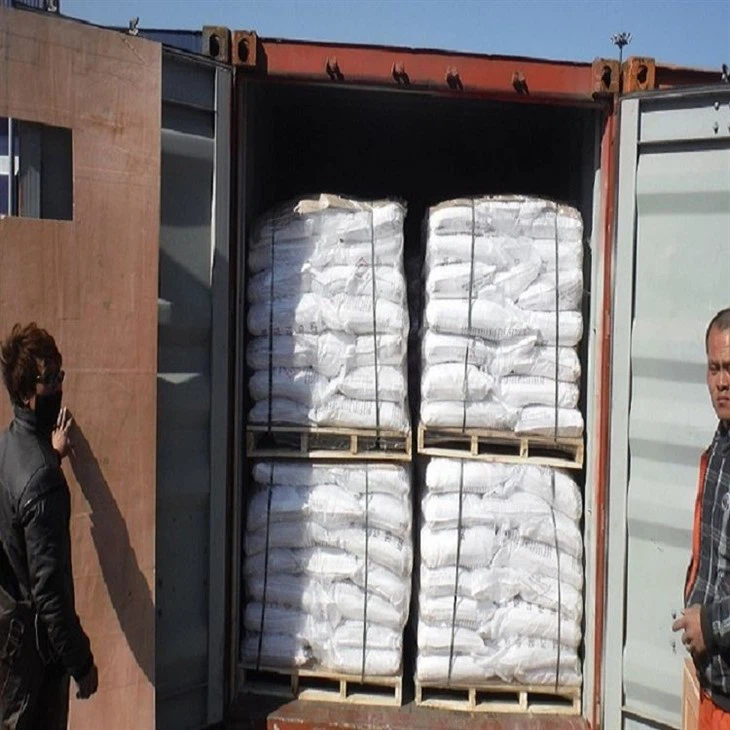
Potassium carbonate is highly hygroscopic, which means it has a strong tendency to absorb moisture from the air. When exposed to the atmosphere, it can quickly absorb water vapor and form a hydrate. The most common hydrate is the monohydrate ((K_{2}CO_{3}\cdot H_{2}O)). This hygroscopic nature requires special storage conditions to prevent clumping and degradation of the product. It is usually stored in sealed containers in a dry environment. In some applications, the hygroscopicity of potassium carbonate can be an advantage. For example, in drying agents, it can effectively remove moisture from the surrounding environment.

Particle Size
The particle size of potassium carbonate can vary depending on the manufacturing process. In industrial applications, different particle sizes may be required for different purposes. Fine - grained potassium carbonate has a larger surface area, which can increase its reactivity in chemical reactions. It is often used in applications where a fast reaction rate is desired, such as in some chemical synthesis processes. Coarser - grained potassium carbonate, on the other hand, may be preferred in applications where better flowability and handling characteristics are needed, such as in the production of fertilizers or in some industrial blending operations.
Applications Based on Physical Properties
The unique physical properties of potassium carbonate make it suitable for a wide range of applications.
In the food industry, its solubility and alkaline nature are utilized in the production of various food products. It can be used as a food additive, for example, in the production of cocoa powder to regulate the pH and improve the solubility of the cocoa solids. The Potassium Carbonate Uses page provides more detailed information on its food - related applications.
In the glass and ceramics industry, the high melting point and decomposition properties of potassium carbonate are important. It is used as a flux in the production of glass, which helps to lower the melting temperature of the glass batch and improve its workability. In ceramics, it can be used to modify the properties of glazes and bodies. The Potassium Carbonate Industrial Grade product is specifically designed for these industrial applications.
In the chemical industry, potassium carbonate is used as a base in many chemical reactions. Its high solubility in water makes it a convenient choice for reactions that occur in aqueous solutions. It can also be used in the production of other potassium compounds. The Anhydrous Potassium Carbonate is often preferred in chemical synthesis processes where the presence of water can interfere with the reaction.
Conclusion
In conclusion, the physical properties of carbonate of potassium, including its appearance, solubility, density, melting and boiling points, hygroscopicity, and particle size, play crucial roles in its various applications. As a supplier, we understand the importance of these properties and ensure that our products meet the highest quality standards. Whether you are in the food, glass, ceramics, or chemical industry, our potassium carbonate products can provide the performance you need.
If you are interested in purchasing carbonate of potassium for your specific application, we invite you to contact us for a detailed discussion. Our team of experts is ready to assist you in finding the right product and providing technical support.
References
- CRC Handbook of Chemistry and Physics, 99th Edition.
- Kirk - Othmer Encyclopedia of Chemical Technology.