


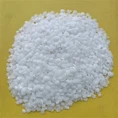


Hey there, folks! I'm a supplier of Carbonate Of Potassium, and today I wanna talk about the reactions of carbonate of potassium with metals. It's a pretty interesting topic, and I hope you'll find it useful, whether you're in the industry or just curious about chemistry.
First off, let's understand what carbonate of potassium is. Potassium carbonate, with the chemical formula K₂CO₃, is a white salt that's soluble in water. It's got a bunch of Potassium Carbonate Uses, like in the production of glass, soap, and even some food products. It's also used in the pharmaceutical and chemical industries.
Now, when we talk about the reactions of potassium carbonate with metals, things can get a bit complicated. Different metals react in different ways, and the conditions like temperature and pressure also play a big role.
Let's start with some of the common metals and how they react with potassium carbonate.
Reactions with Alkali Metals
Alkali metals, like sodium (Na) and potassium (K) themselves, are quite reactive. When it comes to potassium carbonate and potassium metal, in a high - temperature environment, there could be a redox reaction. The potassium carbonate might act as an oxidizing agent to some extent. The general idea is that there can be an exchange of electrons. But this reaction is quite energetic and needs to be carefully controlled. In normal conditions, though, direct reaction between potassium metal and potassium carbonate is rare because they're both stable in certain oxidation states.
For sodium, in a molten state, it can potentially react with potassium carbonate. The reaction might involve the sodium reducing some of the carbonate components. The heat helps break the chemical bonds in potassium carbonate, allowing sodium to come in and react. The products could be a mixture of sodium carbonate and some other by - products depending on the reaction conditions.
Reactions with Alkaline Earth Metals
Take magnesium (Mg) for example. When magnesium is heated with potassium carbonate, a reaction can occur. Magnesium is a relatively reactive metal. It can displace potassium from potassium carbonate under high - temperature conditions. The reaction is a type of displacement reaction. The magnesium atoms lose electrons and form magnesium ions, while the potassium ions in the carbonate gain electrons and can potentially form potassium metal. However, this reaction is not straightforward in practice because magnesium oxide can also form during the reaction due to the presence of oxygen in the carbonate structure. This magnesium oxide can act as a barrier and slow down the reaction.
Calcium (Ca) also shows some reactivity with potassium carbonate. When calcium is heated with potassium carbonate, similar to magnesium, a displacement reaction might take place. But calcium is more reactive than magnesium, so the reaction can be more vigorous. The products might include calcium carbonate and potassium metal or some potassium - containing compounds.
Reactions with Transition Metals
Let's talk about copper (Cu). Copper is a transition metal with multiple oxidation states. When copper is heated in the presence of potassium carbonate, a complex reaction can occur. At a moderate temperature, copper might react with the carbonate ions in potassium carbonate. The copper could form copper carbonate or copper oxide depending on the amount of oxygen available. If there's air present during the heating process, copper will likely oxidize further.
Iron (Fe) is another important transition metal. Iron can react with potassium carbonate in a high - temperature furnace environment. The reaction might lead to the formation of iron carbonate or iron oxides and potassium - containing products. The reactivity of iron depends on its oxidation state and the particle size. For example, finely divided iron powder might react more readily than a solid iron block.
Applications of These Reactions
The reactions of potassium carbonate with metals have some practical applications. In the metallurgical industry, these reactions can be used for metal purification. For instance, by using potassium carbonate to react with certain impurities in a metal, we can separate the impurities and get a purer metal.
In the production of alloys, these reactions can also play a role. The reaction products can affect the properties of the alloy, such as its hardness, ductility, and corrosion resistance.
If you're interested in getting Potassium Carbonate Powder or Potassium Carbonate Industrial Grade for your projects related to metal reactions or other applications, feel free to get in touch for more detailed information. I can provide you with high - quality carbonate of potassium and offer some advice on how to use it effectively.
Factors Affecting the Reactions
There are several factors that can affect the reactions between potassium carbonate and metals. Temperature is a crucial one. Higher temperatures generally increase the reaction rate because they provide more energy for the molecules to break their existing bonds and form new ones.
The particle size of the metal also matters. Finer metal particles have a larger surface area, which means more contact with the potassium carbonate. As a result, the reaction can proceed more quickly.
The presence of catalysts can also speed up the reactions. Some substances can lower the activation energy required for the reaction to start, making it happen more readily.
Safety Considerations
When dealing with the reactions of potassium carbonate with metals, safety is of utmost importance. Some of these reactions can be exothermic, meaning they release a large amount of heat. In extreme cases, this can lead to fires or explosions. So, proper ventilation and fire - prevention measures are essential.


Potassium carbonate is also a caustic substance. It can cause skin and eye irritation. When handling it, appropriate protective equipment like gloves and goggles should be worn.
Conclusion
In conclusion, the reactions of carbonate of potassium with metals are a fascinating area of study. Different metals have different reactivities with potassium carbonate, and the reaction outcomes can vary depending on many factors. Whether you're involved in the chemical industry, metallurgy, or just a chemistry enthusiast, understanding these reactions can be really valuable.
If you're in the market for high - quality carbonate of potassium for your projects, don't hesitate to reach out. I'm here to help you with your purchasing needs and provide any technical support you might require.
References
- Atkins, P. W., & de Paula, J. (2014). Physical Chemistry. Oxford University Press.
- Housecroft, C. E., & Sharpe, A. G. (2012). Inorganic Chemistry. Pearson Education.