


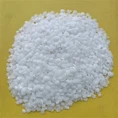


Hey there! As a supplier of Magnesium II Nitrate, I often get asked about its molar mass. So, let's dive right into it and break down what the molar mass of Magnesium II Nitrate is all about.
First off, let's talk about what Magnesium II Nitrate is. Magnesium II Nitrate, also known as magnesium nitrate, has the chemical formula Mg(NO₃)₂. It's a pretty useful compound with various applications, especially in the agricultural and chemical industries. If you want to learn more about it, check out this Magnesium II Nitrate page.
Now, to figure out the molar mass of Magnesium II Nitrate, we need to understand a bit about molar mass itself. Molar mass is basically the mass of one mole of a substance. A mole is just a unit that represents a specific number of particles (6.022 x 10²³, to be exact), kind of like how a dozen represents 12 items.
To calculate the molar mass of Mg(NO₃)₂, we need to add up the molar masses of all the atoms in the compound. Let's break it down step by step:
-
Magnesium (Mg): The molar mass of magnesium is approximately 24.305 g/mol. There's only one magnesium atom in Mg(NO₃)₂, so the contribution of magnesium to the total molar mass is 24.305 g/mol.
-
Nitrogen (N): The molar mass of nitrogen is about 14.007 g/mol. In the nitrate ion (NO₃⁻), there are two nitrate ions in Mg(NO₃)₂, and each nitrate ion contains one nitrogen atom. So, the total number of nitrogen atoms is 2. The contribution of nitrogen to the molar mass is 2 x 14.007 g/mol = 28.014 g/mol.
-
Oxygen (O): The molar mass of oxygen is around 15.999 g/mol. Each nitrate ion (NO₃⁻) has three oxygen atoms, and since there are two nitrate ions in Mg(NO₃)₂, the total number of oxygen atoms is 2 x 3 = 6. The contribution of oxygen to the molar mass is 6 x 15.999 g/mol = 95.994 g/mol.
Now, we just add up the contributions from each element:
Molar mass of Mg(NO₃)₂ = 24.305 g/mol (Mg) + 28.014 g/mol (N) + 95.994 g/mol (O)
Molar mass of Mg(NO₃)₂ = 148.313 g/mol
So, the molar mass of Magnesium II Nitrate is approximately 148.313 g/mol. This value is super important in chemistry because it helps us figure out how much of a substance we need for a particular reaction or process.
One of the common forms of magnesium nitrate that we supply is Magnesium Nitrate Hexahydrate Flakes. The hexahydrate form means that there are six water molecules associated with each formula unit of magnesium nitrate. The chemical formula for magnesium nitrate hexahydrate is Mg(NO₃)₂·6H₂O.
To calculate the molar mass of Mg(NO₃)₂·6H₂O, we need to add the molar mass of Mg(NO₃)₂ to the molar mass of six water molecules. The molar mass of water (H₂O) is approximately 18.015 g/mol. So, the contribution of six water molecules is 6 x 18.015 g/mol = 108.09 g/mol.
Adding this to the molar mass of Mg(NO₃)₂:
Molar mass of Mg(NO₃)₂·6H₂O = 148.313 g/mol (Mg(NO₃)₂) + 108.09 g/mol (6H₂O)
Molar mass of Mg(NO₃)₂·6H₂O = 256.403 g/mol
Magnesium nitrate, including its hexahydrate form, is widely used as a Magnesium Nitrate Fertilizer. It provides both magnesium and nitrogen to plants, which are essential nutrients for their growth and development. Magnesium is important for chlorophyll production, which is crucial for photosynthesis, while nitrogen is needed for the synthesis of proteins and other biomolecules.
In the chemical industry, magnesium nitrate is used in various processes, such as in the production of other magnesium compounds and as an oxidizing agent in some reactions.
If you're in the market for high - quality Magnesium II Nitrate or its related products, we're here to help. Whether you're an agricultural business looking to boost your crop yields or a chemical company in need of a reliable raw material, we can provide you with the products you need. We pride ourselves on offering top - notch quality and excellent customer service.


If you're interested in learning more or want to discuss a potential purchase, don't hesitate to reach out. We'd be more than happy to have a chat and work out the best solution for your needs.
In conclusion, understanding the molar mass of Magnesium II Nitrate and its hydrates is important for both scientific and practical reasons. It helps us in accurate chemical calculations and in using the compound effectively in different applications. So, if you have any more questions about molar mass or our products, feel free to drop us a line.
References
- Chang, R. (2010). Chemistry (10th ed.). McGraw - Hill.
- Brown, T. L., LeMay, H. E., Bursten, B. E., & Murphy, C. J. (2012). Chemistry: The Central Science (12th ed.). Pearson.