




Hey there! I'm a supplier of Magnesium II Nitrate, and I'm super stoked to dive into the reaction rates of this fascinating compound with common reagents.
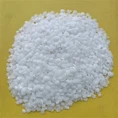
Let's first take a quick look at what Magnesium II Nitrate is. Magnesium II Nitrate, with the chemical formula Mg(NO₃)₂, is an inorganic compound. It comes in both hydrated and anhydrous forms. The hydrated forms are more common in the market due to their relative stability and easier handling.
One of the cool things about Magnesium II Nitrate is its wide range of applications. You can check out more about its uses in agriculture at Magnesium Nitrate Uses in Agriculture. It's used as a fertilizer because it provides both magnesium and nitrogen to the soil, which are essential nutrients for plant growth. And if you're interested in the fertilizer aspect, have a peek at Magnesium Nitrate Fertilizer.
Now, let's get to the nitty - gritty of the reaction rates.
Reaction with Sodium Hydroxide (NaOH)
When Magnesium II Nitrate reacts with sodium hydroxide, a precipitation reaction occurs. The chemical equation for this reaction is:
Mg(NO₃)₂(aq)+ 2NaOH(aq) → Mg(OH)₂(s)+ 2NaNO₃(aq)
Here, magnesium hydroxide (Mg(OH)₂) is formed as a white precipitate. The reaction rate depends on several factors. Temperature plays a big role. At higher temperatures, the kinetic energy of the molecules increases. This means that the magnesium nitrate and sodium hydroxide molecules move around more quickly, collide more frequently, and with more energy. As a result, the reaction rate speeds up.
Concentration also matters a great deal. If you increase the concentration of either magnesium nitrate or sodium hydroxide, there are more molecules in the solution. This leads to a higher probability of successful collisions between the reactant molecules, and thus the reaction occurs faster.
Another factor is the presence of a catalyst. Although there isn't a typical catalyst for this reaction, certain impurities in the solution could potentially affect the reaction rate. If there are ions present that can interact with the reactants or transition states, they might either speed up or slow down the reaction.
Reaction with Potassium Carbonate (K₂CO₃)
The reaction between Magnesium II Nitrate and potassium carbonate is as follows:
Mg(NO₃)₂(aq)+ K₂CO₃(aq) → MgCO₃(s)+ 2KNO₃(aq)
In this case, magnesium carbonate (MgCO₃) is precipitated. Similar to the reaction with sodium hydroxide, temperature and concentration have a significant impact on the reaction rate.
The nature of the solvent can also influence the reaction. If we use a polar solvent, it can solvate the ions in the reactants better. This solvation can either help or hinder the reaction. For example, if the solvation stabilizes the reactant ions too much, it might slow down the reaction as the ions are less likely to react with each other.
Reaction with Hydrochloric Acid (HCl)
When Magnesium II Nitrate reacts with hydrochloric acid, there isn't a direct reaction under normal conditions. But if we consider the possible hydrolysis and subsequent reactions, things get a bit more interesting.
Magnesium nitrate can undergo hydrolysis in water to some extent:
Mg(NO₃)₂ + 2H₂O ⇌ Mg(OH)₂ + 2HNO₃
The hydrochloric acid can then react with the magnesium hydroxide formed in the hydrolysis reaction:
Mg(OH)₂ + 2HCl → MgCl₂ + 2H₂O
The overall reaction rate is a bit more complex to determine. The initial hydrolysis of magnesium nitrate is an equilibrium reaction, and adding hydrochloric acid shifts the equilibrium. The reaction rate is affected by the concentration of hydrochloric acid. A higher concentration of HCl will drive the reaction towards the formation of magnesium chloride and water, as it will react with the magnesium hydroxide and disrupt the hydrolysis equilibrium.
Reaction with Ammonium Hydroxide (NH₄OH)
The reaction between Magnesium II Nitrate and ammonium hydroxide is:
Mg(NO₃)₂(aq)+ 2NH₄OH(aq) → Mg(OH)₂(s)+ 2NH₄NO₃(aq)
Just like with sodium hydroxide, magnesium hydroxide is precipitated. The reaction rate here is influenced by the concentration of ammonium hydroxide. Ammonium hydroxide is a weak base, and its dissociation in water is an equilibrium process:
NH₄OH ⇌ NH₄⁺+ OH⁻
Increasing the concentration of ammonium hydroxide shifts this equilibrium to the right, increasing the concentration of hydroxide ions. These hydroxide ions then react with magnesium nitrate to form the precipitate more quickly.
Impact on Industrial Applications
The reaction rates of Magnesium II Nitrate with common reagents have a huge impact on its industrial applications. In the fertilizer industry, for example, the reaction with soil components might involve reactions similar to the ones we've discussed. Understanding the reaction rates helps in formulating fertilizers that release nutrients at an optimal rate for plant uptake.
In the chemical manufacturing sector, if Magnesium II Nitrate is used as an intermediate or reactant in the production of other chemicals, the reaction rates with different reagents need to be carefully controlled. This ensures the quality and efficiency of the production process.
Why You Should Source Magnesium II Nitrate from Us
As a supplier of Magnesium II Nitrate, I can assure you of a high - quality product. Our Magnesium II Nitrate is produced under strict quality control measures. We understand the importance of the reaction rates of our product, and we make sure that the purity and composition are consistent, so you can rely on it for your reactions.


If you're involved in agriculture, chemical manufacturing, or any other field where Magnesium II Nitrate is used, I encourage you to get in touch for a procurement discussion. Whether you need it for a large - scale industrial project or a small - scale agricultural experiment, we've got you covered. You can explore more about our product at Magnesium Magnesium Nitrate, and then reach out for a chat about your requirements.
References
- Housecroft, C. E., & Sharpe, A. G. (2012). Inorganic Chemistry. Pearson.
- Atkins, P., & de Paula, J. (2009). Physical Chemistry. W. H. Freeman.