


Hey there! As a Kalium Bicarbonate supplier, I've been getting a lot of questions lately about what role this nifty compound plays in rubber processing. So, I thought I'd sit down and share some insights with you all.
What is Kalium Bicarbonate Anyway?
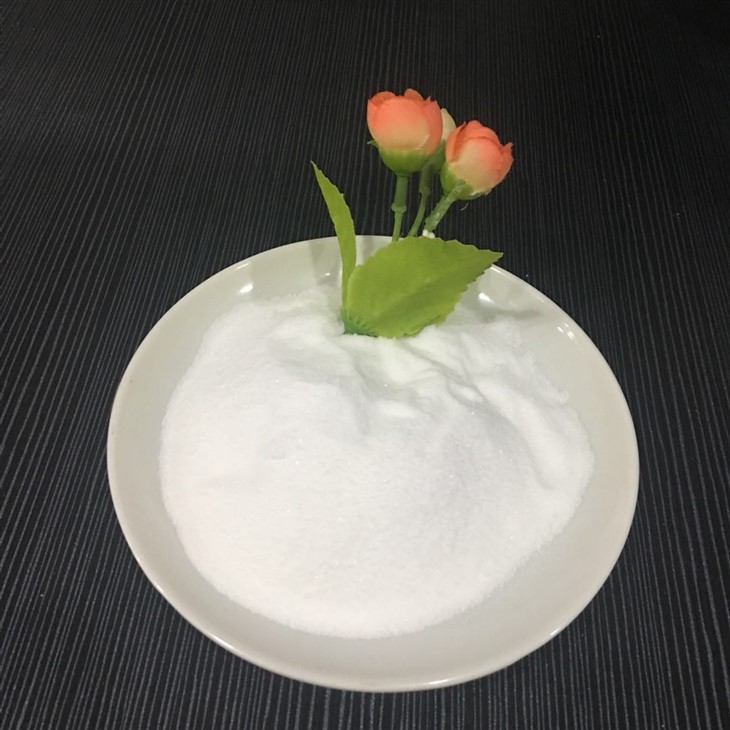
First things first, let's get to know Kalium Bicarbonate a bit better. Kalium Bicarbonate, also known as Bicarbonate Of Potash, has the chemical formula KHCO₃. It's a white, crystalline powder that's water - soluble and relatively stable under normal conditions. You can also find Potassium Bicarbonate Food Grade in the market, which meets the strict safety standards for food applications. But today, we're focusing on its role in rubber processing.
pH Regulation in Rubber Compounds
One of the key roles of Kalium Bicarbonate in rubber processing is pH regulation. Rubber compounds often have specific pH requirements to ensure optimal processing and performance. During the mixing process, various chemicals are added to the rubber, and these can sometimes cause the pH of the compound to shift. Kalium Bicarbonate acts as a buffer, helping to maintain a stable pH.

For example, in some rubber formulations, acidic by - products can be generated during processing. These acids can affect the curing process and the physical properties of the final rubber product. By adding Kalium Bicarbonate, we can neutralize these acids and keep the pH within the desired range. This is crucial because the curing of rubber is highly sensitive to pH. If the pH is too low or too high, the curing reaction may not proceed as expected, leading to poor mechanical properties such as reduced tensile strength and elongation.
Gas Generation for Foaming
Another important application of Kalium Bicarbonate in rubber processing is in the production of foamed rubber products. When heated, Kalium Bicarbonate decomposes to release carbon dioxide gas according to the following reaction:
2KHCO₃ → K₂CO₃+ H₂O + CO₂↑
This gas generation is used to create a cellular structure in the rubber. In the production of foamed rubber, like rubber sponges or insulation materials, Kalium Bicarbonate is added to the rubber compound. During the vulcanization process, when the rubber is heated, the Kalium Bicarbonate decomposes, and the released carbon dioxide forms bubbles within the rubber matrix.
The size and distribution of these bubbles can be controlled by adjusting the amount of Kalium Bicarbonate added and the processing conditions such as temperature and pressure. A well - controlled foaming process results in a rubber foam with uniform cell size, which is important for properties like density, flexibility, and insulation performance.
Curing Acceleration
Kalium Bicarbonate can also act as a curing accelerator in some rubber systems. In rubber processing, curing is the process of cross - linking the polymer chains in the rubber to give it its final mechanical properties. Some curing systems rely on specific chemical reactions that can be enhanced by the presence of certain additives.
Kalium Bicarbonate can interact with other curing agents in the rubber compound to speed up the curing process. This not only shortens the production cycle but also can improve the overall efficiency of the rubber processing. For instance, in some sulfur - based curing systems, Kalium Bicarbonate can help to activate the sulfur and promote the formation of cross - links between the rubber molecules more quickly.
Improving Dispersion of Additives
In rubber compounds, there are often multiple additives such as fillers, antioxidants, and plasticizers. Ensuring uniform dispersion of these additives is essential for the consistent performance of the rubber product. Kalium Bicarbonate can play a role in improving the dispersion of these additives.
It can act as a surface - active agent, reducing the surface tension between the rubber matrix and the additives. This allows the additives to mix more easily with the rubber and distribute evenly throughout the compound. When additives are well - dispersed, the rubber product will have more consistent physical and chemical properties, such as better abrasion resistance and aging resistance.
Compatibility with Different Rubber Types
One of the great things about Kalium Bicarbonate is its compatibility with different types of rubber. Whether it's natural rubber, synthetic rubbers like styrene - butadiene rubber (SBR), or nitrile rubber (NBR), Kalium Bicarbonate can be used effectively in their processing.
For natural rubber, which is sensitive to pH changes and has a complex curing mechanism, Kalium Bicarbonate can help to optimize the processing conditions. In synthetic rubbers, it can also perform its functions of pH regulation, gas generation, and curing acceleration. This wide compatibility makes it a versatile additive in the rubber industry.
Impact on the Final Properties of Rubber Products
The use of Kalium Bicarbonate in rubber processing has a direct impact on the final properties of the rubber products. As mentioned earlier, by regulating the pH and accelerating the curing process, it can improve the mechanical properties of the rubber. The foaming effect also gives the rubber unique properties depending on the application.
For example, in automotive rubber seals, the addition of Kalium Bicarbonate for foaming can make the seal more flexible and better able to conform to irregular surfaces. This improves the sealing performance and reduces noise and vibration. In rubber hoses, the proper use of Kalium Bicarbonate can enhance the chemical resistance and durability of the hose, ensuring long - term reliable operation.
Cost - Effectiveness
From a business perspective, Kalium Bicarbonate is a cost - effective additive in rubber processing. It is relatively inexpensive compared to some other specialized additives, and its multi - functional nature means that a single additive can serve multiple purposes. This reduces the need to use multiple different chemicals, which can simplify the processing and reduce costs.
Considerations When Using Kalium Bicarbonate
When using Kalium Bicarbonate in rubber processing, there are a few things to keep in mind. First, the amount of Kalium Bicarbonate added needs to be carefully controlled. Too much Kalium Bicarbonate can lead to excessive gas generation in the foaming process, resulting in a rubber foam with large, uneven cells. It can also affect the curing process if the pH is over - regulated.
Second, the storage and handling of Kalium Bicarbonate are important. It should be stored in a dry place to prevent moisture absorption, which can affect its quality and performance. Also, during the mixing process, proper mixing techniques should be used to ensure uniform distribution of Kalium Bicarbonate in the rubber compound.
Conclusion and Call to Action
In conclusion, Kalium Bicarbonate plays a vital role in rubber processing, from pH regulation and gas generation for foaming to curing acceleration and improving additive dispersion. Its versatility and cost - effectiveness make it a valuable additive in the rubber industry.
If you're in the rubber processing business and are looking for a reliable Kalium Bicarbonate supplier, I'd love to have a chat with you. Whether you have questions about the right grade of Kalium Bicarbonate for your specific rubber formulation or need advice on its application, I'm here to help. Feel free to reach out to discuss your procurement needs and how we can work together to optimize your rubber processing.
References
- "Rubber Technology: Compounding, Processing, and Testing of Rubber" by Maurice Morton
- "Handbook of Rubber Technology" edited by A. Y. Coran