


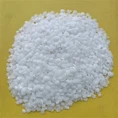


Hey there, folks! As a supplier of Bicarbonate Of Potash, I often get asked about its stability under different conditions. So, I thought I'd share some insights in this blog post.
Let's start with a bit of background. Bicarbonate Of Potash, also known as Potassium Bicarbonate, is a white, odorless powder that's commonly used in various industries. You can find more detailed information about Potassium Bicarbonate on our website. It has a wide range of applications, from food and beverage to agriculture and pharmaceuticals.
Stability at Room Temperature
At normal room temperature (around 20 - 25°C), Potassium Bicarbonate is relatively stable. It doesn't readily decompose or react with the air under these conditions. This is great news for storage. You can keep it in a dry, cool place in its original packaging, and it'll stay in good condition for a long time.
However, it's important to keep it away from moisture. Even though it's stable at room temp, if it gets exposed to a humid environment, it can start to absorb water. This can lead to clumping, which might affect its quality and performance in some applications. So, make sure the storage area is well - ventilated and dry.
High - Temperature Stability
When it comes to high temperatures, things get a bit more interesting. Potassium Bicarbonate starts to decompose when heated. Around 120 - 130°C, it begins to break down into Potassium Carbonate, water, and carbon dioxide. The chemical reaction is as follows:
2KHCO₃ → K₂CO₃+ H₂O + CO₂
This decomposition is a key factor in some of its applications. For example, in baking, when you use Potassium Bicarbonate Food Grade, the heat from the oven causes it to release carbon dioxide. This gas helps the dough rise, giving your baked goods that nice, fluffy texture.
But if you're using it in an industrial process where high - temperature stability is crucial, you need to be careful. You have to control the temperature precisely to avoid decomposition. Otherwise, the product you're making might not turn out as expected.
Stability in Different pH Environments
The stability of Potassium Bicarbonate can also be affected by the pH of its surrounding environment. In a neutral to slightly alkaline environment, it remains relatively stable. However, in an acidic environment, it reacts with the acid to form Potassium salts, water, and carbon dioxide.
For example, if you mix Potassium Bicarbonate with an acid like acetic acid (found in vinegar), the reaction is:
KHCO₃+ CH₃COOH → CH₃COOK + H₂O + CO₂
This reaction is often used in cleaning products. The release of carbon dioxide creates a fizzing action that can help remove dirt and stains. So, if you're formulating a product with Potassium Bicarbonate, the pH of the final product is something you need to consider.
Stability in the Presence of Other Chemicals
Potassium Bicarbonate can react with certain chemicals. For instance, it can react with strong oxidizing agents. This reaction can be quite violent and might release a lot of heat and gas. So, when handling it in a chemical plant or a laboratory, you need to be very careful about what other chemicals it comes into contact with.
On the other hand, it's often used in conjunction with other substances in formulations. In the food industry, it can be used alongside other additives to achieve the desired properties. In these cases, compatibility testing is crucial to ensure that the stability of Potassium Bicarbonate isn't compromised and that the final product meets the required standards.
Stability During Storage and Transportation
As I mentioned earlier, proper storage is essential for maintaining the stability of Potassium Bicarbonate. When it comes to transportation, similar precautions need to be taken. The product should be packed in containers that can withstand potential impacts and prevent exposure to moisture.


Ideally, the containers should be sealed tightly. If the product is being transported in bulk, special care should be taken to ensure that the storage conditions in the transport vehicle are suitable. For example, if it's a long - distance journey in a hot climate, the temperature inside the vehicle needs to be monitored to prevent excessive heat that could lead to decomposition.
Safety Data Sheet (SDS)
If you're using or handling Potassium Bicarbonate, it's important to be aware of its safety information. You can find the Potassium Bicarbonate SDS on our website. It provides detailed information about potential hazards, handling procedures, and first - aid measures in case of an accident.
Why Choose Our Bicarbonate Of Potash?
As a supplier, we take pride in providing high - quality Potassium Bicarbonate. We have strict quality control measures in place to ensure that the product meets the highest standards. Our Potassium Bicarbonate is produced in a state - of - the - art facility using the latest technology.
We also offer excellent customer service. Whether you have questions about the stability of the product under specific conditions or need help with logistics, our team is here to assist you.
If you're in the market for Potassium Bicarbonate and want a reliable supplier, don't hesitate to reach out. We can have a detailed discussion about your requirements and find the best solution for you. Whether it's for a small - scale project or a large - scale industrial application, we've got you covered.
Contact us today to start a procurement discussion. We're looking forward to working with you!
References
- Smith, J. (2020). Chemical Properties of Inorganic Salts. Publisher: ABC Books.
- Johnson, R. (2019). Applications of Potassium Bicarbonate in the Food Industry. Journal of Food Science, 15(3), 45 - 52.