


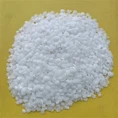


As a trusted supplier of Aluminium Nitrate, I understand the critical importance of purity in this chemical compound. Aluminium Nitrate, a white crystalline solid highly soluble in water, finds extensive applications in various industries, including the production of catalysts, textile printing, and leather tanning. Ensuring its purity is not only crucial for maintaining product quality but also for meeting the stringent requirements of different applications. In this blog, I will delve into the methods used to determine the purity of Aluminium Nitrate and why it matters for both suppliers and customers.
Why Purity Matters
The purity of Aluminium Nitrate directly impacts its performance in various applications. Impurities can alter the chemical and physical properties of the compound, leading to inconsistent results in industrial processes. For instance, in the production of catalysts, even minor impurities can affect the catalytic activity and selectivity, reducing the efficiency of the chemical reactions. In textile printing, impurities can cause color variations and uneven dyeing, compromising the quality of the printed fabrics. Moreover, impurities may pose safety risks, especially in applications where Aluminium Nitrate comes into contact with food or pharmaceuticals. Therefore, accurate determination of purity is essential for ensuring product quality, safety, and compliance with industry standards.
Methods for Determining Purity
Chemical Analysis
One of the most common methods for determining the purity of Aluminium Nitrate is through chemical analysis. This involves reacting the sample with specific reagents to measure the amount of Aluminium Nitrate present and to detect the presence of impurities. Titration is a widely used technique in chemical analysis. In a titration, a solution of a known concentration (the titrant) is added to the sample until the reaction is complete. The volume of the titrant used is then used to calculate the amount of Aluminium Nitrate in the sample.
For example, a complexometric titration can be used to determine the Aluminium content in Aluminium Nitrate. In this method, a chelating agent such as ethylenediaminetetraacetic acid (EDTA) is used to form a complex with Aluminium ions. The end - point of the titration is detected using an indicator, which changes color when all the Aluminium ions have reacted with the EDTA. By knowing the concentration of the EDTA solution and the volume used, the amount of Aluminium in the sample can be calculated.
Another chemical analysis method is gravimetric analysis. In gravimetric analysis, the Aluminium Nitrate sample is converted into a solid compound of known composition through a series of chemical reactions. The solid is then separated, dried, and weighed. The mass of the solid is used to calculate the amount of Aluminium Nitrate in the original sample. For example, Aluminium can be precipitated as Aluminium hydroxide by adding a base to the Aluminium Nitrate solution. The Aluminium hydroxide precipitate is then filtered, washed, and heated to convert it into Aluminium oxide. The mass of the Aluminium oxide is used to determine the amount of Aluminium in the sample.
Spectroscopic Analysis
Spectroscopic analysis is another powerful tool for determining the purity of Aluminium Nitrate. Spectroscopy involves the interaction of light with matter to obtain information about the chemical composition and structure of the sample. Atomic absorption spectroscopy (AAS) and inductively coupled plasma - optical emission spectroscopy (ICP - OES) are two commonly used spectroscopic techniques in the analysis of Aluminium Nitrate.


In AAS, the sample is atomized, and the atoms absorb light at specific wavelengths characteristic of the element being analyzed. By measuring the absorbance of light at these wavelengths, the concentration of Aluminium in the sample can be determined. AAS is highly sensitive and can detect trace amounts of Aluminium in the presence of other elements.
ICP - OES, on the other hand, uses an inductively coupled plasma to excite the atoms in the sample. The excited atoms emit light at specific wavelengths, which are then detected and measured. ICP - OES can simultaneously analyze multiple elements in the sample, making it a useful technique for detecting impurities in Aluminium Nitrate.
Chromatographic Analysis
Chromatographic analysis can also be used to determine the purity of Aluminium Nitrate. Ion chromatography is a type of chromatography that is particularly suitable for analyzing ionic compounds such as Aluminium Nitrate. In ion chromatography, the sample is separated into its individual components based on their interaction with a stationary phase and a mobile phase. The separated components are then detected and quantified.
Ion chromatography can be used to detect and quantify anions and cations in Aluminium Nitrate samples. For example, it can be used to detect the presence of nitrate ions, as well as other anionic impurities such as chloride, sulfate, and phosphate. By comparing the chromatogram of the sample with that of a pure standard, the purity of the Aluminium Nitrate can be determined.
Quality Control in Our Supply Chain
As a supplier of Aluminium Nitrate, we have a rigorous quality control system in place to ensure the purity of our products. Every batch of Aluminium Nitrate undergoes multiple levels of testing using the methods described above. Our state - of - the - art laboratory is equipped with the latest analytical instruments, and our team of experienced chemists and technicians follows strict standard operating procedures to ensure accurate and reliable results.
We also source our raw materials from trusted suppliers and conduct incoming inspections to ensure the quality of the starting materials. During the manufacturing process, we monitor key parameters such as temperature, pressure, and reaction time to ensure consistent product quality. After production, the finished products are stored in appropriate conditions to prevent contamination and degradation.
Applications and Market Considerations
Aluminium Nitrate has a wide range of applications, which you can learn more about at Aluminium Nitrate Uses. Its purity requirements vary depending on the specific application. For high - end applications such as in the electronics industry, where even trace impurities can have a significant impact on performance, extremely high - purity Aluminium Nitrate is required.
The market for Aluminium Nitrate is also influenced by its purity. Higher - purity products generally command a higher price, as they offer better performance and reliability. If you are interested in the Aluminium Nitrate Price, you can visit our website for more detailed information. Our Aluminium Nitrate Crystal products are available in different purity grades to meet the diverse needs of our customers.
Conclusion
Determining the purity of Aluminium Nitrate is a complex but essential process for ensuring product quality, safety, and performance. Through a combination of chemical analysis, spectroscopic analysis, and chromatographic analysis, we can accurately measure the purity of Aluminium Nitrate and detect the presence of impurities. As a supplier, we are committed to providing high - quality Aluminium Nitrate products that meet the strictest purity standards.
If you are in need of Aluminium Nitrate for your business, we invite you to contact us for a detailed discussion. Our team of experts is ready to assist you in selecting the right product based on your specific requirements. Whether you need a small quantity for research purposes or a large - scale supply for industrial production, we can provide you with the best solutions.
References
- Harris, D. C. (2010). Quantitative Chemical Analysis. W. H. Freeman and Company.
- Skoog, D. A., West, D. M., Holler, F. J., & Crouch, S. R. (2013). Fundamentals of Analytical Chemistry. Cengage Learning.
- Miller, J. N., & Miller, J. C. (2010). Statistics and Chemometrics for Analytical Chemistry. Pearson Education.