


Hey there! I'm an aluminium nitrate supplier, and today I wanna chat about how aluminium nitrate reacts with bases. It's not just some boring chemistry stuff; it's super important for a bunch of industries. So, let's dive in!
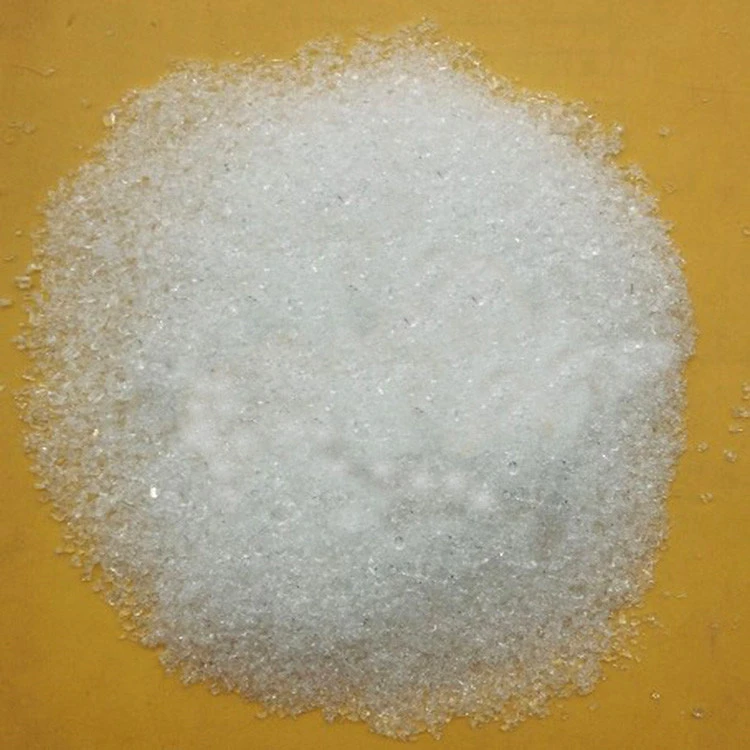
First off, what's aluminium nitrate? It's a salt with the chemical formula Al(NO₃)₃. It's usually found as a white crystalline solid, and it's highly soluble in water. You can find all about its Aluminium Nitrate Uses on our website. It's used in a ton of things, like the production of other aluminium compounds, as a mordant in dyeing, and even in some water treatment processes.
Now, when it comes to reacting with bases, things get pretty interesting. A base is a substance that can accept protons (H⁺ ions) or donate a pair of electrons. Common bases include sodium hydroxide (NaOH), potassium hydroxide (KOH), and ammonia (NH₃).
Let's start with the reaction between aluminium nitrate and sodium hydroxide. When you mix them in water, the aluminium nitrate dissociates into aluminium ions (Al³⁺) and nitrate ions (NO₃⁻), and the sodium hydroxide dissociates into sodium ions (Na⁺) and hydroxide ions (OH⁻). The aluminium ions then react with the hydroxide ions to form a precipitate of aluminium hydroxide, Al(OH)₃. The chemical equation for this reaction is:
Al(NO₃)₃(aq) + 3NaOH(aq) → Al(OH)₃(s) + 3NaNO₃(aq)
Here, the (aq) stands for aqueous, meaning the substance is dissolved in water, and (s) stands for solid, indicating a precipitate. The nitrate ions and sodium ions just hang around in the solution as spectator ions, which means they don't really take part in the chemical reaction.
But the fun doesn't stop there. If you keep adding more sodium hydroxide to the solution, the aluminium hydroxide precipitate will dissolve. This is because aluminium hydroxide is amphoteric, which means it can react with both acids and bases. When it reacts with the excess hydroxide ions, it forms a complex ion called the aluminate ion, [Al(OH)₄]⁻. The chemical equation for this second reaction is:
Al(OH)₃(s) + NaOH(aq) → NaAl(OH)₄
So, in total, the overall reaction when you add excess sodium hydroxide to aluminium nitrate is:
Al(NO₃)₃(aq) + 4NaOH(aq) → NaAl(OH)₄ + 3NaNO₃(aq)
Now, let's look at the reaction with potassium hydroxide. It's pretty similar to the reaction with sodium hydroxide. The initial reaction forms a precipitate of aluminium hydroxide, and then with excess potassium hydroxide, the precipitate dissolves to form a potassium aluminate complex. The chemical equations are:
Al(NO₃)₃(aq) + 3KOH(aq) → Al(OH)₃(s) + 3KNO₃(aq)
Al(OH)₃(s) + KOH(aq) → KAl(OH)₄
Overall:
Al(NO₃)₃(aq) + 4KOH(aq) → KAl(OH)₄ + 3KNO₃(aq)
When it comes to ammonia, the reaction is a bit different. Ammonia in water forms ammonium hydroxide, NH₄OH. When you add aluminium nitrate to an ammonia solution, the aluminium ions react with the hydroxide ions from the ammonium hydroxide to form the aluminium hydroxide precipitate. The chemical equation is:
Al(NO₃)₃(aq) + 3NH₄OH(aq) → Al(OH)₃(s) + 3NH₄NO₃(aq)
However, unlike with sodium or potassium hydroxide, adding more ammonia won't dissolve the aluminium hydroxide precipitate. This is because ammonia is a weak base, and it doesn't provide enough hydroxide ions to form the aluminate complex.
The reaction between aluminium nitrate and bases has some real - world applications. In water treatment, for example, aluminium nitrate can be used along with a base to remove impurities. The aluminium hydroxide precipitate can trap suspended particles in the water, making it easier to filter them out.

But safety is super important when dealing with these reactions. Aluminium nitrate can be irritating to the skin, eyes, and respiratory system. You can check out our Aluminium Nitrate SDS for all the safety information. And if you're thinking about using aluminium nitrate, you might be interested in our Aluminium Nitrate Price.
We offer high - quality aluminium nitrate at competitive prices. Whether you're in the water treatment industry, the dyeing business, or any other field that uses aluminium nitrate, we've got you covered. Our product is reliable, and we can provide the quantity you need.
If you're interested in purchasing aluminium nitrate, don't hesitate to reach out. We're always ready to have a chat about your requirements and see how we can help you. Whether it's a small - scale project or a large - scale industrial application, we're here to support you.
References
- Brown, T. L., LeMay, H. E., Bursten, B. E., Murphy, C. J., Woodward, P. M., & Stoltzfus, M. W. (2017). Chemistry: The Central Science. Pearson.
- Chang, R., & Goldsby, K. A. (2019). Chemistry. McGraw - Hill Education.