


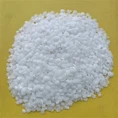

Hey there! As a supplier of Sodium Nitrate, I've been dealing with this chemical for quite a while. And one question that often pops up is: What are the factors that affect the stability of Sodium Nitrate? Well, let's dive right in and explore this topic together.


1. Temperature
Temperature plays a huge role in the stability of Sodium Nitrate. At normal room temperatures, Sodium Nitrate is relatively stable. It exists as a white crystalline solid and doesn't undergo any significant chemical changes. However, when the temperature starts to rise, things get a bit more interesting.
Sodium Nitrate has a melting point of around 308°C. As it approaches this temperature, it begins to melt and turn into a liquid. Once it's in the liquid state, it becomes more reactive. If the temperature continues to increase further, Sodium Nitrate can decompose. At high temperatures, it breaks down into Sodium Nitrite and Oxygen. This decomposition reaction can be quite dangerous because oxygen is a supporter of combustion, and it can increase the risk of fire or explosion.
For example, in industrial settings where Sodium Nitrate is used in high - temperature processes, proper temperature control is crucial. If the temperature goes out of the safe range, it can lead to unexpected chemical reactions and potential safety hazards. So, as a supplier, I always make sure to inform my customers about the temperature limits for storing and using Sodium Nitrate.
2. Humidity
Humidity is another important factor. Sodium Nitrate is hygroscopic, which means it has a tendency to absorb moisture from the air. When it absorbs moisture, it can form a solution or a wet mass. This can cause several problems.
Firstly, the presence of water can accelerate the decomposition of Sodium Nitrate. Water can act as a medium for chemical reactions, and it can make the decomposition reaction occur at a lower temperature than usual. Secondly, the formation of a wet mass can lead to caking. Caked Sodium Nitrate is difficult to handle and use in industrial processes. It can clog pipes, valves, and other equipment, which can disrupt the production process.
To prevent these issues, it's important to store Sodium Nitrate in a dry environment. As a supplier, I often recommend using sealed containers and storing the product in a place with low humidity. For instance, if you're storing Sodium Nitrate in a warehouse, you might want to use dehumidifiers to keep the humidity levels in check.
3. Contaminants
Contaminants can have a significant impact on the stability of Sodium Nitrate. Even small amounts of certain substances can act as catalysts or reactants with Sodium Nitrate, leading to unwanted chemical reactions.
For example, some metals can catalyze the decomposition of Sodium Nitrate. Metals like copper, iron, and manganese can speed up the reaction rate at which Sodium Nitrate decomposes into Sodium Nitrite and Oxygen. Other chemicals, such as organic compounds, can also react with Sodium Nitrate. Organic compounds are often flammable, and when they react with Sodium Nitrate, it can lead to a fire or explosion.
As a supplier, I ensure that the Sodium Nitrate I provide is of high purity. I have strict quality control measures in place to minimize the presence of contaminants. But it's also important for customers to be careful when handling Sodium Nitrate. They should avoid mixing it with other chemicals without proper knowledge and safety precautions.
4. Light
Although not as well - known as temperature and humidity, light can also affect the stability of Sodium Nitrate. Prolonged exposure to light, especially ultraviolet (UV) light, can cause photochemical reactions in Sodium Nitrate.
UV light has enough energy to break the chemical bonds in Sodium Nitrate. This can lead to the formation of free radicals and other reactive species, which can then initiate decomposition reactions. However, the effect of light is usually less significant compared to temperature and humidity.
To minimize the impact of light, it's a good idea to store Sodium Nitrate in opaque containers. This can block out the light and reduce the chances of photochemical reactions. As a supplier, I often suggest customers use opaque storage containers if they're going to store Sodium Nitrate for an extended period.
5. Particle Size
The particle size of Sodium Nitrate can influence its stability. Finer particles have a larger surface area compared to coarser particles. A larger surface area means more exposure to the surrounding environment, such as air, moisture, and contaminants.
Finer particles of Sodium Nitrate are more likely to absorb moisture from the air because of their larger surface area. They are also more reactive in general. For example, in a chemical reaction, finer particles can react more quickly than coarser particles. This can be both an advantage and a disadvantage. On one hand, in some industrial processes where a fast reaction is desired, finer particles might be preferred. On the other hand, if the reaction needs to be controlled, coarser particles might be a better choice.
As a supplier, I offer different particle sizes of Sodium Nitrate to meet the diverse needs of my customers. You can check out our Sodium Nitrate Powder for finer particles and Colorless Crystal Sodium Nitrate for coarser particles.
6. Pressure
In most cases, pressure doesn't have a major impact on the stability of Sodium Nitrate under normal conditions. However, in high - pressure environments, it can affect the physical and chemical properties of Sodium Nitrate.
Under high pressure, the melting point and decomposition temperature of Sodium Nitrate can change. High pressure can also affect the solubility of Sodium Nitrate in water. In some industrial processes that involve high - pressure conditions, such as certain chemical synthesis reactions, the pressure needs to be carefully controlled to ensure the stability of Sodium Nitrate.
As a supplier, I'm aware of these factors, and I can provide my customers with relevant information if they're using Sodium Nitrate in high - pressure applications.
Conclusion
So, there you have it! Temperature, humidity, contaminants, light, particle size, and pressure are all factors that can affect the stability of Sodium Nitrate. As a supplier, I understand the importance of these factors, and I'm always ready to help my customers ensure the safe and effective use of Sodium Nitrate.
If you're in the market for high - quality Sodium Nitrate, we have a great selection of products, including Sodium Nitrate Technical Grade. Whether you need it for industrial applications, agriculture, or any other use, we can provide you with the right product. If you have any questions or want to discuss your specific requirements, don't hesitate to reach out. We're here to assist you with all your Sodium Nitrate needs.
References
- Kirk - Othmer Encyclopedia of Chemical Technology.
- Handbook of Inorganic Chemicals.
- Safety Data Sheets on Sodium Nitrate from various chemical manufacturers.