




Hey there! As a supplier of Potassium Bicarb, I often get asked about how long this stuff stays in the body. It's a pretty interesting question, and today, I'm gonna break it down for you.

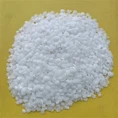
First off, let's talk a bit about what Potassium Bicarb is. Potassium Bicarbonate, also known as Kalium Bicarbonate, is a white, crystalline powder that's commonly used in a bunch of different industries. In the food industry, Potassium Bicarbonate Food Grade is used as a leavening agent, a pH regulator, and even a food additive. It's also used in medicine to treat certain conditions related to potassium deficiency and acid-base balance in the body.

Now, when you take Potassium Bicarb, whether it's in the form of a supplement or as part of your diet, it doesn't just stick around in your body forever. The human body is an amazing machine that's constantly working to maintain a balance, and that includes getting rid of substances it doesn't need.
The absorption of Potassium Bicarb starts in the digestive system. Once you swallow it, it begins to dissolve in the stomach acid. The potassium ions are then absorbed through the walls of the small intestine and into the bloodstream. From there, they're transported to different parts of the body where they're needed.
So, how long does it stay in the body? Well, it depends on a few factors. One of the main factors is your body's individual metabolism. Everyone's metabolism is different, and that affects how quickly your body processes and eliminates substances. Some people might have a really fast metabolism, which means the Potassium Bicarb will be processed and excreted more quickly. On the other hand, people with a slower metabolism might hold onto it for a bit longer.
Another factor is the amount of Potassium Bicarb you take. If you take a small dose, your body might be able to process and get rid of it relatively quickly. But if you take a large dose, it could take longer for your body to deal with it all.

Generally speaking, most of the Potassium Bicarb that you take will be excreted from the body within a few hours to a couple of days. The kidneys play a major role in this process. They filter the blood and remove excess potassium and other waste products, which are then excreted in the urine.
However, some of the potassium might be stored in the body's cells. Potassium is an essential mineral that's involved in a lot of important bodily functions, like muscle contraction, nerve impulse transmission, and maintaining proper fluid balance. So, your body will try to hold onto some of the potassium it needs.
The amount of potassium stored in the cells can vary from person to person, depending on their diet, overall health, and other factors. But in general, the body has a way of regulating the amount of potassium it keeps and the amount it gets rid of.
If you're taking Potassium Bicarb as a supplement, it's important to follow the recommended dosage. Taking too much potassium can be dangerous, as it can lead to a condition called hyperkalemia. This is when there's too much potassium in the blood, and it can cause all sorts of problems, like irregular heartbeats, muscle weakness, and even paralysis.
On the other hand, not getting enough potassium can also be a problem. It can lead to a condition called hypokalemia, which can cause symptoms like fatigue, muscle cramps, and constipation.
So, finding the right balance is key. And that's where we come in. As a supplier of high-quality Potassium Bicarbonate, we make sure that our products meet the highest standards of quality and purity. Whether you're in the food industry, the pharmaceutical industry, or any other industry that uses Potassium Bicarb, we've got you covered.
If you're interested in learning more about our products or if you're looking to place an order, don't hesitate to get in touch with us. We're always happy to answer any questions you might have and help you find the right solution for your needs.
In conclusion, the amount of time Potassium Bicarb stays in the body can vary depending on a few factors, but most of it will be excreted within a few hours to a couple of days. It's an important mineral that plays a crucial role in the body, but it's important to use it responsibly. And if you're in the market for Potassium Bicarb, we're here to provide you with the best products and service.
References:
- Guyton, A. C., & Hall, J. E. (2006). Textbook of medical physiology. Elsevier Saunders.
- Murray, R. K., Bender, D. A., Botham, K. M., Kennelly, P. J., Rodwell, V. W., & Weil, P. A. (2012). Harper's illustrated biochemistry. McGraw-Hill Medical.