




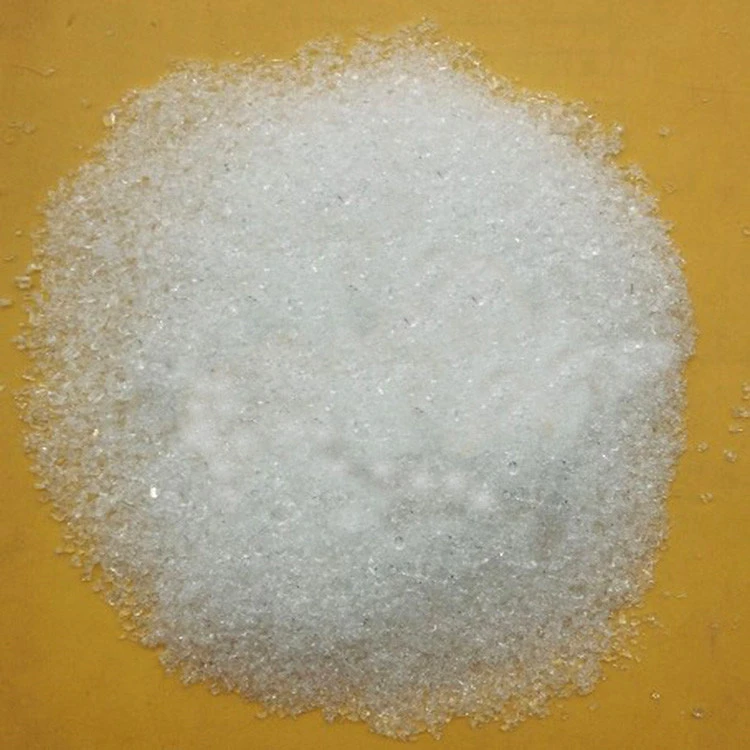
Aluminium nitrate, a versatile chemical compound, plays a significant yet often under - recognized role in the paper - making process. As a reliable supplier of various aluminium nitrate products, including Aluminium Nitrate Crystal, Aluminium Nitrate Nonahydrate, and offering competitive Aluminium Nitrate Price, I am excited to delve into how this compound is utilized in the paper - making industry.
1. Introduction to the Paper - Making Process
Before exploring the role of aluminium nitrate, it's essential to understand the basic steps in paper - making. The process typically starts with the pulping of raw materials, such as wood chips, recycled paper, or agricultural residues. The pulp is then refined, and various additives are incorporated to enhance its properties. After that, the pulp is formed into a sheet on a paper machine, pressed to remove excess water, and finally dried and finished.

2. Aluminium Nitrate in Pulp Treatment
2.1 pH Adjustment
One of the primary uses of aluminium nitrate in the paper - making process is for pH adjustment in the pulp. Aluminium nitrate can act as an acid - releasing agent. When added to the pulp slurry, it hydrolyzes in water to form aluminium hydroxide and nitric acid. The release of nitric acid helps to lower the pH of the pulp. A proper pH level is crucial for many subsequent steps in paper - making. For example, in acidic papermaking systems, a lower pH can improve the retention of sizing agents and fillers. Sizing agents are used to control the paper's absorbency, and fillers are added to improve the paper's opacity, smoothness, and printability. By adjusting the pH with aluminium nitrate, the efficiency of these additives can be significantly enhanced.

2.2 Coagulation and Flocculation
Aluminium nitrate also functions as a coagulant and flocculant in the pulp. In the pulp suspension, there are numerous fine particles, such as fibers, fines, and colloidal substances. These particles are often negatively charged and tend to repel each other, keeping them in a dispersed state. Aluminium nitrate dissociates in water to form aluminium ions (Al³⁺). These positively charged ions can neutralize the negative charges on the particles, causing them to come closer together and form larger aggregates. This process is known as coagulation. Subsequently, these aggregates can further combine to form even larger flocs through flocculation. The formation of flocs is beneficial for several reasons. Firstly, it helps in the dewatering process during papermaking. Larger flocs allow water to drain more easily from the pulp, reducing the energy required for drying. Secondly, it improves the retention of fine particles and fillers in the paper sheet, resulting in better paper quality.
3. Aluminium Nitrate in Surface Treatment
3.1 Sizing Enhancement
Sizing is an important process in paper - making that controls the paper's resistance to liquid penetration. There are two main types of sizing: internal sizing and surface sizing. Aluminium nitrate can be used to enhance surface sizing. When applied to the paper surface, aluminium nitrate can react with sizing agents, such as rosin - based or synthetic sizing agents. It forms a complex with the sizing agent, which helps to anchor the sizing agent more firmly to the paper fibers. This results in a more effective sizing layer, improving the paper's water - repellency, ink - holdout, and resistance to other liquids. For example, in printing papers, better ink - holdout means that the ink will stay on the surface of the paper and not penetrate into the fibers, resulting in sharper and more vivid print quality.
3.2 Surface Strength Improvement
The surface strength of paper is crucial, especially for papers used in high - speed printing and packaging applications. Aluminium nitrate can contribute to improving the surface strength of paper. By forming chemical bonds between the paper fibers on the surface, it helps to hold the fibers together more tightly. This reduces the tendency of fibers to be picked off during printing or handling, which is known as "picking." As a result, the paper can withstand the mechanical stresses associated with printing and packaging processes without significant damage to its surface.

4. Impact on Paper Quality
4.1 Opacity and Brightness
Aluminium nitrate can have a positive impact on the opacity and brightness of paper. When used in combination with fillers, such as calcium carbonate or kaolin, it can help to disperse the fillers more evenly in the pulp. This even distribution of fillers increases the paper's opacity, making it more suitable for applications where the back - side printing or writing should not show through. Additionally, the chemical reactions involving aluminium nitrate can sometimes bleach the pulp slightly, enhancing the paper's brightness. A brighter paper is often more aesthetically pleasing and can improve the readability of printed materials.
4.2 Tensile Strength and Folding Endurance
The use of aluminium nitrate in the paper - making process can also improve the paper's mechanical properties, such as tensile strength and folding endurance. As mentioned earlier, aluminium nitrate helps in the coagulation and flocculation of pulp particles, which leads to a more uniform distribution of fibers in the paper sheet. A more uniform fiber distribution means that the paper can better withstand tensile forces without breaking. Similarly, the improved bonding between fibers due to the presence of aluminium nitrate enhances the paper's ability to be folded multiple times without cracking or delaminating.
5. Environmental Considerations
In today's environmentally conscious world, it's important to consider the environmental impact of chemicals used in the paper - making industry. Aluminium nitrate is relatively safe to use compared to some other chemicals. It is biodegradable to some extent, and the by - products of its reactions in the paper - making process are generally less harmful to the environment. However, proper waste management is still necessary. The wastewater from the paper - making process that contains aluminium nitrate and its reaction products should be treated before being discharged. This can involve processes such as precipitation and filtration to remove the aluminium compounds and other contaminants.
6. Cost - Effectiveness
From a cost - effectiveness perspective, aluminium nitrate offers several advantages. Its relatively low cost compared to some other specialty chemicals makes it an attractive option for paper manufacturers. Moreover, its multi - functional nature means that it can perform several tasks in the paper - making process, such as pH adjustment, coagulation, and surface treatment, with a single chemical. This reduces the need for multiple additives, which can simplify the manufacturing process and potentially lower the overall production cost.
7. Contact for Procurement
If you are a paper manufacturer looking to enhance your paper - making process with high - quality aluminium nitrate products, we are here to assist you. Our company offers a wide range of aluminium nitrate products, including Aluminium Nitrate Crystal and Aluminium Nitrate Nonahydrate, at competitive Aluminium Nitrate Price. We are committed to providing reliable supply and excellent customer service. Please feel free to contact us to discuss your specific requirements and start a fruitful business relationship.
References
- Smook, G. A. (1992). Handbook for Pulp & Paper Technologists. Angus Wilde Publications.
- Casey, J. P. (1980). Pulp and Paper: Chemistry and Chemical Technology. John Wiley & Sons.