


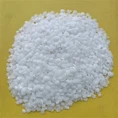


Hey there! As a supplier of Potassium Nitrite Crystal, I often get asked about the purity of the commercial stuff. So, let's dig into it and find out just how pure commercial Potassium Nitrite Crystal really is.
First off, what is Potassium Nitrite? It's an inorganic compound with the chemical formula KNO₂. You can find more detailed info about it on the Nitrite Potassium page. Potassium Nitrite has a bunch of uses, which we'll touch on later. But for now, let's focus on purity.
The purity of commercial Potassium Nitrite Crystal can vary quite a bit. It depends on a bunch of factors, like the manufacturing process, the quality of the raw materials used, and the level of purification that's done. In the market, you'll usually see Potassium Nitrite with purities ranging from around 95% to 99%.
Let's talk about the manufacturing process. There are a few different ways to make Potassium Nitrite. One common method is by reacting potassium hydroxide (KOH) with nitrous acid (HNO₂). During this reaction, impurities can sneak in. For example, if the potassium hydroxide or other reactants aren't of high quality, they might bring in unwanted elements like sodium, calcium, or chloride ions. These impurities can affect the overall purity of the final Potassium Nitrite Crystal.
Another factor is the purification step. After the initial synthesis, the Potassium Nitrite needs to be purified to increase its purity. This can involve processes like recrystallization, where the compound is dissolved in a solvent and then slowly crystallized out. This helps to separate the Potassium Nitrite from many of the impurities. But even after purification, there might still be some trace amounts of impurities left.
So, how do we measure the purity of Potassium Nitrite Crystal? There are several analytical methods that can be used. One common method is titration. In titration, a solution of a known concentration is added to the Potassium Nitrite sample until a chemical reaction is complete. By measuring the amount of the titrant used, we can calculate the amount of Potassium Nitrite in the sample and determine its purity.
Another method is spectroscopy. Spectroscopy involves shining light on the sample and analyzing how the light is absorbed or emitted. Different elements and compounds absorb and emit light at specific wavelengths, so by looking at the spectrum of the Potassium Nitrite sample, we can identify and quantify any impurities.


Now, let's look at why purity matters. If you're using Potassium Nitrite in a laboratory setting, high purity is often crucial. For example, in chemical synthesis, impurities can interfere with the reaction and give unexpected results. In analytical chemistry, even small amounts of impurities can affect the accuracy of measurements.
In industrial applications, the required purity level can vary. For some applications, like in the production of dyes or pigments, a slightly lower purity might be acceptable. But in other applications, like in the food industry (yes, Potassium Nitrite is used as a food additive in some cases), high purity is essential to ensure safety and quality. You can learn more about the various Potassium Nitrite Uses on that page.
It's also important to note that the purity of Potassium Nitrite can affect its safety. Impurities can sometimes react with other substances and cause unexpected reactions or produce harmful by - products. That's why it's always a good idea to check the Potassium Nitrite SDS (Safety Data Sheet) for information about the purity and potential hazards of the product.
As a supplier, I understand the importance of providing high - quality Potassium Nitrite Crystal. We take several steps to ensure the purity of our product. We source our raw materials from reliable suppliers and use strict quality control measures throughout the manufacturing process. Our purification steps are carefully optimized to remove as many impurities as possible.
When you're looking to buy Potassium Nitrite Crystal, it's a good idea to ask the supplier about the purity level and the methods they use to ensure quality. You can also ask for a certificate of analysis, which will show the exact purity and the levels of any impurities in the product.
In conclusion, the purity of commercial Potassium Nitrite Crystal can vary, but it generally falls in the range of 95% - 99%. Factors like the manufacturing process and purification steps play a big role in determining the final purity. Measuring the purity is important for both laboratory and industrial applications, and it can affect the safety and performance of the product.
If you're in the market for high - quality Potassium Nitrite Crystal, I'd love to talk to you. Whether you need it for a small laboratory experiment or a large - scale industrial application, we can provide the right product for your needs. Feel free to reach out and start a conversation about your requirements.
References:
- "Inorganic Chemistry" textbooks, which cover the synthesis and properties of Potassium Nitrite.
- Journal articles on the manufacturing and analysis of Potassium Nitrite.