


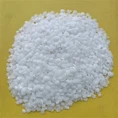


Hey there! As a supplier of Calcium Nitrate Crystals, I often get asked about what happens when these crystals react with acids. It's a pretty interesting topic, so I thought I'd dive into it and share some insights with you all.
First off, let's talk a bit about calcium nitrate crystals. Calcium nitrate is a chemical compound with the formula Ca(NO₃)₂. It comes in different forms, like Calcium Nitrate Anhydrous and Calcium Nitrate Water Soluble. These crystals are widely used, especially in the agricultural industry as Calcium Nitrate Fertilizer because they provide both calcium and nitrogen to the plants.
Now, when calcium nitrate crystals react with acids, the products depend on the type of acid involved. Let's take a look at some common acids and their reactions with calcium nitrate.
Reaction with Hydrochloric Acid (HCl)
When calcium nitrate [Ca(NO₃)₂] reacts with hydrochloric acid (HCl), a double - displacement reaction occurs. The general equation for a double - displacement reaction is AB + CD → AD+ CB. In this case, the chemical reaction can be written as:
Ca(NO₃)₂ + 2HCl → CaCl₂+ 2HNO₃
The products of this reaction are calcium chloride (CaCl₂) and nitric acid (HNO₃). Calcium chloride is a salt that is highly soluble in water. It has various applications, such as in de - icing roads during winter, as a desiccant in some industrial processes, and in food processing. Nitric acid, on the other hand, is a strong and corrosive acid. It's used in the production of fertilizers, explosives, and in the manufacturing of dyes and plastics.
Reaction with Sulfuric Acid (H₂SO₄)
When calcium nitrate reacts with sulfuric acid, the reaction is as follows:
Ca(NO₃)₂ + H₂SO₄ → CaSO₄+ 2HNO₃
The products here are calcium sulfate (CaSO₄) and nitric acid. Calcium sulfate exists in different forms, like gypsum (CaSO₄·2H₂O) and anhydrous calcium sulfate. Gypsum is commonly used in the construction industry for making plasterboard, in agriculture to improve soil structure, and in the food industry as a coagulant. Nitric acid, as we mentioned earlier, has a wide range of industrial applications.
Reaction with Phosphoric Acid (H₃PO₄)
The reaction between calcium nitrate and phosphoric acid is a bit more complex. The chemical equation is:
3Ca(NO₃)₂ + 2H₃PO₄ → Ca₃(PO₄)₂+ 6HNO₃
The products are calcium phosphate [Ca₃(PO₄)₂] and nitric acid. Calcium phosphate is an important compound in the biological and industrial fields. In the body, it's a major component of bones and teeth. In industry, it's used as a fertilizer, in the production of ceramics, and in the food industry as an anti - caking agent.
Factors Affecting the Reaction
Several factors can affect the reaction between calcium nitrate crystals and acids. Temperature is one of them. Generally, increasing the temperature speeds up the reaction rate because the molecules have more kinetic energy, which leads to more frequent and energetic collisions between the reactant molecules.
The concentration of the acid also plays a role. A higher concentration of acid means there are more acid molecules available to react with the calcium nitrate crystals, which can increase the rate of the reaction.
The surface area of the calcium nitrate crystals is another factor. Finely powdered calcium nitrate crystals have a larger surface area compared to large chunks. A larger surface area allows for more contact between the reactants, thus increasing the reaction rate.
Applications of the Reaction Products
The products obtained from the reaction between calcium nitrate crystals and acids have a wide range of applications. For example, the calcium salts produced, like calcium chloride, calcium sulfate, and calcium phosphate, are used in various industries. As we've seen, they're used in construction, agriculture, food processing, and the manufacturing of consumer products.
The nitric acid produced in these reactions is a key ingredient in the production of ammonium nitrate, which is a widely used fertilizer. It's also used in the production of nitroglycerin, a well - known explosive.
Safety Considerations
It's important to note that when dealing with these reactions, safety should be a top priority. Both calcium nitrate and the acids involved are potentially hazardous. Acids are corrosive and can cause severe burns if they come into contact with the skin or eyes. Calcium nitrate can also be an irritant.
When carrying out these reactions, proper protective equipment such as gloves, goggles, and a lab coat should be worn. The reactions should be carried out in a well - ventilated area to prevent the inhalation of any toxic fumes, especially those from nitric acid.
Why Choose Our Calcium Nitrate Crystals
As a supplier of calcium nitrate crystals, we offer high - quality products. Our Calcium Nitrate Anhydrous and Calcium Nitrate Water Soluble are produced under strict quality control measures. Whether you're in the agricultural industry looking for Calcium Nitrate Fertilizer or in an industrial setting that requires these chemicals for various processes, we've got you covered.
If you're interested in purchasing our calcium nitrate crystals, or if you have any questions about the reactions or the products, feel free to reach out. We're always happy to help you with your needs and discuss any potential business opportunities.
Conclusion
In conclusion, the reaction between calcium nitrate crystals and acids can lead to the formation of various useful products, including calcium salts and nitric acid. These products have diverse applications in different industries. Understanding these reactions is not only important for chemists and researchers but also for businesses that rely on these chemicals for their operations. If you're in the market for high - quality calcium nitrate crystals, don't hesitate to contact us for more information and to start a procurement discussion.


References
- Brown, T. L., LeMay, H. E., Bursten, B. E., & Murphy, C. J. (2017). Chemistry: The Central Science. Pearson.
- Housecroft, C. E., & Sharpe, A. G. (2018). Inorganic Chemistry. Pearson.