


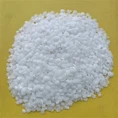


Potassium bicarbonate, also known as potassium hydrogen carbonate or by the names Kalium Bicarbonate, Potassium Bicarbonate Food Grade, and Bicarbonate Of Potash, is a white, crystalline, slightly alkaline and salty substance. It has the chemical formula KHCO₃. As a leading supplier of potassium bicarbonate, I am excited to delve into the chemical properties of this versatile compound.
Basic Chemical Structure and Composition
Potassium bicarbonate consists of potassium cations (K⁺) and bicarbonate anions (HCO₃⁻). The bicarbonate ion is a polyatomic ion with a central carbon atom bonded to three oxygen atoms and a hydrogen atom. The carbon - oxygen bonds in the bicarbonate ion are a combination of single and double bonds, and resonance structures contribute to its stability.
The ionic nature of potassium bicarbonate means that it exists as an ionic solid in its pure form. In the solid state, the potassium cations and bicarbonate anions are arranged in a regular lattice structure held together by strong electrostatic forces of attraction between the positive and negative ions.
Solubility
One of the important chemical properties of potassium bicarbonate is its solubility in water. Potassium bicarbonate is moderately soluble in water. At room temperature (around 20 - 25°C), approximately 33.7 grams of potassium bicarbonate can dissolve in 100 milliliters of water.
When potassium bicarbonate dissolves in water, it dissociates into its constituent ions according to the following equation:
KHCO₃(s) → K⁺(aq) + HCO₃⁻(aq)
This dissociation is a crucial aspect of its behavior in aqueous solutions. The dissolved ions can participate in various chemical reactions, such as acid - base reactions and precipitation reactions under appropriate conditions.
Acid - Base Reactions
Potassium bicarbonate is a weak base. The bicarbonate ion (HCO₃⁻) can act as a base by accepting a proton (H⁺) from an acid. For example, when potassium bicarbonate reacts with hydrochloric acid (HCl), the following reaction occurs:
KHCO₃ + HCl → KCl + H₂O+ CO₂↑
In this reaction, the bicarbonate ion reacts with the hydrogen ions from the hydrochloric acid to form carbonic acid (H₂CO₃). Carbonic acid is unstable and decomposes into water and carbon dioxide gas. This reaction is often used in applications such as baking, where the release of carbon dioxide gas causes dough or batter to rise.
On the other hand, the bicarbonate ion can also act as an acid in the presence of a stronger base. It can donate a proton to form the carbonate ion (CO₃²⁻). The reaction with a strong base like sodium hydroxide (NaOH) is as follows:
KHCO₃+ NaOH → K₂CO₃ + H₂O
In this reaction, the bicarbonate ion donates a proton to the hydroxide ion from sodium hydroxide, resulting in the formation of water and potassium carbonate.
Thermal Decomposition
Potassium bicarbonate undergoes thermal decomposition when heated. When heated to a sufficient temperature (around 120 - 130°C), it decomposes to form potassium carbonate (K₂CO₃), water, and carbon dioxide gas according to the following chemical equation:
2KHCO₃(s) → K₂CO₃(s)+ H₂O(g)+ CO₂(g)
This decomposition reaction is an important consideration in applications where potassium bicarbonate is exposed to high temperatures. For example, in some industrial processes or in the storage of potassium bicarbonate, care must be taken to avoid excessive heating to prevent decomposition and the loss of product quality.
Redox Reactions
Under normal conditions, potassium bicarbonate is relatively stable with respect to redox reactions. The oxidation states of the elements in potassium bicarbonate are as follows: potassium has an oxidation state of +1, hydrogen has an oxidation state of +1, carbon has an oxidation state of +4, and oxygen has an oxidation state of - 2.
However, in the presence of strong oxidizing agents under specific conditions, the carbon in the bicarbonate ion could potentially be further oxidized. But such reactions are not common and require special reaction conditions.
Chemical Stability
Potassium bicarbonate is generally stable under normal storage conditions. It does not react readily with air at room temperature. However, it can react slowly with moisture in the air over a long period of time, especially in humid environments. The presence of moisture can cause the potassium bicarbonate to absorb water and potentially form a solution or undergo partial decomposition if the conditions are right.
To maintain its stability, it is recommended to store potassium bicarbonate in a dry, cool place in a sealed container. This helps to prevent moisture absorption and the associated chemical changes.
Uses Based on Chemical Properties
The chemical properties of potassium bicarbonate make it useful in a wide range of applications.
In the food industry, Potassium Bicarbonate Food Grade is used as a leavening agent in baking. Its ability to react with acids in the dough to produce carbon dioxide gas causes the dough to rise, resulting in a lighter and fluffier texture in baked goods. It is also used as a pH regulator in some food products to control the acidity or alkalinity.
In the medical field, potassium bicarbonate can be used as a source of potassium ions to treat potassium deficiency in patients. The solubility of potassium bicarbonate in water allows for easy administration in the form of an oral solution.
In fire extinguishers, potassium bicarbonate - based dry chemicals are used to extinguish fires, especially those involving flammable liquids and electrical equipment. When the dry chemical is discharged onto the fire, the thermal decomposition of potassium bicarbonate releases carbon dioxide gas, which helps to smother the fire by displacing oxygen.
Conclusion
Potassium bicarbonate is a compound with a rich set of chemical properties. Its solubility in water, acid - base behavior, thermal decomposition, and stability characteristics all contribute to its wide range of applications in various industries.
As a supplier of potassium bicarbonate, we ensure that our product meets the highest quality standards. Whether you are in the food industry, medical field, or any other industry that requires potassium bicarbonate, we can provide you with a reliable and pure product.
If you are interested in purchasing potassium bicarbonate for your specific needs, we invite you to contact us for a detailed discussion about your requirements, pricing, and delivery options. Our team of experts is ready to assist you in finding the best solution for your business.


References
- Cotton, F. A.; Wilkinson, G.; Murillo, C. A.; Bochmann, M. (1999). Advanced Inorganic Chemistry (6th ed.). Wiley - Interscience.
- Chang, R. (2010). Chemistry (10th ed.). McGraw - Hill.
- Housecroft, C. E.; Sharpe, A. G. (2012). Inorganic Chemistry (4th ed.). Pearson.