




What are the physical degradation rate of Aluminium Nitrate in SDS?
Hey there! As a supplier of Aluminium Nitrate SDS, I've got a lot of insights into this chemical and its behaviors. In this blog, we're going to dig into the physical degradation rate of aluminium nitrate in SDS (Safety Data Sheet).
First off, let's quickly understand what aluminium nitrate and SDS are. Aluminium nitrate is a chemical compound that has various uses. You can check out more about its uses on this page: Aluminium Nitrate Uses. It's often found in the form of a crystal, and if you're curious about that, here's a link: Aluminium Nitrate Crystal. And the SDS is like a detailed manual about the chemical, which includes information about its properties, hazards, and handling. You can access our Aluminium Nitrate SDS here: Aluminium Nitrate SDS.
Now, let's talk about the physical degradation rate. The physical degradation of aluminium nitrate in SDS can be influenced by several factors. One of the main factors is the environment. For example, temperature plays a huge role. If the temperature is too high, aluminium nitrate might start to break down faster. High temperatures can cause the chemical bonds in aluminium nitrate to become more unstable, leading to a higher degradation rate.
Another factor is humidity. Aluminium nitrate is a hygroscopic substance, which means it can absorb moisture from the air. When it absorbs water, it can form a solution, and this process can also affect its degradation rate. In a high - humidity environment, the physical degradation of aluminium nitrate might speed up.
The presence of other substances can also impact the degradation rate. If aluminium nitrate is stored with other chemicals that can react with it, it can lead to a change in its physical state and an increase in the degradation rate. For instance, if it comes into contact with reducing agents, a chemical reaction might occur, causing the aluminium nitrate to degrade.
To measure the physical degradation rate of aluminium nitrate in SDS, we usually look at changes in its physical properties over time. This can include changes in its appearance, such as color or crystal structure. We can also measure changes in its solubility, density, or melting point.
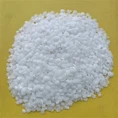
Let's say we have a sample of aluminium nitrate stored under normal conditions. Over a period of a few months, we might notice that the crystals start to become a bit more clumpy. This could be a sign of physical degradation. If we measure the solubility of the sample at the beginning and then after a few months, we might find that it has decreased. This is because as the chemical degrades, its molecular structure changes, and it becomes less soluble in the solvent.
In a laboratory setting, we can use various techniques to study the degradation rate more precisely. One common method is thermogravimetric analysis (TGA). TGA measures the change in weight of a sample as it is heated. By analyzing the weight loss curve, we can get an idea of how the aluminium nitrate is degrading at different temperatures.
Differential scanning calorimetry (DSC) is another useful technique. DSC measures the heat flow associated with physical or chemical changes in a sample. By looking at the heat flow patterns, we can determine the degradation temperature and the energy involved in the degradation process of aluminium nitrate.
It's important to understand the physical degradation rate of aluminium nitrate in SDS for several reasons. For one, it helps in ensuring the quality of the product. If we know how fast it degrades, we can set appropriate storage conditions and expiration dates. This is crucial for both us as suppliers and for our customers.
For our customers, understanding the degradation rate can also help them in using the product effectively. If they know that aluminium nitrate degrades faster in high - temperature environments, they can take steps to store it properly and use it within a reasonable time frame.
Now, if you're in the market for high - quality aluminium nitrate, we're here to help. Whether you need it for research purposes, industrial applications, or something else, we've got you covered. Our Aluminium Nitrate SDS provides all the necessary information to help you handle the product safely. You can visit our Aluminium Nitrate SDS page to learn more.
If you're interested in purchasing our aluminium nitrate, feel free to reach out. We're more than happy to have a chat about your requirements and provide you with a quote. Don't hesitate to get in touch for any procurement discussions.
References


- "Handbook of Inorganic Chemicals" by Pradyot Patnaik
- "Thermal Analysis and Calorimetry of Inorganic Materials" edited by various experts