


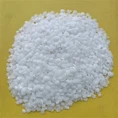


Sodium nitrate (NaNO₃) is a versatile inorganic compound with a wide range of applications in industries such as agriculture, food preservation, and pyrotechnics. As a leading supplier of sodium nitrate, I am often asked about its reactions with metals. Understanding these reactions is crucial for various industrial processes and safety considerations. In this blog post, I will delve into the reactions of sodium nitrate with different metals, exploring the underlying chemistry and practical implications.
General Reactivity of Sodium Nitrate with Metals
Sodium nitrate is an oxidizing agent, which means it has the ability to accept electrons from other substances during a chemical reaction. When sodium nitrate reacts with metals, it typically oxidizes the metal to a higher oxidation state while being reduced itself. The general reaction can be represented as follows:
[
x \text{Metal} + y \text{NaNO}_3 \rightarrow \text{Metal Oxide(s)} + \text{Reduction Products of } \text{NaNO}_3
]
The specific products of the reaction depend on several factors, including the nature of the metal, the reaction conditions (such as temperature and pressure), and the stoichiometry of the reactants.
Reactions with Different Metals
1. Reaction with Aluminum (Al)
Aluminum is a highly reactive metal that readily reacts with sodium nitrate under certain conditions. When heated together, aluminum can reduce sodium nitrate to form aluminum oxide (Al₂O₃), sodium oxide (Na₂O), and nitrogen gas (N₂). The reaction is exothermic and can be quite violent, releasing a large amount of heat and gas.
The chemical equation for the reaction is:
[
10 \text{Al} + 6 \text{NaNO}_3 \rightarrow 5 \text{Al}_2\text{O}_3 + 3 \text{Na}_2\text{O} + 3 \text{N}_2
]
This reaction is used in some pyrotechnic applications, where the rapid release of heat and gas can produce a bright flash and a loud noise. However, it is important to handle this reaction with extreme caution due to its high reactivity and potential for explosion.
2. Reaction with Iron (Fe)
Iron reacts with sodium nitrate at elevated temperatures to form iron oxides and nitrogen-containing compounds. The exact products depend on the oxidation state of iron and the reaction conditions. For example, when iron reacts with sodium nitrate in the presence of oxygen, it can form iron(III) oxide (Fe₂O₃) and sodium nitrite (NaNO₂).
The reaction can be represented as:
[
4 \text{Fe} + 6 \text{NaNO}_3 + 3 \text{O}_2 \rightarrow 2 \text{Fe}_2\text{O}_3 + 6 \text{NaNO}_2
]
This reaction is relevant in the steel industry, where sodium nitrate can be used as an oxidizing agent in the heat treatment of iron and steel to improve their mechanical properties.
3. Reaction with Copper (Cu)
Copper reacts with sodium nitrate in acidic solutions to form copper(II) nitrate (Cu(NO₃)₂), nitrogen oxides, and water. The reaction is typically carried out in the presence of a strong acid, such as nitric acid (HNO₃), to provide the necessary acidic medium.
The chemical equation for the reaction is:
[
3 \text{Cu} + 8 \text{HNO}_3 + 2 \text{NaNO}_3 \rightarrow 3 \text{Cu(NO}_3)_2 + 2 \text{NO} + 4 \text{H}_2\text{O} + 2 \text{NaNO}_3
]
This reaction is used in the production of copper salts and in some analytical chemistry techniques for the determination of copper.


4. Reaction with Magnesium (Mg)
Magnesium is a highly reactive metal that reacts vigorously with sodium nitrate when heated. The reaction produces magnesium oxide (MgO), sodium oxide (Na₂O), and nitrogen gas (N₂). Similar to the reaction with aluminum, this reaction is exothermic and can be explosive.
The chemical equation for the reaction is:
[
5 \text{Mg} + 2 \text{NaNO}_3 \rightarrow 5 \text{MgO} + \text{Na}_2\text{O} + \text{N}_2
]
This reaction is used in some pyrotechnic and military applications, where the high energy release can be utilized for specific purposes.
Practical Applications and Considerations
The reactions of sodium nitrate with metals have several practical applications in various industries. For example, in the pyrotechnics industry, the reactions with aluminum and magnesium are used to produce bright flashes and loud noises in fireworks and other pyrotechnic devices. In the steel industry, the reaction with iron is used to improve the properties of steel through heat treatment. In the chemical industry, the reaction with copper is used in the production of copper salts.
However, it is important to note that these reactions can be dangerous if not handled properly. The high reactivity of sodium nitrate with some metals can lead to explosions, fires, and the release of toxic gases. Therefore, it is essential to follow strict safety protocols when working with sodium nitrate and metals, including wearing appropriate protective equipment, working in a well-ventilated area, and using proper storage and handling procedures.
Our Sodium Nitrate Products
As a trusted supplier of sodium nitrate, we offer a wide range of high-quality products to meet the diverse needs of our customers. Our White Crystalline Powder Sodium Nitrate is a pure and highly soluble form of sodium nitrate, suitable for various industrial applications. Our Sodium Nitrate Technical Grade is a cost-effective option for general industrial use, while our Colorless Crystal Sodium Nitrate is ideal for applications where high purity and clarity are required.
Conclusion
The reactions of sodium nitrate with metals are complex and depend on several factors. Understanding these reactions is crucial for various industrial processes and safety considerations. As a sodium nitrate supplier, we are committed to providing our customers with high-quality products and technical support to ensure the safe and effective use of sodium nitrate in their applications. If you have any questions or need further information about our sodium nitrate products, please do not hesitate to contact us for procurement discussions. We look forward to working with you to meet your sodium nitrate needs.
References
- Housecroft, C. E., & Sharpe, A. G. (2012). Inorganic Chemistry (4th ed.). Pearson.
- Cotton, F. A., Wilkinson, G., Murillo, C. A., & Bochmann, M. (1999). Advanced Inorganic Chemistry (6th ed.). Wiley-Interscience.
- Ebbing, D. D., & Gammon, S. D. (2010). General Chemistry (9th ed.). Houghton Mifflin Company.