


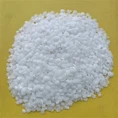


What is the solubility of Nitrite Potassium in water?
As a dedicated supplier of Nitrite Potassium, I often encounter inquiries about its solubility in water. Understanding the solubility of this compound is crucial for various industries that rely on its unique properties. In this blog post, I will delve into the details of Nitrite Potassium's solubility, its influencing factors, and its practical applications.
Solubility of Nitrite Potassium in Water
Nitrite Potassium, with the chemical formula KNO₂, is a highly soluble salt in water. At room temperature (around 20°C), approximately 300 grams of Potassium Nitrite can dissolve in 100 milliliters of water. This high solubility is due to the ionic nature of the compound. When Potassium Nitrite is added to water, the ionic bonds between potassium ions (K⁺) and nitrite ions (NO₂⁻) are broken by the polar water molecules. The water molecules surround the individual ions, forming a hydration shell, which allows the ions to disperse evenly throughout the solution.
The solubility of Potassium Nitrite is also affected by temperature. As the temperature increases, the solubility of the salt generally increases. This is because higher temperatures provide more energy for the water molecules to break the ionic bonds in the salt and for the ions to move more freely in the solution. For example, at 100°C, the solubility of Potassium Nitrite in water can reach up to about 415 grams per 100 milliliters.
Factors Affecting Solubility
Temperature
As mentioned earlier, temperature plays a significant role in the solubility of Potassium Nitrite. The relationship between solubility and temperature can be described by the solubility curve. By plotting the solubility of Potassium Nitrite at different temperatures, we can see that the curve slopes upward, indicating that solubility increases with temperature. This property is important for industrial processes where precise control of the solution concentration is required. For instance, in some chemical reactions that use Potassium Nitrite as a reactant, adjusting the temperature can help to achieve the desired concentration of the salt in the solution.
Presence of Other Substances
The presence of other substances in the water can also affect the solubility of Potassium Nitrite. For example, if there are other salts in the water that share common ions with Potassium Nitrite, such as potassium salts or nitrite salts from other sources, the solubility of Potassium Nitrite may be reduced due to the common - ion effect. The common - ion effect occurs when an ion that is already present in the solution is added from another source. According to Le Chatelier's principle, the equilibrium of the dissolution reaction of Potassium Nitrite will shift to the left, reducing the amount of Potassium Nitrite that can dissolve.
pH of the Solution
The pH of the solution can influence the solubility of Potassium Nitrite to some extent. Nitrite ions can react with hydrogen ions in acidic solutions to form nitrous acid (HNO₂). In very acidic solutions, the formation of nitrous acid can reduce the concentration of free nitrite ions in the solution, potentially affecting the solubility equilibrium of Potassium Nitrite. However, under normal conditions and in a wide range of pH values, the effect of pH on the solubility of Potassium Nitrite is relatively minor compared to the effects of temperature and the presence of other substances.
Practical Applications
In the Food Industry
Potassium Nitrite is widely used in the food industry as a preservative and color fixative, especially in cured meats. Its high solubility in water allows it to be easily incorporated into brines and marinades. When dissolved in water, it can penetrate the meat tissue effectively, helping to inhibit the growth of bacteria, such as Clostridium botulinum, and giving the meat a characteristic pink color. The solubility of Potassium Nitrite ensures uniform distribution in the meat products, which is essential for consistent quality and safety.
In the Chemical Industry
In the chemical industry, Potassium Nitrite is used as an intermediate in the synthesis of various compounds. Its solubility in water makes it a convenient starting material for many chemical reactions. For example, it can be used in the production of diazonium salts, which are important in the synthesis of dyes, pharmaceuticals, and other organic compounds. The ability to dissolve Potassium Nitrite in water allows for easy mixing with other reactants and precise control of the reaction conditions.
In the Metallurgy Industry
Potassium Nitrite is also used in the metallurgy industry as a corrosion inhibitor. When dissolved in water, it can form a protective film on the surface of metals, preventing corrosion. Its solubility enables it to be applied in various forms, such as in aqueous solutions or coatings, to protect metal structures and equipment.


Our Offerings
As a reliable supplier of Nitrite Potassium, we offer high - quality Potassium Nitrite Crystal that meets strict industry standards. Our products are carefully produced and tested to ensure consistent solubility and purity. We also provide Potassium Nitrite SDS to ensure the safe handling and use of our products. If you are interested in Nitrite Potassium for your specific application, please feel free to contact us for more information and to discuss your procurement needs. We are committed to providing excellent products and services to meet your requirements.
Conclusion
The solubility of Nitrite Potassium in water is an important property that has significant implications for its various applications. Its high solubility at room temperature and the dependence on temperature make it suitable for a wide range of industries, from food to chemical and metallurgy. Understanding the factors that affect its solubility, such as temperature, the presence of other substances, and pH, can help in optimizing its use in different processes. As a supplier, we are dedicated to providing high - quality Nitrite Potassium products and ensuring that our customers have the necessary information to use them effectively and safely.
References
- Atkins, P. W., & de Paula, J. (2014). Physical Chemistry. Oxford University Press.
- Haynes, W. M. (Ed.). (2016). CRC Handbook of Chemistry and Physics. CRC Press.
- Smith, J. M., Van Ness, H. C., & Abbott, M. M. (2005). Introduction to Chemical Engineering Thermodynamics. McGraw - Hill.