


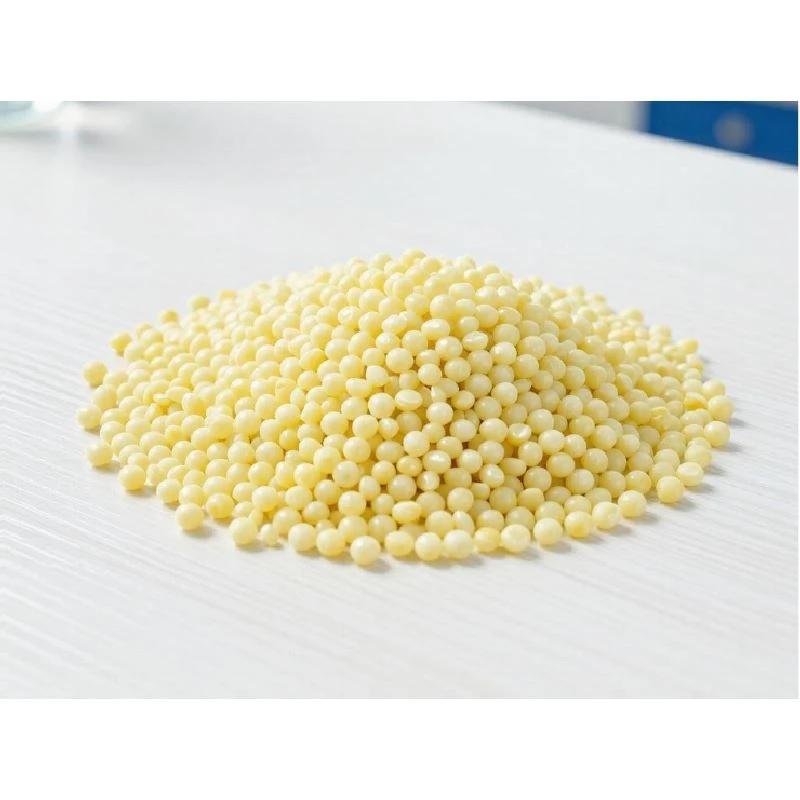
Methylene Urea (MU) is a urea-formaldehyde-based slow-release nitrogen fertilizer widely used in NPK fertilizer manufacturing, specialty liquid and dry formulations, commercial turf and lawn fertilizers, horticultural products, and nursery landscaping applications.
Product Overview
|
Parameter |
Product Details |
|
Product Name |
Methylene Urea (MU) Slow-Release Fertilizer |
|
Chemical Family |
Urea-Aldehyde Polymer / Synthetic Slow-Release Nitrogen |
|
Main Nitrogen Source |
Methylene Urea Compounds (Urea-Formaldehyde Condensates) |
|
Physical Form |
Granular / Micro-Granular / Fine Powder (Grade Dependent) |
|
Primary Applications |
NPK Dry Blending, Granulation, Turf Care, Horticulture, Nursery |
|
Target Buyers |
Fertilizer Manufacturers, Blenders, Global Distributors, Ag-Input Companies |
|
Environmental Profile |
Non-coated slow-release nitrogen; minimizes leaching and runoff risks |
Technical Specifications & Analytical Parameters
|
Analytical Parameter |
Standard Specification Range |
Commercial Significance |
|
Total Nitrogen (TN) |
38.0% - 40.0% min |
Determines the total nitrogen contribution to finished formulations |
|
Urea Nitrogen (Soluble N) |
8.0% - 12.0% |
Measures the immediate-release nitrogen fraction |
|
Cold Water Insoluble N (CWIN) |
14.0% - 18.0% |
Evaluates the medium-to-long-term slow-release fraction (25 deg C) |
|
Hot Water Insoluble N (HWIN) |
4.0% - 7.0% |
Identifies long-chain compounds with extended slow-release activity |
|
Activity Index (AI) |
40.0% - 55.0% min |
Percentage of CWIN soluble in hot water; indicates N availability |
|
Biuret Content |
0.8% - 1.2% max |
Critical for phytotoxicity prevention in foliar and sensitive crop uses |
|
Moisture Content |
1.0% - 2.0% max |
Prevents caking during storage and preserves free-flowing handling |
|
Particle Size (SGN) |
SGN 70 - 230 (Customizable) |
Ensures particle-size matching to prevent segregation in bulk blends |
|
Bulk Density |
0.60 - 0.75 g/cm3 |
Required for hopper calibration, volumetric dosing, and packaging |
|
Appearance |
White to Off-White Granules/Powder |
Used for visual inspection and batch identity verification |
Product Comparison: Methylene Urea vs. Conventional Urea
|
Feature / Factor |
Conventional Granular Urea |
Methylene Urea (MU) Fertilizer |
|
Primary Nitrogen Form |
Highly Soluble Monomeric Urea |
Polymeric Urea-Formaldehyde Chains |
|
Water Solubility |
Rapidly Water-Soluble |
Fractionated (Soluble, CWIN, HWIN) |
|
Nitrogen Availability |
Immediate (High risk of volatilization) |
Gradual and Controlled via Microbial Action |
|
Environmental Impact |
Higher risk of nitrate leaching |
Low leaching and lower environmental footprint |
|
Key Quality Criteria |
Total N (>= 46%), Biuret, Moisture |
Total N, CWIN, HWIN, Activity Index, SGN |
|
Primary Application |
Commodity Crop Basal/Top Dressing |
High-Value Turf, Specialty Blends, Horticulture |
Grade Selection Guidelines by Application
NPK Fertilizer Manufacturing & Bulk Blending: Prioritize Particle Size Distribution (SGN), Bulk Density, and Moisture. Matching particle sizes prevents bulk material segregation during transport and storage.
Commercial Turf & Lawn Care: Focus on Total Nitrogen, Activity Index (AI), and SGN 100-140. Ensures uniform nitrogen distribution without surge growth or leaf burn.
Horticultural & Nursery Formulations: Focus on Low Biuret (< 1.0%), CWIN, and HWIN. Protects greenhouse plants and ornamentals from salt stress and localized toxicity.
Quality Assurance & Compliance
Standard Test Methods: Analytical verification aligns with ISO 19670:2017 (Fertilizers - Solid urea-aldehyde slow-release fertilizers) and corresponding AOAC/EN testing protocols.
Environmental & Microplastic Regulations: As a non-coated chemical slow-release matrix, MU complies with global environmental standards to reduce microplastic soil residues while minimizing groundwater nitrate leaching.
Traceability: Every commercial batch includes full lot traceability linked to raw material inspection logs, reaction temperature monitoring, screening reports, and final laboratory COAs.
Supplier Qualification Checklist
Product Verification: Confirm Total N, Soluble N, CWIN, HWIN, Activity Index, Biuret, SGN, and Moisture limits against guaranteed specifications.
Quality Documentation: Review current TDS, Safety Data Sheets (SDS), and COAs from at least three distinct recent production batches.
Manufacturing Capacity: Verify production lines, raw material quality controls, automated packaging, and monthly production capacity.
Commercial Terms: Confirm Minimum Order Quantity (MOQ), lead times, palletizing options, bulk bag (FIBC) specs, and shipping terms (FOB/CIF).
FAQ
Q: How does Methylene Urea release nitrogen over time?
A: Methylene Urea relies on soil microbial activity to break down its methylene nitrogen chains into plant-available nitrogen.
Q: What is the significance of the Activity Index (AI) in MU fertilizers?
A: The Activity Index (AI) measures the percentage of Cold Water Insoluble Nitrogen (CWIN) that is soluble in hot water. A higher AI value (typically above 40%) indicates better nitrogen availability, proving that the slow-release fraction will convert efficiently into crop nutrition rather than remaining inert in the soil.
Q: Why is particle size matching (SGN) crucial when using MU in dry blends?
A: In dry fertilizer blending, mismatched particle sizes or bulk densities lead to physical segregation during handling, transit, and spreading. Specifying the correct SGN (Size Guide Number) for MU ensures uniform distribution across the field and prevents localized over- or under-fertilization.
Q: Does Methylene Urea comply with microplastic restrictions?
A: Yes. Unlike polymer-coated or sulfur-coated slow-release urea products, Methylene Urea is a non-coated, chemically reacted slow-release nitrogen matrix. It leaves zero synthetic polymer or microplastic residues in agricultural soil, making it compliant with strict environmental regulations like EU microplastic limits.
Q: What technical documentation should be requested before placing a bulk order?
A: Buyers should request a Technical Data Sheet (TDS), Safety Data Sheet (SDS), Product Specification Sheet, and Certificate of Analysis (COA) from at least 2-3 recent production batches to verify supply consistency and analytical standards.
Hot Tags: methylene urea (mu) slow-release fertilizer, China methylene urea (mu) slow-release fertilizer manufacturers, suppliers, factory, Manganese Fluoride


