


Agricultural Potassium Nitrate
What is Agricultural Potassium Nitrate
Agricultural potassium nitrate is a type of fertilizer that contains both potassium (K) and nitrogen (N), two essential nutrients for plant growth and development. It is commonly used as a fertilizer in agriculture and horticulture because it provides these important macronutrients to crops in a readily available form.Potassium nitrate is a unique source of potassium by its nutritional value and its contribution to the health and yields of plants. Potassium nitrate features desirable chemical and physical properties, integrated with environmental qualities. The Cl-free potassium along with the counter-ion of Nitrate-nitrogen make it an ideal source of N and K for optimal plant nutrition.
company advantage
Rich Experience: With over 20 years of experience in the chemical industry, we have developed a strong foundation of knowledge and expertise. Our team of professionals understands the complexities of chemical manufacturing and can provide valuable insights and solutions for your specific requirements.
Quality Control: At Us Chemical Co., Ltd., quality is our utmost priority. We adhere to strict quality control measures at every stage of the production process to ensure that our chemicals meet the highest standards.
Advanced Equipment: Our state-of-the-art laboratory is equipped with advanced testing equipment, allowing us to perform rigorous quality checks and guarantee the purity and effectiveness of our products.
Custom Service: Our team will work closely with you to develop tailored chemicals based on your specifications. We are committed to providing flexible and innovative solutions that give you a competitive edge in the market.your doorstep.
-
![Water Soluble Potassium Nitrate]() Water Soluble Potassium Nitrate
Water Soluble Potassium Nitrate$ 985.00
-
![Potassium Nitrate Prills]() Potassium Nitrate Prills
Potassium Nitrate Prills$ 1090.00
-
![Potassium Nitrate for Plants]() Potassium Nitrate for Plants
Potassium Nitrate for Plants$ 985.00
-
![Agricultural Grade Potassium Nitrate]() Agricultural Grade Potassium Nitrate
Agricultural Grade Potassium Nitrate$ 985.00


Benefits of Agricultural Potassium Nitrate
The n-p2o5-k2o share is 13.5-0-46 (13% of n is 62% of NO3 -), 46% of K2O is 38% of K +, which is 100% of KNO3). Potassium nitrate is the only fertilizer that can supply two kinds of many elements, nitrogen, and potassium. The content of these two elements is the highest in any plant.
The synergistic effect of K + and NO3 - helps the root absorb two ions. In addition, the affinity between the negatively charged nitrate and the positively charged potassium ion prevents the adsorption of potassium ion by soil particles, thus prolonging the time when potassium ion can be absorbed by plants.potassium nitrate can exist in the form of crystalline powder and particles, so it is suitable for various fertilizer application methods. High power fertilizer application methods, such as irrigation, top dressing, and slow control, ensure the timely, appropriate, and appropriate application of nutrient elements.
Potassium is the primary cation in plants, which can neutralize many negative mineral anions and organic acids. Therefore, potassium in potassium nitrate is very important for the normal menu of plant growth and tissue. Potassium ion (K +) plays an important role in many aspects of cell innovation and plays an important role in the regulation of plant water use.
According to agrospectroscopy, when chloride concentration in soil solution is added, plants absorb chloride rather than necessary anion (especially nitrate) nutrients, which will inevitably hinder the growth of plants. The increase of chloride content is a toxic reaction, which may lead to the decrease of production value and even the death of plants. However, potassium nitrate does not contain harmful chloride, and the nitrate in potassium nitrate can counteract the harmful effect of chloride.
Potassium nitrate is effectively absorbed. The synergistic interaction of K+ and NO3– makes it easier for the plant to absorb both nutrients through its roots. Additionally, the negative charge of nitrate and the positive charge of potassium have an affinity for one another, which reduces the likelihood of soil particles being absorbed and prolongs the time that they are available to plants.
Potassium nitrate boosts a plant’s defence resistance against diseases. Short-chain carbohydrates and non-protein nitrogen buildup, which serves as a barrier against bacteria, fungi, nematodes, and viruses, are removed. Potassium nitrate enhances soil water absorption, encourages the commencement and ramification of the root system, and makes plants more drought-tolerant.
Potassium nitrate’s potassium content stops water loss. Because potassium controls the opening and shutting of the stomata, it helps plants use less water by reducing transpiration. Additionally, supplying plants with enough potassium boosts their ability to absorb water from the soil. The salt buildup is prevented by potassium nitrate. Potassium nitrates take the place of the need for more water to remove salts from the soil.
Application of Agricultural Potassium Nitrate
To work, fireworks need gunpowder to thrust or propel them into the air. The gunpowder used is made primarily of potassium nitrate, mixed with charcoal and sulfur. Potassium nitrate is used in both force-and-spark fireworks as well as the colorful flame varieties. It is also used for propulsion in model rockets.
Used as a pyrotechnic fumigant, potassium nitrate is an ingredient used in various insecticides, rodenticides and predacides. According to the EPA, their target pests include ground-nesting wasps, rodents, skunks and coyotes. These products work by combining potassium nitrate with other ingredients to create fumigant gas cartridges. Placed ignited into burrows, these cartridges explode, releasing toxic gas.
Potassium nitrate is the key ingredient in many brands of stump remover. These products work by chemically accelerating stump decomposition, eventually reducing stumps to a soft, manageable mulch. To use, simply drill several holes into a stump and fill them with chemical stump remover mixed with water. Though this process takes time, ranging from several weeks to several months, it can prove effective, especially on older stumps.
Toothpaste designed for sensitive teeth and gums often contain potassium nitrate. As gums recede, underlying roots are exposed, causing pain when they come in contact with heat or cold. According to Toms of Maine, a manufacturer of natural toothpastes, potassium nitrate is “clinically proven effective in reducing pain by shielding the sensory nerves under the gum line.”
Though potassium nitrate was heavily used as a food preservative in the past, it’s since been replaced in most foods by more predictable preservatives such as sodium nitrate. It is still used, however, in some brands of processed, cured and smoked meats, such as salami, corned beef and sausage. Nitrates or nitrites are needed for stability and to provide the correct color and flavor for these meats. Too many nitrates, however, can cause negative health effects, according to the National Center for Home Food Preservation.
Types of Agricultural Potassium Nitrate
Water Soluble Potassium Nitrate
Water Soluble Potassium Nitrate is colorless transparent rhombic crystal or white powder, which could be easily soluble in water, and also soluble in liquid ammonia and glycerin, but it is insoluble in anhydrous ethanol and ether. As a strong oxidizing agent, it can cause combustion or explosion when it comes into contact with reducing agent carbonate and metal powders such as sulfur and titanium, it can cause combustion or explosion.
Potassium Nitrate Prills
Potassium nitrate prills is also known as potassium saltpeter. Potassium nitrate prills is 100% plant nutrients and can be completely dissolved in water. Potassium nitrate prills is a nitrogen-free potassium and nitrogen compound fertilizer.Potassium nitrate prills can provide nutrients for crops under any conditions and can be applied in four seasons. Since potassium nitrate is not volatile, it can be applied directly to the soil surface without mulching.
Potassium Nitrate For Plants
Potassium nitrate for plant is colorless crystal or white powder and does not deliquescence in air. The melting temperature is 2.11g/cm3 at 334℃, and decomposes to potassium nitrite and oxygen at 338℃ or above. The solubility of potassium nitrate decreases with the increase of nitric acid concentration, and increases when the minimum value is reached, and the solubility of potassium nitrate in water increases with the increase of temperature. The product contains at least 46.0% potassium oxide and 13.5% nitrogen.
Properties of Agricultural Potassium Nitrate
1.The molecular weight or molar mass of potassium nitrate is 101.1032 g/mol.
2.The density of potassium nitrate is 2.109g/cm3.
3.Also, the boiling point and melting point of potassium nitrate is 400oC and 334oC respectively.
4.Potassium nitrate is an orthorhombic crystal. It transforms to a trigonal system at 129oC or 264oF.
5.Potassium nitrate is moderately soluble in water. Its solubility increases with temperature. Potassium nitrate is not very hygroscopic. 6.It absorbs about 0.03% water in 80% relative humidity over 50 days.
7.Potassium nitrate is insoluble in alcohol and is not poisonous. It reacts explosively with reducing agents.
What Are Some Natural Sources of Potassium Nitrate?

Cave Deposits
In the early part of the 19th century and throughout the Civil War, caves in many Southern states were rich sources of potassium nitrate. Usually found as huge crusts and growths on cave walls and ceilings, they formed when solutions containing alkali potassium and nitrate seeped into cavern cracks and crevices. For example, the DesertUSA website reports that miners extracted 200 tons of potassium nitrate from Mammoth Cave in Kentucky between 1811 and 1814, to use in the making of gunpowder.

Desert Sources
A major source of potassium nitrate was the Atacama Desert in Chile—“the driest place on Earth,” according to National Geographic. More than 170 mining towns were in full operation up until the early 1940s to supply the world with potassium nitrate. Since the invention of synthetic nitrate, however, they have all but shut down.

Formation
Potassium nitrate forms naturally in warm climates. Bacteria from the decomposition of feces, urine and plants combine with air, moisture, plant ash and alkaline soil to create nitrification—the conversion of the decaying matter into nitrates that penetrate the soil. Dissolved by rainwater, the evaporated deposits form a white powder. Once boiling and evaporating wash impurities away, potassium nitrate is ready for practical uses.
Products Containing Agricultural Potassium Nitrate
Household products
In the modern home, potassium nitrate is a very common ingredient in various products. Sensitivity toothpaste and tooth whitening products certainly contain this compound.Furthermore, the salt exists in makeup primer. The salt also exists in various fertilizers, potting mixes, and plant foods.
Agricultural Products
Many agricultural products contain this compound. Pyrotechnic fumigants contain this compound to control insects, rodents, and various kinds of pests.Furthermore, these cartridges create pest-killing gases to control coyotes, skunks, wasps, and other animals that are harmful to crops and farms.
Industrial products
Many industries depend upon the compound as an ingredient or as a helpful substance.People have been using it as a food preservative since the middle ages. Moreover, this salt is present in gunpowder, fireworks, matches, and blasting powders.There is a presence of this compound in rocket fuel. Furthermore, the salt is quite useful in steel tempering and manufacturing of glass.
Potassium Nitrate Compound Fertilizers Market Size
The Potassium Nitrate Compound Fertilizers market presents a unique landscape for Public Relations (PR) professionals, offering a plethora of opportunities for strategic communication and brand building. In this report, we will delve into the dynamics, challenges, and growth prospects of the Potassium Nitrate Compound Fertilizers market, emphasizing the pivotal role PR plays in shaping perceptions, fostering relationships, and driving business success. In the coming years, the global Potassium Nitrate Compound Fertilizers Market is set to experience steady growth, driven by a combination of continuous technological advancements, growing environmental awareness, and the rising need for streamlined operations. To seize the evolving market opportunities, industry players are anticipated to concentrate on product innovation, strategic collaborations, and geographical expansion.
Our factory
Shanxi Wencheng Chemical Co., Ltd. is a chemical enterprise that engages in producing, developing and marketing inorganic potassium salt products. It has two production bases. Wencheng is situated in the base of Shanxi energy resources and heavy chemical industry. They enjoy a convenient transportation for they are only 70km away from Taiyuan City -- the capital of Shanxi province. As a window of international trade, Shanxi Wencheng Chemical Co., Ltd has independent import and export rights.Our main products are potassium nitrate, potassium carbonate, potassium sulphate, potassium bicarbonate, potassium nitrite, calcium nitrate tetrahydrate, calcium ammonium nitrate, magnesium nitrate, sodium nitrate, sodium nitrite, ferric nitrate, zinc nitrate, copper nitrate, calcium nitrite, chromium nitrate, aluminum nitrate, magnesium sulphate heptahydrate, ammonium sulfate, zinc chloride, and etc.
our products


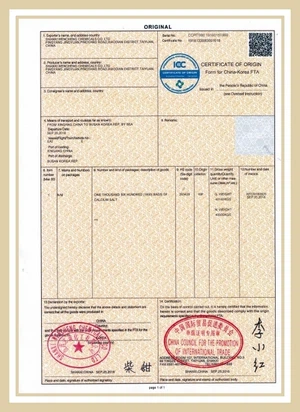
Certificate

FAQ
We're well-known as one of the best agricultural potassium nitrate manufacturers and suppliers in China. If you're going to buy top quality agricultural potassium nitrate at competitive price, welcome to get pricelist from our factory.
Agricultural Potassium Nitrate