


Aluminium Nitrate
What is Aluminium Nitrate
Aluminium Nitrate, also known as aluminium (III) nitrate has a white crystalline solid appearance. Aluminium nitrate is a salt consisting of aluminium and nitric acid and it is easily soluble in water. This salt has a density of 1.72 g/cm3. It is a strong electrolyte and oxidizing agent. It has the capacity to hold water and retain it. Nitric aluminium salt is the other name for it. It has a boiling point of 135°C and a melting point of 72.8°C. Aluminium nitrate salt is used in some industrial processes for the extraction of heavy elements and is also used in the industry for the production of alumina.
company advantage
Rich Experience: With over 20 years of experience in the chemical industry, we have developed a strong foundation of knowledge and expertise. Our team of professionals understands the complexities of chemical manufacturing and can provide valuable insights and solutions for your specific requirements.
Quality Control: At Us Chemical Co., Ltd., quality is our utmost priority. We adhere to strict quality control measures at every stage of the production process to ensure that our chemicals meet the highest standards.
Advanced Equipment: Our state-of-the-art laboratory is equipped with advanced testing equipment, allowing us to perform rigorous quality checks and guarantee the purity and effectiveness of our products.
Custom Service: Our team will work closely with you to develop tailored chemicals based on your specifications. We are committed to providing flexible and innovative solutions that give you a competitive edge in the market.your doorstep.


Physical Properties of Aluminium Nitrate
There are many different physical properties of this compound. For example, aluminum nitrate has molar mass which is equal to 212.996 g/mol. As for the density of the compound, it is 1.401 g/cm3. Besides, as any other compound, aluminum nitrate has melting and boiling points which are 72.8°C and 135°C respectively. The solubility of aluminum nitrate is known with various liquids. Aluminum nitrate has no odor, while its molecular weight appears to be 375.13. The chemical formula of aluminum nitrate is Al(NO₃)₃.
Uses of Aluminium Nitrate
1. The principal use of Aluminium Nitrate is in the preparation of alumina or aluminium oxide, which is used in making corrosion-resistant parts, electronic items, etc.
2. Aluminium nitrate is used in our daily life as antiperspirants, i.e., as perfumes, deodorants, etc.
3. Tanning of leather products requires Aluminum nitrate.
4. Aluminium nitrate is also used during the refining of gasoline. So, we can say that this compound is indirectly used to drive our vehicles!
5. Aluminium nitrate is useful in providing us electricity as it is used in the uranium extraction process, which is a necessary fuel of a nuclear reactor. These nuclear reactors generate electricity. Aluminium nitrate helps in the corrosion inhibiting process; as a result, it prevents corrosion of some parts of nuclear reactors that may get corroded with time.
6. It is used to make insulating papers used as a heating element component of cathode ray tubes.
7. The hydrated forms of aluminium nitrate are used for the extraction of the elements of the actinide series of the modern periodic table because aluminium nitrate is a very strong oxidising agent.
8. It is also used as a nitrating agent in a chemical reaction.
Types of Aluminium Nitrate

Aluminium Nitrate Crystal
Aluminium nitrate crystal is colorless rhombic crystal. It is oxidizing. Soluble in water, ethanol and CS2, aqueous solution is acidic, easy deliquescence. At 70℃, it melts into AI(NO3)3·6 H2O, decomposes to form basic salt [AI(NO3)3·3A1(OH)3·H20] at 135℃, and forms 4A1203·3N205· 14H2O at 140℃. When the temperature is higher than 200℃, aluminium nitrate crystal is completely decomposed into alumina.
Aluminium Nitrate Nonahydrate
Aluminium nitrate nonahydrate is colorless crystal. It is easy to delix, melting point is 37.5℃, decompose at 150℃, easily soluble in water, alcohol, insoluble in ethyl acetate, aqueous solution is acidic, has strong oxidation, toxic, contact with flammable products can cause fire, and organic matter heating will burn and explode, irritating to the skin.Aluminium nitrate nonahydrate is mainly used in the manufacture of catalysts for organic synthesis, mordant for textile industry, oxidant, as a salting agent in the recovery of nuclear fuel by solvent extraction and for the manufacture of other aluminum salts.
Industrial Applications of Aluminium Nitrate
In order to chrome-tan leather, aluminum nitrate is occasionally combined with chrome salts. By stabilizing the collagen fibers in the hide, this technique increases the leather’s durability and resistance to degradation.
Utilizing aluminum nitrate as a catalyst in the synthesis of polymers is among its most popular uses. Polymers are found in many different products, such as adhesives, textiles, and plastics. The synthesis of polyester fibers, polyethylene terephthalate (PET), and other polymers uses aluminum nitrate as a catalyst. It contributes to raising the reaction’s efficiency and lowering the energy needed to create the polymer. Furthermore, titanium dioxide and other chemicals can be produced using aluminum nitrate as a catalyst. White pigment titanium dioxide is used in many different products, such as paint, plastics, and paper. When producing titanium dioxide through the chloride process, which involves chlorinating ilmenite ore, aluminum nitrate is utilized as a catalyst.
Aluminum nitrate has significant application in dyeing, where it serves as a mordant. Mordant is used to bind dyes to various materials. Aluminum nitrate in mordant is specifically used to bind the dyes with cotton. Thus, aluminum nitrate plays a crucial role in the cotton material dyeing process.
In the water treatment industry, it acts as a flocculant, a chemical that makes suspended solids in water aggregate and sink to the bottom of the container. This facilitates the process of removing the solids from the water. In water treatment facilities, iron and manganese impurities—which can lead to discoloration and other issues—are eliminated with the use of aluminum nitrate. In order to get rid of heavy metals and other contaminants, it is also used in industrial wastewater treatment.
Laboratory preparation method
Under heating conditions, dissolve aluminum in 57% nitric acid, boil the reaction solution slightly, and filter to remove impurities. The filtrate is acidified with nitric acid, evaporated and concentrated at a temperature not higher than 74°C until crystallization occurs. Cool and crystallize, filter, wash the crystals with ice water, dry in a sulfuric acid desiccator for a short time, and seal and package.
Industrial manufacturing method
Clean the metal aluminum plate with 10% caustic soda solution to remove surface oil stains, then rinse with tap water, then put it into the reactor, add a small amount of 1 (approximately 2 kg per 100 kg of aluminum flakes) mercury oxide as the oxidant, and then slowly Add dilute nitric acid (concentration of about 38%), keep excess aluminum during the reaction, and heat with steam to keep the reaction temperature at 110-115°C. After about 2 hours, the reaction is completed. The specific gravity of the reaction solution is 25-32 Be. After clarification and filtration, the clear liquid is sent to the evaporator and evaporated to 45-47 Be under reduced pressure. It is placed in a crystallizer for natural cooling and crystallization. After being taken out and mashed, it is dehydrated with a centrifuge. After drying, it is directly packed into barrels as the finished product.
Aluminum ash-nitric acid method
Add caustic soda solution and aluminum ash into the reactor to react to form sodium aluminate, then add nitric acid to react to form aluminum hydroxide and sodium nitrate. After the reaction solution is filtered, add nitric acid to dissolve the aluminum hydroxide to form Aluminum nitrate. The solution is then filtered, evaporated and concentrated, cooled and crystallized, and centrifuged to obtain the finished product of Aluminum nitrate.
Other methods
Aluminum nitrate is produced by directly reacting metallic aluminum with nitric acid. This method is simple and convenient, but the purity of the products produced is not high. This method is generally not used to produce Aluminum nitrate. Aluminum nitrate suitable for textile and other industrial uses is produced by metathesis of other industrially pure aluminum salts with aluminum nitrate, barium nitrate or calcium nitrate.
Aluminum Nitrate Handling Precautions And Storage
Precautions for handling aluminum nitrate
Close operation and enhance ventilation. Operators must undergo special training and strictly abide by operating procedures. It is recommended that operators wear self-priming filter dust masks, chemical safety glasses, tape anti-virus clothing, and rubber gloves. Keep away from fire and heat sources. Smoking is strictly prohibited in the workplace. Keep away from flammable and combustible materials. Avoid dust generation. Avoid contact with reducing agents, acids, and active metal powders. When handling, load and unload with care to prevent damage to packaging and containers. Equipped with corresponding varieties and quantities of fire-fighting equipment and leakage emergency treatment equipment. Empty containers may be harmful residues.
Aluminum nitrate preservation
Store in a cool and dry place, away from fire and heat sources. Do not store, mix, transport or swallow with reducing agents, acids, flammable substances, sulfur, etc. Drink warm water, induce vomiting to extinguish fire, mist water, sand.
Precautions for saving
Store in a cool, dry, well-ventilated warehouse. Keep away from fire and heat sources. The packaging must be sealed and protected from moisture. It should be stored separately from flammable (combustible) substances, reducing agents, acids, active metal powders, etc., and avoid mixed storage. Suitable materials should be available in the storage area to contain spills.
When Using Aluminum Nitrate, You Need To Pay Attention To The Following Matters
Prevent contact
Aluminum nitrate is corrosive and irritating to a certain extent. Avoid direct contact with skin, eyes and respiratory tract. When operating, appropriate personal protective equipment such as gloves, glasses, and masks should be worn.
Good ventilate
When working with aluminum nitrate, ensure that the operating area is well ventilated to avoid accumulation of its vapors or gases. Exposure risks can be reduced by using exhaust equipment or by performing operations outdoors.
Avoid mixing
Aluminum nitrate is oxidizing, avoid mixing with combustibles, reducing agents and other chemicals to avoid dangerous reactions or fires.
Safe storage
Aluminum nitrate should be stored in a dry, cool, ventilated place, away from fire sources and flammable materials. Storage containers should be well sealed to avoid contact with air and moisture.
Waste disposal
Waste aluminum nitrate should be disposed of in accordance with local regulations. Do not discharge it into sewers or the environment to avoid environmental pollution.
Accident emergency response
In the event of a leak, splash into the eyes, or inhalation of excessive amounts of aluminum nitrate, operations should be stopped immediately, the affected area should be quickly flushed with clean water, and medical help should be sought if necessary.
Our factory
Shanxi Wencheng Chemical Co., Ltd. is a chemical enterprise that engages in producing, developing and marketing inorganic potassium salt products. It has two production bases. Wencheng is situated in the base of Shanxi energy resources and heavy chemical industry. They enjoy a convenient transportation for they are only 70km away from Taiyuan City -- the capital of Shanxi province. As a window of international trade, Shanxi Wencheng Chemical Co., Ltd has independent import and export rights.Our main products are potassium nitrate, potassium carbonate, potassium sulphate, potassium bicarbonate, potassium nitrite, calcium nitrate tetrahydrate, calcium ammonium nitrate, magnesium nitrate, sodium nitrate, sodium nitrite, ferric nitrate, zinc nitrate, copper nitrate, calcium nitrite, chromium nitrate, aluminum nitrate, magnesium sulphate heptahydrate, ammonium sulfate, zinc chloride, and etc.
our products


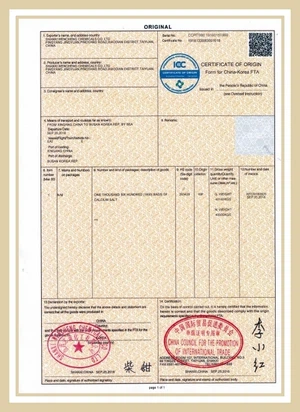
Certificate

FAQ
We're well-known as one of the best aluminium nitrate manufacturers and suppliers in China. If you're going to buy top quality aluminium nitrate at competitive price, welcome to get pricelist from our factory.
Aluminium Nitrate, Aluminium Nitrate Nonahydrate, Aluminium Nitrate Crystal