


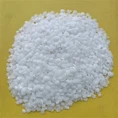


Carbonate of potassium, commonly known as potassium carbonate (K₂CO₃), is a versatile inorganic compound with a wide array of applications. As a reliable supplier of carbonate of potassium, I've encountered numerous inquiries about its reactivity, especially with phosphorus compounds. In this blog, we'll explore the reactions between carbonate of potassium and phosphorus compounds, delving into the underlying chemical processes, applications, and factors influencing these reactions.
Chemical Properties of Carbonate of Potassium and Phosphorus Compounds
Before we dive into their reactions, it's crucial to understand the chemical properties of both carbonate of potassium and phosphorus compounds. Potassium carbonate is a white, hygroscopic solid that dissolves readily in water. It is a strong base, meaning it can accept protons (H⁺ ions) from acids. Potassium carbonate can be found in different forms, such as Anhydrous Potassium Carbonate, which is free of water molecules.
On the other hand, phosphorus compounds exhibit a diverse range of chemical behaviors. Phosphorus can exist in various oxidation states, from -3 to +5, leading to a wide variety of compounds with different reactivity. Common phosphorus compounds include phosphoric acid (H₃PO₄), phosphates (e.g., sodium phosphate, Na₃PO₄), and phosphorus pentoxide (P₂O₅).
Reactions between Carbonate of Potassium and Phosphorus Compounds
Reaction with Phosphoric Acid
When potassium carbonate reacts with phosphoric acid (H₃PO₄), a series of substitution reactions can occur, depending on the stoichiometry of the reactants. The reaction is an acid-base reaction, where the carbonate ion (CO₃²⁻) from potassium carbonate acts as a base and reacts with the acidic protons (H⁺) from phosphoric acid.
The overall reaction can be divided into three steps:
-
Formation of Potassium Dihydrogen Phosphate:
K₂CO₃ + 2H₃PO₄ → 2KH₂PO₄ + H₂O + CO₂↑
In this step, one carbonate ion reacts with two protons from phosphoric acid to form potassium dihydrogen phosphate (KH₂PO₄), water, and carbon dioxide gas. -
Formation of Potassium Hydrogen Phosphate:
K₂CO₃ + H₃PO₄ → K₂HPO₄ + H₂O + CO₂↑
When the amount of potassium carbonate is increased relative to phosphoric acid, a secondary reaction occurs, producing potassium hydrogen phosphate (K₂HPO₄). -
Formation of Potassium Phosphate:
3K₂CO₃ + 2H₃PO₄ → 2K₃PO₄ + 3H₂O + 3CO₂↑
In the presence of an excess of potassium carbonate, all three acidic protons of phosphoric acid are substituted, resulting in the formation of potassium phosphate (K₃PO₄).
These phosphate salts have various applications in the agricultural, food, and pharmaceutical industries. For example, potassium dihydrogen phosphate is commonly used as a fertilizer and a food additive.
Reaction with Phosphates
Potassium carbonate can also react with other phosphates, such as sodium phosphate. In this case, a double displacement reaction may occur, where the potassium ion (K⁺) from potassium carbonate exchanges with the sodium ion (Na⁺) in the phosphate salt.
K₂CO₃ + Na₃PO₄ → 2Na₂CO₃ + K₃PO₄
The products of this reaction are sodium carbonate and potassium phosphate. The reaction is driven by the formation of more stable compounds and the solubility of the products in the reaction medium.
Factors Influencing the Reactions
Several factors can influence the reactions between carbonate of potassium and phosphorus compounds:
- Stoichiometry: As demonstrated in the reaction with phosphoric acid, the ratio of reactants plays a crucial role in determining the products. Different stoichiometric ratios can lead to the formation of different phosphate salts.
- Temperature: Temperature can affect the reaction rate and the equilibrium of the reactions. Higher temperatures generally increase the reaction rate, but they can also influence the stability of the products.
- pH: The pH of the reaction medium can impact the reactivity of the carbonate and phosphate ions. In acidic conditions, the carbonate ion can react with protons to form carbon dioxide, while in basic conditions, the phosphate ions may exist in different forms.
- Solubility: The solubility of the reactants and products in the reaction medium can affect the reaction outcome. For example, if the products are insoluble, they may precipitate out of the solution, driving the reaction forward.
Applications of the Reaction Products
The products of the reactions between carbonate of potassium and phosphorus compounds have numerous applications:
- Agriculture: Potassium phosphates, such as potassium dihydrogen phosphate and potassium hydrogen phosphate, are important fertilizers. They provide essential nutrients (potassium and phosphorus) for plant growth and can improve crop yield and quality.
- Food Industry: Potassium phosphates are used as food additives. They can act as buffering agents, emulsifiers, and stabilizers in various food products, such as dairy products, meat products, and beverages.
- Pharmaceutical Industry: Some phosphate salts are used in the formulation of pharmaceutical products. For example, potassium phosphate can be used as a pH adjuster in buffer solutions.
Potassium Carbonate Uses and Market Demand
The reactions between carbonate of potassium and phosphorus compounds not only demonstrate the chemical versatility of potassium carbonate but also highlight its importance in various industries. As a supplier of Potassium Carbonate K₂CO₃, I've witnessed the growing market demand for potassium carbonate, driven by its wide range of applications.
In addition to its reactions with phosphorus compounds, potassium carbonate is used in the production of glass, soap, and detergents. It is also used in the purification of biogas and the production of specialty chemicals.
Conclusion
The reactions between carbonate of potassium and phosphorus compounds are complex and influenced by various factors. Understanding these reactions is essential for industries that rely on the production of phosphate salts and other related products. As a supplier of carbonate of potassium, I'm committed to providing high-quality products and technical support to meet the diverse needs of our customers.
If you're interested in purchasing carbonate of potassium or have any questions about its reactions with phosphorus compounds, please don't hesitate to contact me. We can discuss your specific requirements and work together to find the best solutions for your business.


References
- Chang, R. (2010). Chemistry, 10th Edition. McGraw-Hill Education.
- Housecroft, C. E., & Sharpe, A. G. (2012). Inorganic Chemistry, 4th Edition. Pearson Education.
- Shriver, D. F., Atkins, P. W., & Langford, C. H. (1990). Inorganic Chemistry, 3rd Edition. W. H. Freeman and Company.